


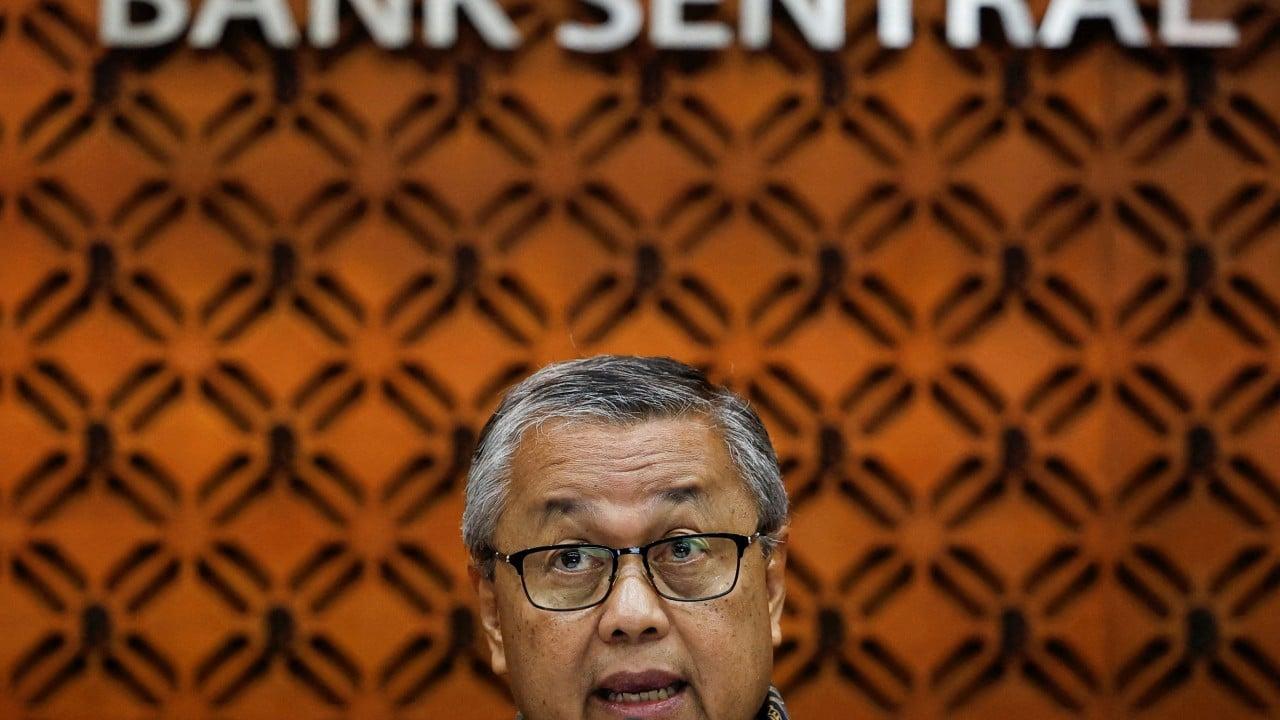
Indonesian Central Banker’s Resignation Highlights Rate Policy Dilemma
The abrupt departure of Bank Indonesia's governor underscores the challenging balance between tightening policy to stabilize currencies and inflation, and loosening it to support economic growth.

POLICY WIRE — Jakarta, Indonesia — The unexpected resignation of Bank Indonesia’s governor, Perry Warjiyo, has spotlighted a critical dilemma faced by central bankers in the region: the need to either tighten monetary policy to defend weakening currencies and curb inflation, or to loosen it in support of pro-growth economic mandates.
Warjiyo’s departure has sparked speculation that he was under pressure to adopt measures more aligned with President Prabowo Subianto’s economic growth agenda. Analysts suggest that this tension between inflation control and growth support is at the heart of the central bank’s current challenges.
During his tenure, Warjiyo navigated a complex economic landscape, balancing the need to stabilize the rupiah against the backdrop of global economic uncertainties and domestic growth targets. His exit comes at a time when the Indonesian economy is grappling with inflationary pressures — and currency volatility.
According to financial experts, the central bank’s policy decisions are further complicated by external factors such as global market fluctuations and the ongoing recovery from the COVID-19 pandemic. These variables require a nuanced approach to monetary policy that can effectively address both short-term economic stability and long-term growth objectives.
The resignation hasn’t only raised questions about the future direction of Indonesia’s monetary policy but has also cast a spotlight on the broader challenges faced by central banks in emerging markets. As nations strive to revive their economies post-pandemic, the delicate balance between inflation control and growth stimulation remains a pivotal issue.
Warjiyo’s leadership saw several policy adjustments aimed at stabilizing the rupiah and managing inflation, including interest rate changes and other monetary tools. His successor will inherit these challenges, along with the task of aligning monetary policy with the government’s broader economic goals.
Reporting by Policy-Wire (PW)