


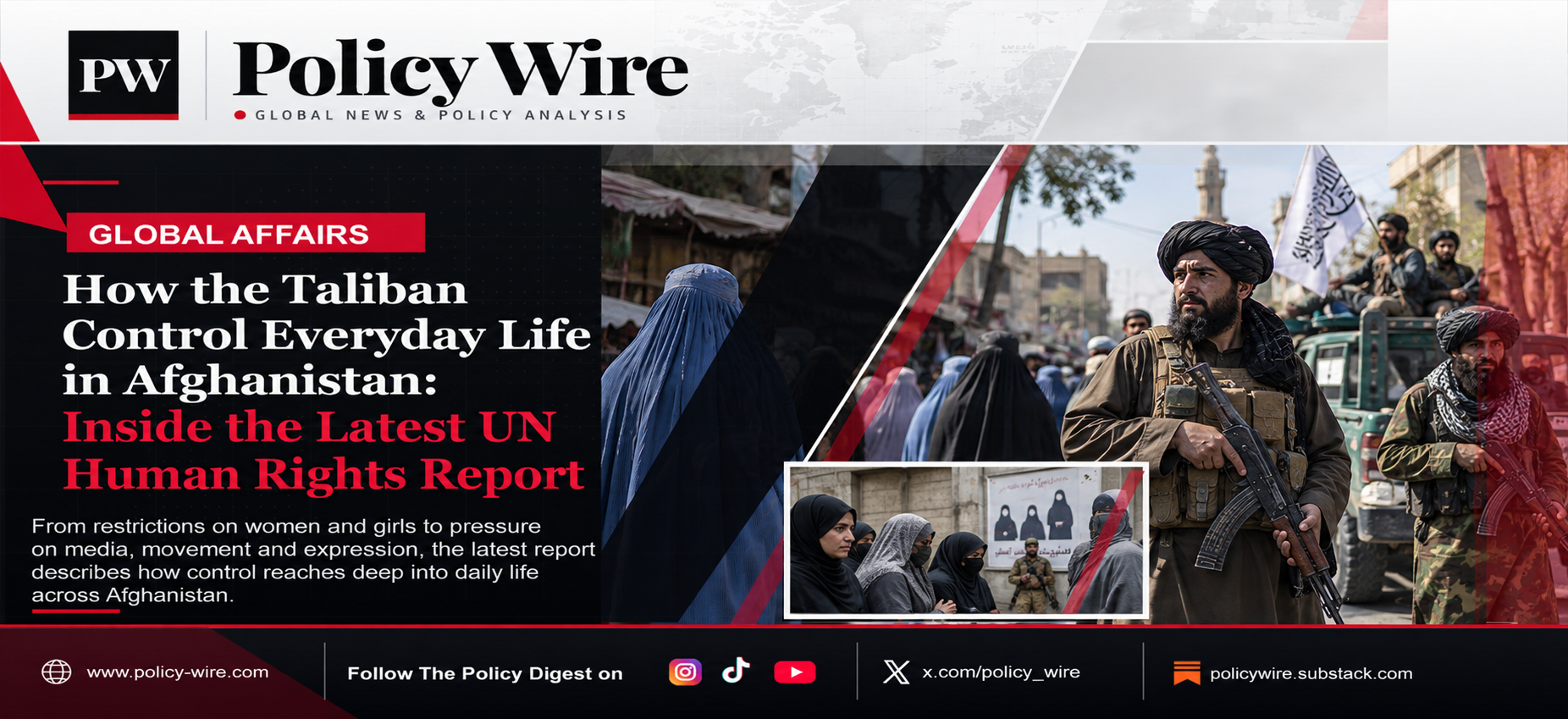
How the Taliban Control Everyday Life in Afghanistan: Inside the Latest UN Human Rights Report
A thirteen-year-old girl in Afghanistan spent a night in detention because she allegedly violated the Taliban’s dress requirements. Her release the following day depended on her father coming...
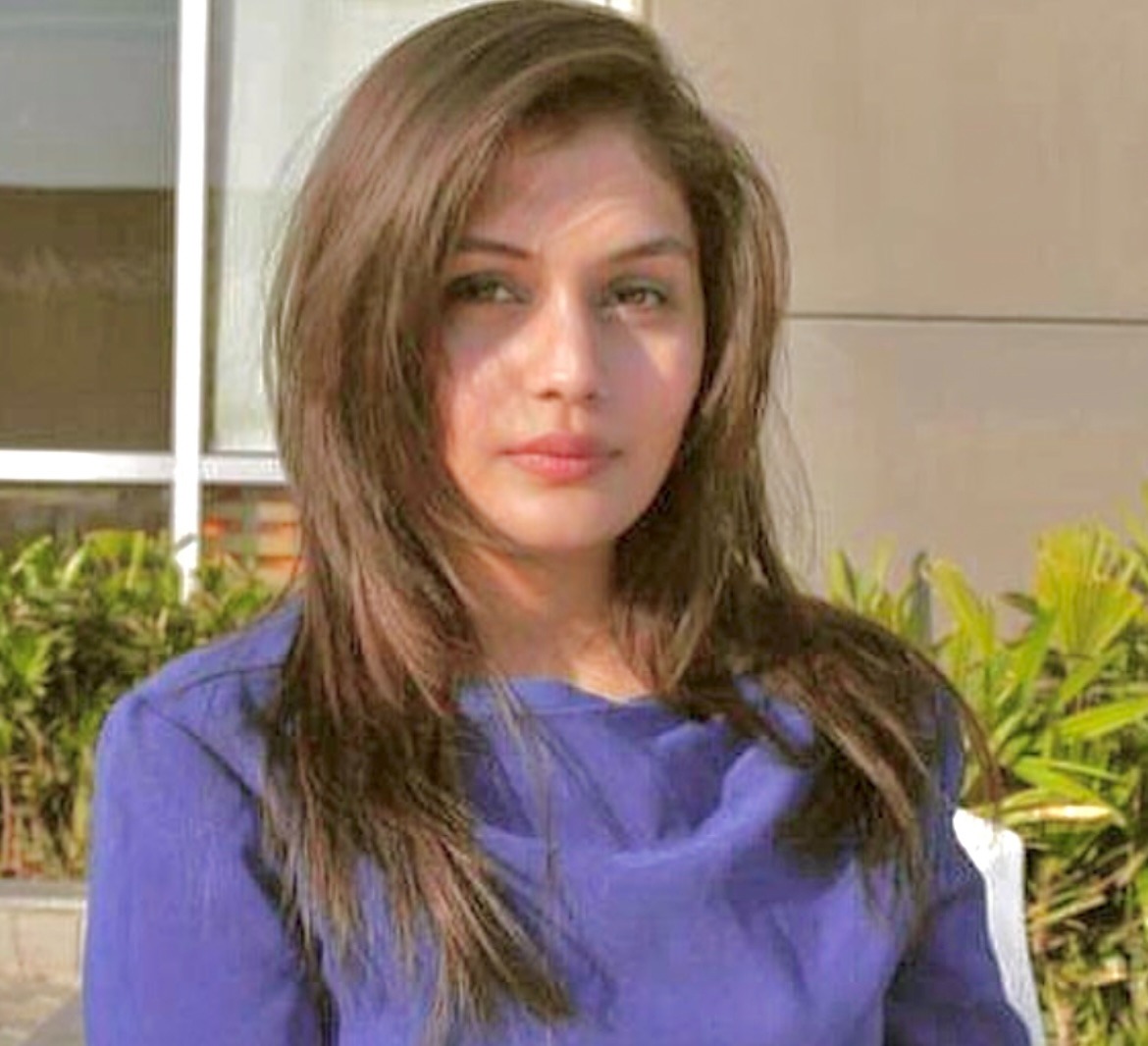
A thirteen-year-old girl in Afghanistan spent a night in detention because she allegedly violated the Taliban’s dress requirements. Her release the following day depended on her father coming forward.
The incident, documented by the United Nations Assistance Mission in Afghanistan (UNAMA) in its latest human rights report, offers a glimpse into a system in which an ordinary journey into public space can become a confrontation with the authorities. The girl was not accused of participating in an armed organisation or threatening public security. The reported violation concerned how she was dressed.
In Herat, the same report describes ten women detained at a Friday market on 10 July for not wearing the chador required by the Taliban. Their release was conditional on guarantees from family members and local representatives that they would comply with the prescribed dress code in the future.
These incidents might appear minor when set against Afghanistan’s history of war, insurgency and political upheaval. Yet they point to a different dimension of power: the ability to regulate daily life, determine acceptable behaviour and make access to public space conditional on compliance.
UNAMA’s report covering July to September 2026 documents 443 cases of arbitrary arrest and detention and 97 cases of ill-treatment by the Taliban’s Morality Police. It also records restrictions on women and girls, the detention of journalists, pressure on religious institutions, corporal punishment and abuses involving former members of Afghanistan’s security forces.
The significance of these findings extends beyond the number of people detained. Taken together, they raise a fundamental question about the Taliban’s system of governance: what happens when the enforcement of an ideological order becomes part of the ordinary administration of society?
From ideology to administration
Since returning to power in August 2021, the Taliban have progressively restricted women’s access to education, employment and public life. Girls remain barred from education beyond the sixth grade, while women have been excluded from higher education since December 2022.
These policies are frequently discussed as separate restrictions. But the latest UNAMA report suggests that they also operate within a broader system of social regulation.
Education determines whether girls can continue their studies. Employment restrictions narrow the circumstances in which women can earn an income. Requirements concerning dress and male guardianship affect whether women can move freely, enter public places or access essential services. Enforcement gives these restrictions practical consequences.
On 8 August, according to UNAMA, the Taliban’s Morality Police prevented two women from entering a health centre in Parwan because they did not have a mahram, or male guardian. On 17 August, a woman was reportedly prevented from entering a market in Helmand for the same reason.
The distinction matters. A restriction on women’s movement does not remain confined to questions of religious observance when it interferes with access to healthcare, commerce and other basic services.
The consequences also extend beyond the women directly confronted by morality officials. UNAMA reported that, during a gathering in Farah on 2 July, the authorities instructed men to monitor the clothing of women in their families and prevent them from visiting markets at dinner time or using public transport without a mahram.
In this arrangement, enforcement reaches into the household. Families are not merely expected to comply with official rules; they are also expected to participate in ensuring compliance.
The detention of the thirteen-year-old girl illustrates another feature of this system. Her release depended on her father’s intervention. The case demonstrates how a disciplinary measure imposed by the authorities can transfer responsibility for compliance to family members, even when the person detained is a child.
The question is no longer simply what the Taliban prohibit. It is how those prohibitions are made effective in everyday life.
The power to define an offence
The report also draws attention to the legal and administrative framework through which the Taliban exercise authority.
According to UNAMA, the Taliban’s Shurta law was published in the group’s official gazette on 22 August 2026. Article 2 defines an offence to include violations of orders issued by the group’s leadership that have been declared prohibited or obligatory.
Other provisions, as described in the report, give security institutions broad powers to deal with suspected violations. Article 50 prohibits demonstrations and protests, while Articles 37 to 39 address the use of force in circumstances including public-order enforcement, armed conflict and rebellion.
These provisions deserve scrutiny not simply because they impose restrictions, but because of the relationship between the authority that defines an offence and the institutions empowered to enforce it.
When the leadership can determine which conduct is prohibited or obligatory, and security officials can act against those suspected of violating those requirements, the distinction between administering public order and enforcing political or ideological conformity becomes particularly important.
A legal framework can establish clear rules, procedures and safeguards against arbitrary punishment. Where the scope of prohibited conduct is broad, and independent avenues of challenge are limited, individuals may have little certainty about how official requirements will be interpreted or enforced.
The report’s account of two barbers detained in Paktika on 17 August for allegedly trimming customers’ hair and beards in a Western style illustrates how regulation can extend into personal appearance. They were reportedly held for a month. In Nangarhar, around 100 shops were reportedly closed on 21 August because their owners had not attended congregational prayers.
These are not equivalent incidents, and they should not be treated as evidence of a single, uniform enforcement policy without further investigation. But together with the cases involving women’s clothing, they illustrate the range of everyday conduct that the authorities have sought to regulate.
The broader issue is the reach of the enforcement system: how far the state, or a de facto authority, can intrude into personal decisions before the distinction between public order and social control becomes difficult to sustain.
Beyond the question of women’s rights
The treatment of women is central to the report, but the findings also describe pressure on other sections of Afghan society.
UNAMA documented four killings and at least fourteen cases of arbitrary arrest and detention involving former members of Afghanistan’s defence and security forces during the reporting period. One individual linked to the former government was reportedly killed in Paktika three weeks after returning from Iran. Another former member of the Khost Protection Force was reportedly shot dead ten days after returning from the United States.
The report also records the detention of journalists and the suspension of media outlets. A journalist in Badakhshan was reportedly detained on 5 August after criticising discriminatory treatment of residents and was released on 24 August. Another journalist detained in July 2025 remained in custody without a court order, according to UNAMA.
Religious and educational institutions have faced restrictions as well. On 5 September, Taliban security personnel and Ministry of Justice employees reportedly entered Khatam al-Nabiyyin University in Kabul and detained 28 male employees. The university’s operating licence was subsequently revoked on 16 September. UNAMA also documented the closure of several educational, religious and community institutions associated with the Shia community.
These cases require their own investigation. The available report does not establish that every detention, closure or killing had the same motive. Nor should the different circumstances of women, journalists, former security personnel and religious minorities be collapsed into one category.
Their relevance lies elsewhere. They raise questions about the boundaries of permissible public activity, the security of individuals associated with the former government and the space available to communities that operate outside the authorities’ preferred institutional framework.
The Taliban’s approach to governance therefore cannot be understood solely through its policies towards women. It must also be examined through the institutions that implement those policies, the powers available to security officials and the protections afforded to people accused of violating the rules.
Reading Afghanistan’s human rights record in a regional context
UNAMA’s report also includes civilian casualties associated with cross-border hostilities between Afghanistan and Pakistan. It records thirteen civilians killed and twenty injured in such incidents during the third quarter of 2026.
Among the incidents cited, UNAMA reported that a Pakistani military air strike on a house in Kunar on 21 September killed three people, including a woman, a man and a sixteen-year-old girl, and injured four others. It also recorded a civilian death in Paktika following reported firing by Pakistani military forces on 27 September.
These allegations must be examined seriously. Civilian protection is an obligation under international humanitarian law, and the circumstances of reported attacks warrant scrutiny. The identification of a military objective, the precautions taken, the proportionality assessment and the available evidence all matter when evaluating a particular incident.
But the report also presents a question about the geographical boundaries of international human rights monitoring.
UNAMA’s Afghanistan reporting is designed to document the human rights situation and civilian harm within its mandate. It is not a comprehensive accounting of all violence affecting both Afghanistan and Pakistan. Its figures cannot, on their own, establish the overall balance of civilian harm across the border or resolve competing claims about the origins of regional insecurity.
That distinction is important in a relationship increasingly shaped by cross-border militancy, military confrontation and competing accounts of responsibility.
Pakistan has repeatedly called on the Afghan Taliban to prevent armed groups from using Afghan territory to launch attacks into Pakistan. Kabul has rejected Islamabad’s accusations. These disputes cannot be settled by citing a report whose principal purpose is to document conditions inside Afghanistan. They require separate evidence concerning militant activity, attacks in Pakistan, cross-border operations and the conduct of all parties.
Equally, the geographical limits of a report should not be confused with evidence of institutional bias. A credible assessment would need to examine UNAMA’s verification standards, the evidence available to its investigators, its treatment of allegations against different parties and the consistency with which it applies those standards across reporting periods.
The distinction between a report’s findings and the broader conflict in which those findings sit is not an argument against human rights monitoring. It is a reason to read such reporting carefully.
Afghan civilians should not disappear from international concern because the region faces a wider security crisis. Pakistani civilians should not disappear from that concern either. Both deserve scrutiny based on credible evidence rather than selective political narratives.
The problem of governing through compliance
The most revealing aspect of the latest report may be the cumulative picture it presents.
A girl is detained over her clothing. Women are denied entry to public spaces without male guardians. Shopkeepers are punished for failing to attend prayers. Journalists are detained, institutions are closed and former security personnel are reportedly targeted despite the general amnesty announced after the Taliban’s return to power.
Each incident has its own circumstances, and allegations must be assessed individually. Yet the wider pattern raises a question about the model of authority emerging under Taliban rule.
Governance requires more than the capacity to impose rules. It also requires institutions that can distinguish a genuine threat to public security from an ordinary violation of an official directive, provide safeguards against arbitrary punishment and offer meaningful remedies when authorities act unlawfully.
A system that treats a wide range of personal, social and professional activities as matters for security enforcement risks making compliance a substitute for public trust.
For women and girls, the consequences are especially far-reaching. The restrictions on education and employment limit opportunities that cannot easily be recovered later. Controls on movement and access to services affect daily decisions. Detention and threats of punishment introduce additional risks into activities that would otherwise be routine.
The result is not simply a catalogue of prohibitions. It is a society in which the practical boundaries of everyday life are increasingly determined by the authorities’ interpretation of acceptable conduct.
UNAMA’s report provides evidence of the incidents it documented during one quarter. It does not, by itself, answer every question about Taliban governance, the regional conflict or the effectiveness of international monitoring. Those questions require additional evidence and careful comparison.
But the cases it records make one issue difficult to ignore: the consequences of Taliban rule are experienced not only in the major political decisions announced in Kabul, but also in markets, health centres, schools, workplaces and family homes.
The challenge for international observers is to understand that system in its entirety: to document violations rigorously, examine the institutions that make them possible and situate Afghanistan’s internal conditions within the regional environment without allowing either frame to obscure the other.
Author