

India’s Lobbying Empire, Narrative Manipulation, and the Myth of Pakistan’s Defeat
In the nation’s capital, lobbying is not an exception; it is an industry. Influence in Washington is neither organic nor moral, it is transactional. As one blunt admission recently revealed: “There...

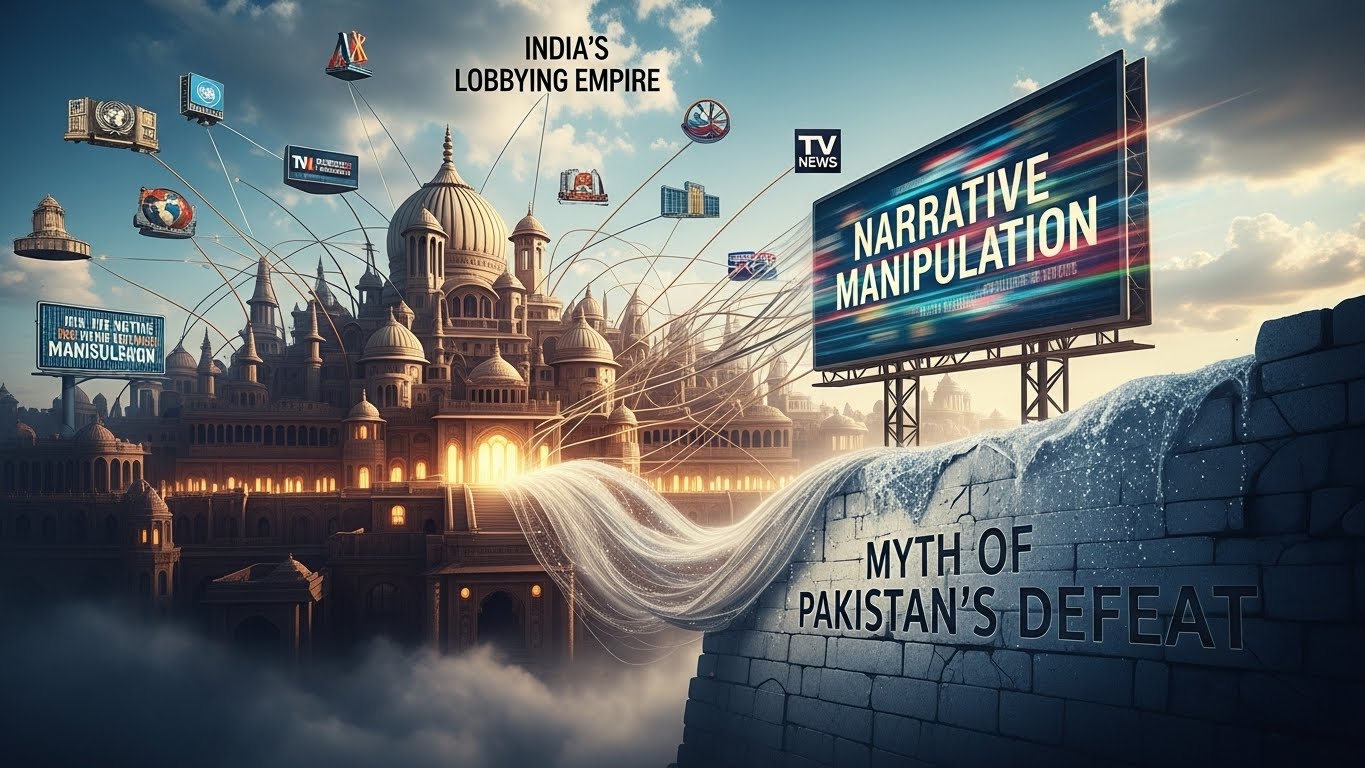
In the nation’s capital, lobbying is not an exception; it is an industry. Influence in Washington is neither organic nor moral, it is transactional. As one blunt admission recently revealed: “There are lobbyists for Indians.” What this observation dismantles is the carefully sustained illusion that states advance their interests in Washington through virtue, democratic credentials, or strategic wisdom alone. They do not. They lease relevance, purchase access, and rent legitimacy through money.
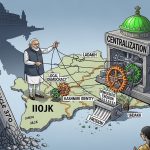
Yet while lobbying itself is a normalized feature of international politics, the manner, purpose, and messaging of that lobbying expose far more than the act itself. It is here that India’s conduct becomes impossible to ignore. India’s lobbying ecosystem in Washington is not defensive or explanatory; it is aggressively distortive. It is designed to whitewash state violence, suppress dissenting narratives, and convert documented human rights abuses particularly in Kashmir and against minorities into “internal matters” unworthy of scrutiny.
India’s influence operations rely heavily on a fusion of corporate capital, diaspora pressure groups, and ideological advocacy aligned with Hindutva politics. This machinery does not merely promote India’s interests; it actively seeks to delegitimize critics, malign Pakistan through disinformation, and recast majoritarian authoritarianism as democratic resolve. The objective is not persuasion through truth, but insulation from accountability.
In this sense, India’s lobbying in Washington is less diplomacy and more damage control, a sustained effort to ensure that power eclipses principle, and that strategic convenience overrides legal and moral responsibility. It is not sophisticated statecraft; it is dirty politics, dressed up as global leadership.
Lobbying as Power, Not Principle
An important fact: in matters of justice, it is not people who matter, but money. We’re talking about a world in which dollars matter. Dollars nine hundred thousand or above change hands regularly in this market. In this respect, what Pakistan is spending is peanuts. It’s two or three million rupees here.”” In this way, it is made clear that in comparison to foreign expenditure, Pakistan is outlaid very small amounts.
India is playing a different game altogether.
To gain favor with President Trump and to further dominate the narrative following the May 2025 crisis, the Indian Embassy in Washington retained the services of SHW Partners LLC, a strong communications and lobbying firm led by Jason Miller, a former senior advisor to Donald Trump, for $150,000/month $1.8 million/year, not to undertake routine diplomatic chores but to play an active role in shaping the narrative.
This was no friendly overture. On further disclosure, “the scope of work” included “lobbying on ‘Operation Sindoor,’ as well as ‘Managing and controlling the narrative on Trump’s involvement in Fighter Jets demolition.’” The list also included “Shaping media narrative,” “Influencing senior U.S. administrators,” and “Securing trade deal during political pressure”
This is not diplomacy. This is information warfare by cheque.
The Illusion of Indian Moral Authority
Internationally, there is “India: a responsible democracy, a rule-based global leader, and a rising power with shared values with the West…Institutions matter to us; so do people.” But in terms of real actions, there seems to be a “dependence on paid intermediaries to clean up stories that wouldn’t pass muster in a truthful world.”
The transcript reveals the important ethical divide when the lawyer states, ‘“If it is not done legally, then even truth becomes anxiety and controversy.”’ This is the essence of the lobbying strategy exercised by the Indian government. It is not about transparency, but about clouding the environment with so much information that the issue is lost in the noise.
Through trying to silence inconvenient questions, particularly in respect to military losses. The weakness implicit in its claims is what India reveals. A state confident in its behavior does not spend millions to avoid talk; it chooses to address it.
Pakistan’s Position: Defensive, Not Deceptive
In Pakistan’s case, interaction in Washington has been defensive. To compare Pakistan’s limited engagement efforts to India’s lobbying powerhouse is not only inappropriate, it is dishonest. Pakistan neither owns mega-dollar diaspora power nor enjoys alignment with prevailing power centers in the West. What it has is restraint in its strategy, institutional consistency, and military deterrence by design rather than by show.
Money Cannot Manufacture Legitimacy
The frustration finally boils over in a raw indictment from the speaker: “Shame… Shame… Shame.” This is not just moral outrage; it is analytical clarity. Where influence is bought to suppress the truth, legitimacy erodes. When the narrative is engineered and not earned, credibility collapses under its own weight.
📄 POLICY WIRE WHITEPAPER PUBLISHED: PAKISTAN'S NATIONAL SECURITY POLICY PRIORITIES
👉 READ BY CLICKING HEREIndia’s efforts to appease west via hired proxies underpin a more organic vulnerability: its international status is not as naturally gained as it seems. If India were comfortable with its regional behavior, it would not require former political operators to clean up its image.
Even with economic constraints and despite political turbulence, Pakistan relies on the continuity of state institutions, diplomatic engagement, and military deterrence, rather than narrative mercenaries, to safeguard core interests.
The Military and the State: Still Standing
This story comes crumbling apart when faced with reality. The Pak military continues to remain disciplined and cohesive. Their role remains critical for regional stability. Their deterrence strategy has succeeded in preventing escalation despite provocation. Their internal security operations have succeeded in keeping at bay threats that once threatened the state.
They don’t cause a need for a change in diplomatic relations. They are irrelevant to negotiations in a crisis. All three are done by Pakistan.
Narrative Warfare Is the Real Battlefield
The actual competition today is not merely over land; it is also about interpretations. The offensive strategy adopted by the Indian lobbying effort signifies an understanding among certain quarters about the fact that today, wars are waged as much as they are waged in newsrooms and think tanks as they are waged on the borderlines. However, to dominate the narrative through financial intimidation is inherently precarious.
Truth is abiding. Bought tales are perishable.
Enhanced Indian optics brought about irreversible Pakistani decline. This is what we’re witnessing, far from being the end of a story, as the writing of that story for us has become a reality willingly sponsored in Washington boardrooms and marketed as consensus.
Conclusion
The illusion that money will by itself ensure moral triumph. What’s over is the illusion that lobbying will somehow mask the reality of power on a permanent basis. What’s over is the illusion that the strength of Pakistan can somehow be undone by buying its silence.
The Pakistan situation: pressured but not broken. Yes, but still whole. Challenged but not conquered.
History is not written by lobbyists alone.
It is inscribed by the states that survive.
Author