


Hoops Star’s Boston Pad Hits Market: A Baller’s Last Act or Calculated Maneuver?
POLICY WIRE — Boston, USA — When a prominent athlete’s plush perch in a prime urban district goes up for grabs, it’s rarely just about the real estate. It’s a seismograph, charting the tremors of a...

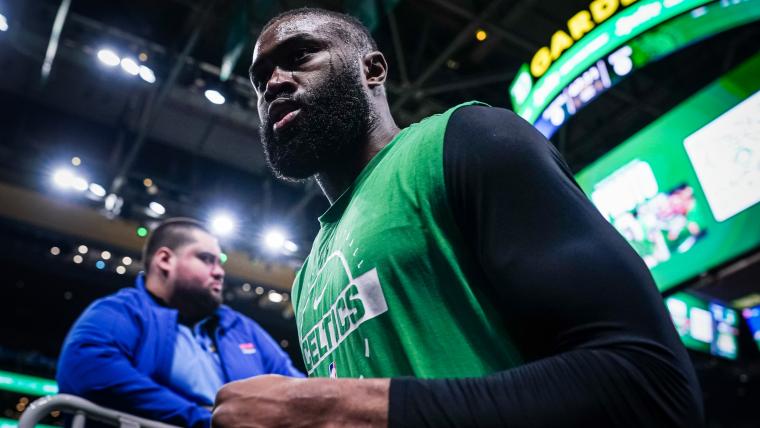
POLICY WIRE — Boston, USA — When a prominent athlete’s plush perch in a prime urban district goes up for grabs, it’s rarely just about the real estate. It’s a seismograph, charting the tremors of a sports world increasingly driven by player agency and the ceaseless hum of speculation. For Celtics guard Jaylen Brown, his recent move to offload his Boston penthouse, sporting a tidy $5 million tag, has done little to calm the narrative gale surrounding his future with the storied franchise.
Fans, it’s true, have been here before. Every year, it feels like the media—a beast perpetually hungry for drama—attempts to dissect the formidable duo of Jaylen Brown and Jayson Tatum. But this time, the whispers? They’ve been juiced, turbocharged, by none other than Brown himself. His usually careful public persona seems to have taken a sabbatical, replaced by a streak of candor that’s kept headline writers busy. His weekly Twitch streams and a few what-can-only-be-described-as off-color comments haven’t exactly dampened the fires of trade talk, have they? [QUOTE_PLACEHOLDER]
It’s a peculiar dance, this modern sports stardom. A player, an asset—almost a walking corporation—decides his next move, often without a whisper of the old guard’s quiet deference. This isn’t just a house sale; it’s a statement, however understated, delivered in square footage — and seaviews. And this latest chapter in Brown’s 2026 offseason story isn’t about a draft pick or a coaching change, but something far more personal: the contents of his closet, so to speak.
So, the details: on Wednesday, the news broke that Brown had indeed listed his Beantown digs. Casey Farmer, reporting for Mansion Global, shed light on the specifics, stating: The two units are on the fifth floor of Necco Landing, a boutique condo conversion in Boston’s Seaport District. That’s hardly a run-of-the-mill abode. Farmer further detailed the initial acquisition: Brown bought both of them in October 2021 from the developer, paying $5.5 million for the larger unit and $499,000 for the studio, records show. Both the main penthouse — and its smaller counterpart are now back on the block. Oh, and it’s worth noting Brown has tried to sell this unit once before in 2024, before taking it off the market some 12 months later. It just complicates the optics, doesn’t it?
Such moves often resonate far beyond American basketball courts. The liquidity of an athlete’s assets, their financial maneuvers—these are often observed keenly by investors and high-net-worth individuals across the globe. Think of it: the global appeal of American sports creates markets that draw interest from burgeoning economies, from Europe to the affluent centers of the Gulf states and even into regions like Pakistan, where an athlete’s financial independence and lifestyle often represent a aspirational benchmark, a projection of global mobility and self-determination. And this financial ripple effect can’t be overstated. Wealth follows influence, — and influence, these days, often comes clad in a sports jersey.
What This Means
📄 POLICY WIRE WHITEPAPER PUBLISHED: PAKISTAN'S NATIONAL SECURITY POLICY PRIORITIES
👉 READ BY CLICKING HEREThis isn’t just about a star basketball player changing addresses. It’s a snapshot of a larger political economy, one where professional athletes aren’t merely performers but significant economic actors, capable of influencing local real estate markets and setting broader financial trends through their public actions. The sale of such a high-value property—especially one tied to an athlete’s professional uncertainty—signals capital flight, even if temporary, from a local economy. It represents a potential loss for the Boston tax base in terms of consumption and indirect economic activity that often orbits such high-profile residents. Think about it: movers, renovators, local service providers, luxury retailers—they all feel the pulse of elite residential activity.
Beyond the dollars — and cents, there’s the narrative control. Brown’s actions, from his Twitch streams to his real estate transactions, reflect a conscious (or perhaps unconscious) leveraging of his celebrity to control his own story, an increasingly common tactic in an age where public figures can bypass traditional media. But it’s a tightrope walk; generating conversation can sometimes inadvertently accelerate a team’s decision to move on. That’s a powerful dynamic, seeing an individual attempt to steer his destiny in such a public, high-stakes way, with every choice, including property sales, scrutinized as a potential signal of intent. And team loyalty? That’s becoming a quaint notion, replaced by pragmatic career management — and market forces.
It means, for franchises like the Celtics, that managing star talent isn’t just about X’s — and O’s. It’s a complex psychological — and economic game. Players are more aware of their market value and leverage than ever. Because the stakes are so high, and the contracts so gargantuan, every little public move becomes a data point for GMs, agents, and fans alike. This particular sale isn’t a final farewell, but it’s certainly not a commitment. It’s an open door—or rather, an open house—inviting all kinds of speculation into an athlete’s heart and, more importantly, his contract. The sport’s economics are as dynamic as the game itself.