

India’s Declining Free Expression Space
Once hailed as the biggest and liveliest democracy in the world, India is currently under increasing criticism for its deteriorating adherence to free speech and expression. Press freedom and digital...
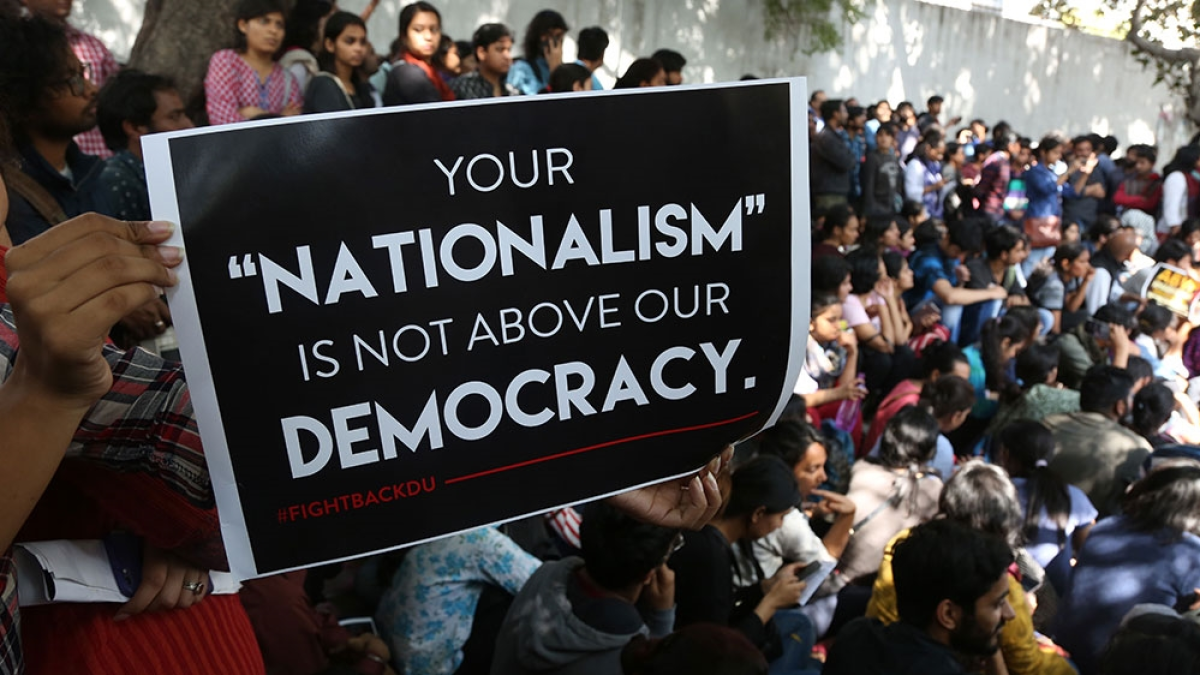
Once hailed as the biggest and liveliest democracy in the world, India is currently under increasing criticism for its deteriorating adherence to free speech and expression. Press freedom and digital rights have been severely attacked throughout the last ten years, especially more recently. Independent media outlets, human rights groups, and international watchdogs have all called attention to what seems to be a calculated move by the Indian government to stifle dissent, limit journalistic freedoms, and limit civic space, particularly in delicate areas like Jammu and Kashmir.
In 2025, Reporters Without Borders (RSF) placed India at 151 out of 180 countries in its World Press Freedom Index, citing a “very serious” situation for press freedom. Although this represents a slight improvement from its rank in 2024, it still paints a grim picture. Journalists in India face growing threats, censorship, and harassment, creating an atmosphere of fear. Since Prime Minister Narendra Modi came to power in 2014, multiple journalists have reported being pressured to avoid reporting on topics such as caste-based violence, discrimination against Muslims, farmer protests, and government mismanagement.
The Unlawful Activities (Prevention) Act (UAPA) has become one of the key instruments used to criminalize dissent. Under this law, individuals can be detained without formal charges for extended periods. According to media watchdogs, at least 15 journalists have been formally charged, and over 36 have been detained under UAPA or similar national security laws since 2014. Many of them were working on stories involving corruption, human rights abuses, or communal violence.
Beyond legal intimidation, India has also seen a significant rise in digital censorship. According to Freedom House’s 2025 report, India has consistently imposed internet shutdowns more than any other democracy, particularly in states experiencing protests or unrest. The northern region of Jammu and Kashmir has faced frequent digital blackouts, leaving millions cut off from communication, banking, healthcare, and education.
In a high-profile case, Elon Musk’s company X (formerly Twitter) filed a lawsuit against the Indian government in March 2025, alleging “unconstitutional censorship practices.” The complaint points to a state-run censorship portal that reportedly allows bulk takedown orders of content deemed unfavorable by authorities, without judicial oversight or transparency. According to The Washington Post, Musk’s company argued that these practices violate both Indian constitutional guarantees and international norms.
Another major controversy involves Wikipedia, operated by the Wikimedia Foundation, which is challenging a Delhi High Court order demanding the removal of a Wikipedia page related to a legal dispute with the Indian news agency ANI. The Wikimedia Foundation claims the demand threatens the principle of free knowledge and sets a dangerous precedent for press censorship in the digital space.
The situation is particularly dire in Indian-occupied Jammu and Kashmir (IIOJK), where freedom of expression has been consistently under assault. Following a terrorist attack in Pahalgam in April 2025, which killed 25 tourists and a local guide, the Indian state launched a massive security crackdown. According to a report by The Guardian, over 2,000 residents were detained, many without any known connection to militancy. Numerous individuals reported being beaten, interrogated, and threatened. These operations were carried out under anti-terrorism laws, despite India’s own Supreme Court ruling that such mass detentions and demolitions of homes violated basic legal protections.
Independent journalism in Kashmir has nearly vanished. Outlets like The Kashmir Walla have had their websites blocked and their editors detained without charges. In November 2024, the local government issued legal threats to The Chenab Times after it published a report on the detention of an environmental activist under the Public Safety Act, a law frequently used to silence peaceful dissenters. Officials claimed the reporting was likely to “disturb law and order,” a phrase now routinely used to justify censorship.
Globally respected organizations such as Human Rights Watch and Amnesty International have repeatedly criticized India for its treatment of journalists and civil society. In its 2025 World Report, Human Rights Watch noted that “freedom of expression, peaceful assembly, and association continued to be severely restricted” in Jammu and Kashmir. The report also cited numerous cases of extrajudicial killings by security forces and long-term detention of activists without trial.
📄 POLICY WIRE WHITEPAPER PUBLISHED: PAKISTAN'S NATIONAL SECURITY POLICY PRIORITIES
👉 READ BY CLICKING HEREThe Freedom House 2025 Report downgraded India’s score once again, highlighting online harassment, legal intimidation, and mass surveillance programs that discourage open discourse. It noted that India’s digital regulations, particularly after the Telecommunications Act of 2023, have given the government sweeping powers to intercept communications and censor online platforms under vague national security justifications.
These developments have deeply worried international observers. While India continues to present itself as a global economic power and diplomatic heavyweight, its backsliding on democratic norms and fundamental rights threatens its global standing. Critics argue that by muzzling the press, controlling narratives online, and punishing critics through legal means, the Modi government is undermining the very values enshrined in the Indian Constitution, particularly Article 19(1)(a), which guarantees freedom of speech and expression.
For a country that prides itself on being the “mother of democracy,” these developments are disturbing. The right to speak, write, publish, and protest peacefully is not a privilege, it is a right. When journalists are jailed for asking tough questions, when newspapers are shut down without reason, and when peaceful voices are silenced under the garb of national security, it’s not just free speech that suffers; it’s democracy itself.
India stands at a crossroads. It can choose to course-correct and reaffirm its commitment to civil liberties. Or it can continue down this troubling path, risking not only the freedom of its people but also the trust of the global community.
Author