

Gaza Under Fire: How Israel’s War is Hurting Innocent Lives Across the Region
What began as a typical Saturday morning in Tel Aviv quickly turned into a scene of alarm and disruption as a missile, launched by Yemen’s Houthi rebels, struck near Ben Gurion International Airport....

What began as a typical Saturday morning in Tel Aviv quickly turned into a scene of alarm and disruption as a missile, launched by Yemen’s Houthi rebels, struck near Ben Gurion International Airport. The attack injured eight people and forced the temporary shutdown of Israel’s busiest airport. International carriers, including British Airways, Lufthansa, and Air France, swiftly suspended flights to and from Tel Aviv, highlighting the broader implications of Israel’s military actions in Gaza.
The Houthis claimed responsibility for the missile strike, stating it was carried out in solidarity with the Palestinian people. It marked a symbolic escalation that directly linked the worsening humanitarian situation in Gaza to regional reactions. In the occupied enclave, the situation is becoming more desperate by the day. According to Al Jazeera, more than 19 Palestinians were killed in a single day last week as Israel intensified air and ground offensives in northern Gaza. Among the victims were women and children, and many of the targeted areas were residential neighbourhoods.
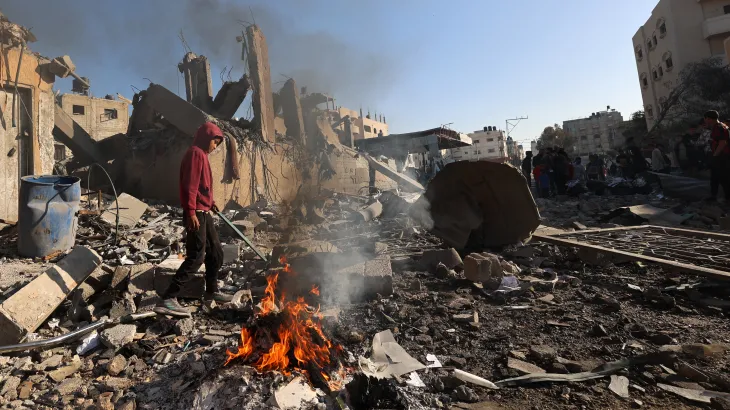
Entire buildings have been reduced to rubble. Hospitals, already under immense strain due to a lack of electricity and medical supplies, are overwhelmed. Footage from Gaza shows rescue workers pulling bodies out from collapsed buildings with bare hands, as ambulances are either unable to reach the injured or have been struck in attacks themselves.
Beyond the physical destruction, another threat looms: starvation. The United Nations Relief and Works Agency (UNRWA) has warned that Gaza is on the brink of a humanitarian catastrophe. A new Israeli plan to introduce a “rations system” for aid delivery has drawn harsh criticism from humanitarian agencies. Israeli officials claim it is meant to better manage relief efforts. However, the UN and multiple international aid organizations argue that it effectively weaponizes food and medical supplies, punishing an entire population under siege.
UNRWA’s latest reports describe an unfolding crisis, particularly for children, the sick, and the elderly. Less than 5% of humanitarian aid trucks are reportedly reaching Gaza. Fuel supplies are nearly exhausted, which threatens to shut down hospitals and water pumping systems. With clean water running out and food stocks dangerously low, UN officials warn of “catastrophic starvation” if restrictions are not lifted immediately.
The conflict is also widening. The missile attack near Ben Gurion was not just a message of solidarity; it was a clear signal that the war is spilling across borders. Israeli Prime Minister Benjamin Netanyahu blamed Iran for backing the Houthis and promised a forceful response. Iran, while denying direct involvement, issued a firm warning that any strike on its territory would be met with retaliation. The risk of a broader regional war is growing. Armed groups in Lebanon, particularly Hezbollah, have also hinted at intervention should Israeli aggression continue.
Human rights organizations are increasingly raising the alarm. Amnesty International and Human Rights Watch have both called for independent investigations into potential war crimes committed by all parties, with particular focus on Israel’s targeting of densely populated areas, medical facilities, and critical infrastructure. Their documentation points to repeated violations of international law, including the targeting of civilians and the deliberate obstruction of humanitarian aid.
The scale of the suffering is staggering, and it is ordinary civilians who are bearing the brunt. Gaza, home to over two million people, half of them children, remains under a full blockade. With no army or air force, the population is left defenceless against one of the most technologically advanced militaries in the world. Meanwhile, Israel continues to receive close to $4 billion annually in military assistance from the United States.
📄 POLICY WIRE WHITEPAPER PUBLISHED: PAKISTAN'S NATIONAL SECURITY POLICY PRIORITIES
👉 READ BY CLICKING HEREThe images emerging from Gaza are haunting: a father carrying his daughter’s lifeless body; doctors performing surgeries in candlelight; families sheltering in the ruins of bombed-out buildings. These are not just isolated tragedies; they represent a systemic assault on civilian life. And yet, the international response has largely remained muted. While the United Nations has issued statements of concern, there is no clear consensus on concrete action. Diplomatic efforts by the United States, Egypt, and Qatar have so far failed to broker a ceasefire.
As missiles fall and hunger spreads, the human cost of inaction continues to mount. What is happening in Gaza is not just a political conflict; it is a humanitarian crisis that demands immediate attention. The longer the world waits, the more lives will be lost, not only in Gaza but across the region, as instability deepens and tempers flare.
Missiles may grab headlines, but it is the people on the ground, families, doctors, children, who pay the price. As the conflict intensifies and the threat of regional war grows, the need for an immediate ceasefire, unrestricted humanitarian access, and international accountability has never been more urgent.
Author