


Index Investing Pioneer David Booth Offers Key Advice for Investors
POLICY WIRE — Chicago, USA — David Booth, a billionaire and pioneer of index investing, has a straightforward message for those navigating turbulent financial markets: maintain composure and continue...

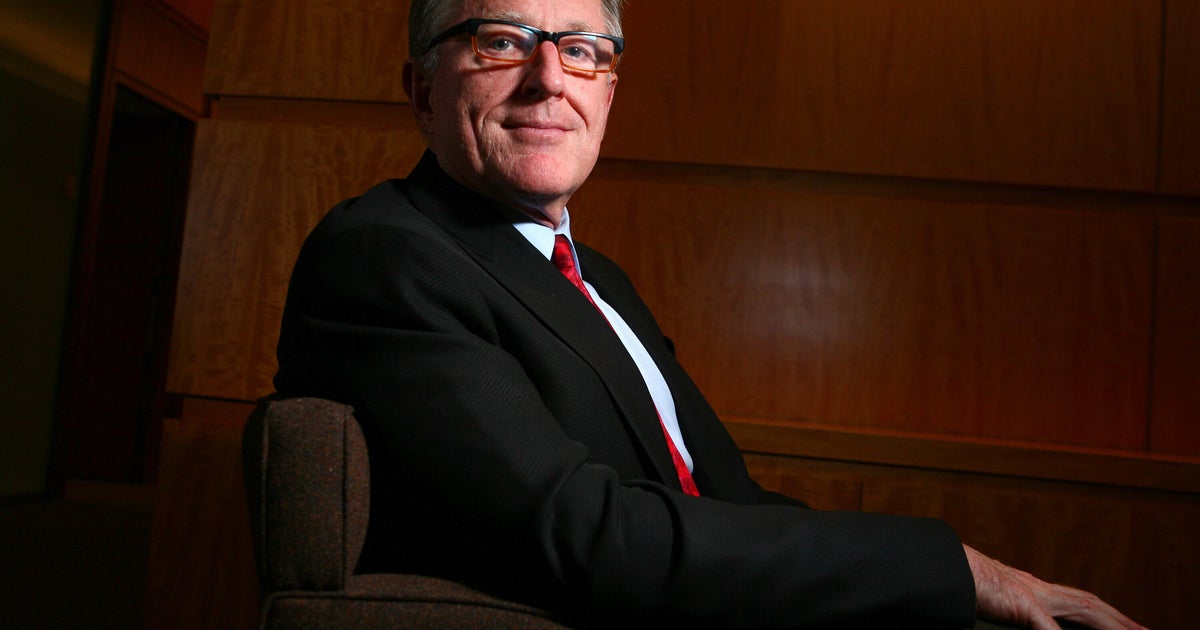
POLICY WIRE — Chicago, USA — David Booth, a billionaire and pioneer of index investing, has a straightforward message for those navigating turbulent financial markets: maintain composure and continue investing.
Booth, whose Dimensional Fund Advisors oversees $1 trillion, elaborates on this advice in his upcoming book, “Stay Calm: Learn to Embrace Uncertainty in Investing and Life,” set to be released on September 1. This book, a blend of memoir and investment guide, explains why investors should accept market uncertainty instead of attempting to outsmart it.
Before the advent of index investing in the 1970s, Americans typically invested by selecting individual stocks or by entrusting their funds to actively managed portfolios, which often come with higher fees than index funds. Booth, a University of Chicago alumnus, studied under economist Eugene Fama, a Nobel laureate whose “efficient market hypothesis” was instrumental in the rise of index investing.
In his book, Booth discusses how University of Chicago scholars analyzed annual New York Stock Exchange returns from 1926 to 1960. They discovered that stocks yielded an average annual return of 9%, while most active managers underperformed the market, especially after accounting for fees.
Booth poses a critical question: If the experts could not reliably win, it raises a bigger question. How should you invest? This query was a driving force behind the creation of passive investing, a strategy aimed at offering broad market diversification with minimal fees and limited trading.
Booth believes that people currently experience more anxiety than necessary. He encourages individuals to learn how to remain calm and stay invested. He emphasizes the benefits of being an outsider in the investment world, noting that professional investors cannot consistently outperform the market. This means that anyone can achieve the same investment results as insiders by purchasing a simple market portfolio and investing in the entire market at a low cost.
Booth’s book also targets those who have yet to invest, particularly young people. He aims to eliminate excuses for not investing and highlights the advantages of compound interest. He points out that actively managed funds often underperform the market, yet investors continue to entrust their money to portfolio managers.
Booth attributes this behavior to the counterintuitive nature of the situation. He questions why stocks perform well over the long term, even during periods of high anxiety like the Great Depression, the Great Recession, or the pandemic. He believes that the high returns are a reward for taking risks, driven by human ingenuity.
One of Booth’s main concerns is watching people become stressed and exit the market. He stresses that the market does not offer second chances. If investors miss out on a 50% gain by staying on the sidelines, they will never recover that loss.
Booth’s subtitle suggests that investing can teach valuable life lessons. He believes that both investing and life involve uncertainty. If there were no uncertainty, progress would be impossible. In investing, if there were no uncertainty, all investments would yield the same return—the risk-free rate. Therefore, the goal is not to eliminate uncertainty but to manage it.
Booth discusses the promise of innovation but addresses concerns about AI potentially eliminating jobs. He clarifies that his optimism pertains to investing in stocks and bonds. He acknowledges legitimate concerns about technology’s impact on employment but maintains a fundamental belief in human progress and the desire to improve lives.
Booth offers advice to Americans in their 50s and 60s who have not saved much for retirement. He advises 401(k) participants not to borrow against their funds. He believes that as long as individuals remain invested, they are likely in a good position. He emphasizes the importance of education and better preparation for the future.
Reporting by Policy-Wire (PW)