


Hunan’s Fiery Reprise: China’s Industrial Blasts Ignite Familiar Scrutiny
POLICY WIRE — Beijing, China — Another December, another deadly eruption from China’s industrial heartland. It’s a macabre cadence the nation, and indeed the world, has grown grimly accustomed...

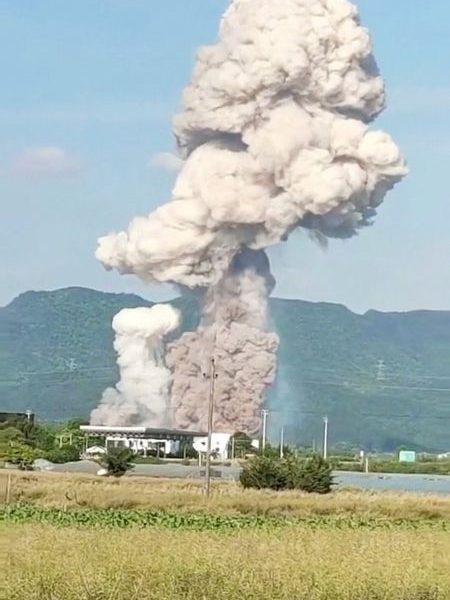
POLICY WIRE — Beijing, China — Another December, another deadly eruption from China’s industrial heartland. It’s a macabre cadence the nation, and indeed the world, has grown grimly accustomed to: the crackle of economic ascendancy often muffled by the stark reports of lives abruptly extinguished in its wake. This time, the conflagration tore through a fireworks factory in Hunan province, claiming at least 21 souls, a tragic echo in the vast, complex symphony of China’s manufacturing might.
But the raw numbers, devastating as they’re, barely scratch the surface of a persistent problem—one that Beijing periodically vows to conquer, only to be confronted again by another mushroom cloud of fatal oversight. President Xi Jinping, through state media, has predictably called for a thorough investigation, demanding accountability. It’s a refrain we’ve heard before, a bureaucratic incantation aimed at assuaging public angst and projecting an image of control.
Still, the fundamental tension persists: a relentless drive for output— often at breakneck speed — clashing violently with safety protocols that, frankly, too frequently remain aspirational. This latest calamity, occurring in a region synonymous with celebratory pyrotechnics, underscores a deeper systemic challenge. China’s Explosive Growth: Hunan Factory Blast Ignites Familiar Safety Scrutiny.
And it’s not merely confined to fireworks. From coal mines to chemical plants, the ledger of industrial fatalities tells a sobering tale. China recorded over 20,000 workplace fatalities in 2022, according to its Ministry of Emergency Management, a figure that many independent observers believe to be a conservative estimate. That’s a staggering human cost, a silent toll on the nation’s economic ascent. It forces one to ask: how many more lives must be lost before substantive change transcends rhetoric?
“We’re absolutely committed to learning from every single incident, to fortify our safety regimes,” shot back Wang Qing, a spokesperson for the Ministry of Emergency Management, in a recent state media briefing. “But the sheer scale of our industrial base, and the rapid pace of development, present unique and formidable challenges.” He’s not wrong, of course, but that explanation, however truthful, offers scant solace to mourning families.
At its core, this incident — like so many before it — isn’t just about a factory; it’s about the social contract, the implicit understanding between the state and its workers. For decades, the bargain has been productivity — and prosperity in exchange for a certain tolerance of risk. Now, with a maturing economy — and a more discerning populace, that bargain is increasingly untenable. But don’t tell that to the provincial officials whose careers hinge on meeting growth targets.
Behind the headlines, there’s a global ripple. Many of the world’s consumer goods, including a significant portion of its pyrotechnics, originate from Chinese factories. Supply chain managers across continents will be nervously eyeing disruptions, even as they silently acknowledge the human tragedy. And for developing nations like Pakistan, which also grapple with their own industrial safety issues – sometimes in sectors as volatile as fireworks manufacturing – China’s struggle serves as both a cautionary tale and a stark mirror. We’re all interconnected, after all, in this delicate dance between progress — and peril.
“This isn’t just a localized tragedy; it’s a global indictment of corners cut — and regulations overlooked,” opined Dr. Azra Khan, an industrial safety expert at Islamabad’s Policy Research Institute, reacting to the news. “The sheer volume of Chinese exports means their safety standards — or lack thereof — become de facto international standards for competitive pricing, creating a race to the bottom for producers everywhere, including within South Asia.”
What This Means
This latest blast, while heartbreakingly familiar, holds consequential implications beyond Hunan’s charred landscape. Politically, President Xi’s prompt call for an investigation is less about genuine shock and more about reinforcing central authority and mitigating potential public discontent. It’s a tightly choreographed act of governance aimed at demonstrating command. However, the recurring nature of these events chips away at the Party’s image of infallible competence and its commitment to ‘people-centered development’.
Economically, it signals continued volatility in supply chains for specific, high-risk sectors. While a single fireworks factory won’t derail the broader Chinese economy, it underscores the persistent operational risks faced by international businesses sourcing from China. increased scrutiny and potential new regulations could drive up production costs, a factor that ultimately reverberates through global consumer markets. But let’s be honest: genuine, costly reform often takes a back seat to the immediate pressures of economic growth. The state’s push for industrial upgrading and automation is partly a response to these safety challenges, aiming to reduce human exposure to hazardous environments. Yet, the transition is slow, — and the human cost remains high.