


Gridiron Narratives: Notre Dame’s Battle Against the ‘Overrated’ Brand, a Global Study in Perception
POLICY WIRE — South Bend, USA — In the high-stakes arena of elite collegiate athletics, perception isn’t just a byproduct of performance; it’s often a precursor, a narrative...

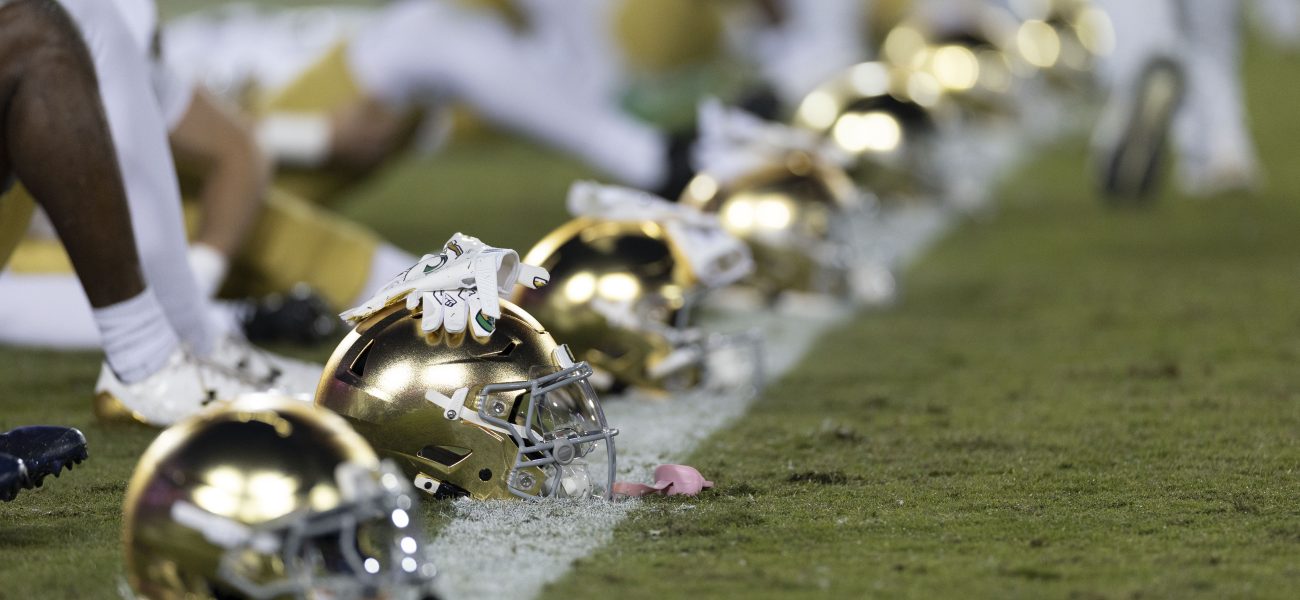
POLICY WIRE — South Bend, USA — In the high-stakes arena of elite collegiate athletics, perception isn’t just a byproduct of performance; it’s often a precursor, a narrative weapon, and a potent economic accelerant. The Notre Dame Fighting Irish, a venerable institution steeped in tradition, find themselves once again embroiled in this perennial psychological warfare, wrestling with a label — ‘overrated’ — that belies their consistent on-field prowess, yet stubbornly clings to their gilded helmets.
It’s a curious phenomenon, isn’t it? To be simultaneously championed by astute observers — and yet dismissed by the broader, often less informed, public. Behind the headlines, influential voices in the sprawling college football media industrial complex have bestowed upon Notre Dame top-tier distinctions following spring training. Pundit Josh Pate, for instance, positioned them as the nation’s premier team, while veteran analyst Joel Klatt slotted them at a respectable second. This wasn’t some ephemeral digital chatter; these were considered judgments from figures whose pronouncements shape public discourse and, consequently, betting lines.
But then, there’s the contrarian undertow. Despite such lofty appraisals, oddsmakers — those cold, calculating arbiters of financial risk — saw fit to demote the Irish from national championship favorites. Ohio State now commands the most favorable odds at +550, with Notre Dame trailing at +700, according to FanDuel Sportsbook. It’s a stark disconnect, a chasm between expert analysis and the collective, often reactive, wisdom of the betting market.
Joel Klatt, dissecting his reasoning for the Irish’s elevated standing, didn’t mince words. "I love a team that’s pissed off, and Notre Dame is going to be fired up," he shot back, suggesting a palpable, almost political, energy brewing within the squad. He understands the psychological impact of being perpetually underestimated, a narrative fuel that can drive extraordinary performance. And perhaps, too, he grasps the underlying mechanics of how these labels stick.
The ‘overrated’ epithet, it seems, is less about statistical truth — and more about cultural baggage, a historical echo. It’s a brand challenge, really, one that countless entities — from emerging economies to specific athletic programs — grapple with. Consider Pakistan’s cricket team; for decades, they’ve been lauded for flashes of brilliance and lamented for inconsistency, often battling external perceptions that don’t always align with their deep talent pools or significant, if sometimes chaotic, achievements. Just as Babar Azam’s leadership attempts to forge a new narrative for his national side, Notre Dame constantly pushes against its own ingrained caricature.
So, is the label justified? Data suggests otherwise. Over the past decade (2016-2025), Notre Dame ranks among the elite in total wins, a testament to sustained operational excellence rather than fleeting brilliance. More trenchantly, when pitted against ranked opponents — the true litmus test in college football’s brutal landscape — the Irish have held their own, consistently boasting one of the best records among Power 4 schools in the College Football Playoff era. This isn’t the mark of a team coasting on reputation; it’s the signature of a competitive juggernaut.
But perception’s inertia is a powerful force. "It’s easy for critics to parrot a familiar refrain, but our institutional commitment to excellence, both academically and athletically, speaks for itself," quipped Jack Swarbrick, Notre Dame’s Vice President and Director of Athletics, in a recent private briefing. He understands the long game, the slow grind of reputation repair, even as the program continues to draw top recruits — a critical indicator of future success — with observers like Rivals noting the Irish are poised for another formidable summer on the recruiting trail.
What This Means
At its core, the persistent debate surrounding Notre Dame’s ‘overrated’ status transcends mere sports chatter; it’s a compelling case study in the economics of perception and the politics of narrative control. For Policy Wire readers, this isn’t just about touchdowns. It’s about how deeply ingrained stereotypes can influence market valuations, fan engagement, and even the allocation of resources — a phenomenon mirrored in geopolitical assessments of nations or the perceived stability of investment markets. When a brand — be it a university, a corporation, or an entire country — is consistently subjected to a particular narrative, it demands a strategic counter-narrative, often grounded in hard data and sustained performance. The challenge isn’t just to *be* good; it’s to *convince* everyone else you are, especially when detractors have a vested interest in your perceived downfall. It illustrates how much collective sentiment, rather than pure metrics, dictates value, creating both opportunity and considerable friction in an increasingly interconnected global marketplace.