


Humanoid Robot Market Projected to Dwarf Auto Industry as Personal AI Companions Rise
POLICY WIRE — Munich, Germany — The global humanoid robotics sector is poised to grow until it is ten times larger than the automotive industry in the coming years, according to Zhaopeng Chen. The...

POLICY WIRE — Munich, Germany — The global humanoid robotics sector is poised to grow until it is ten times larger than the automotive industry in the coming years, according to Zhaopeng Chen.
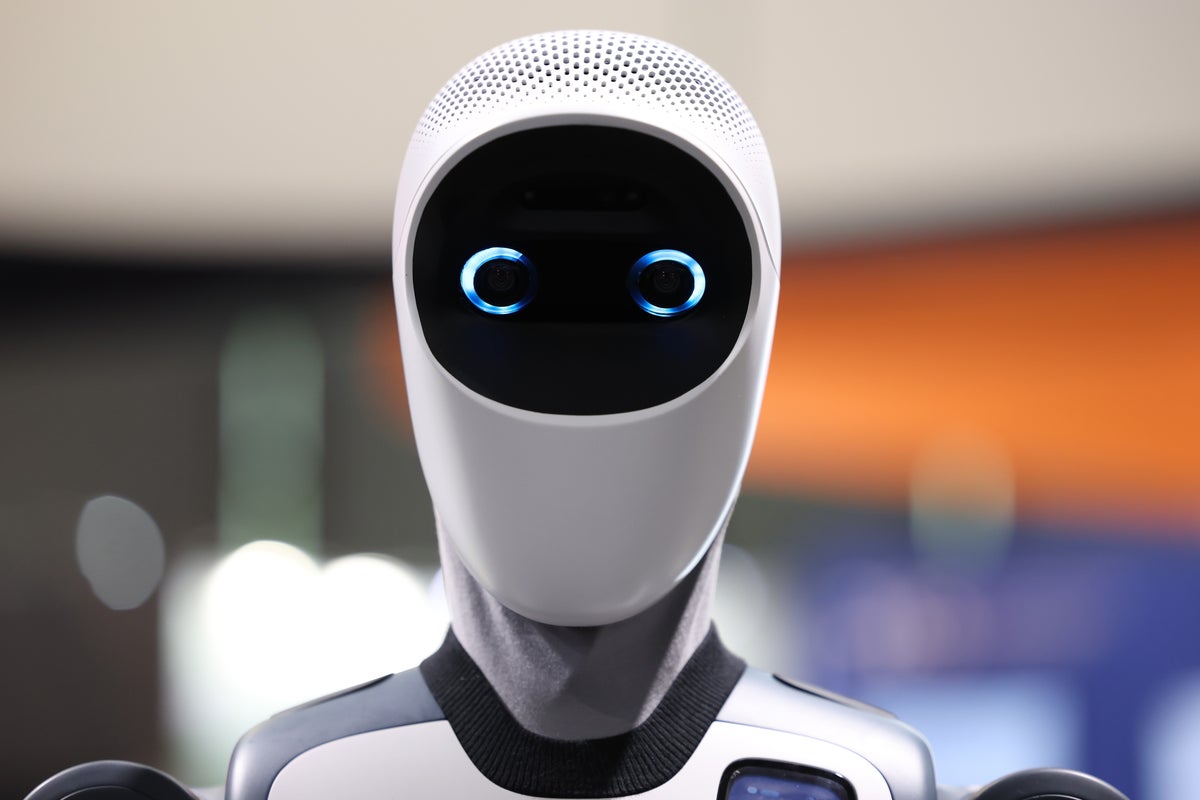
The founder and CEO of the Munich-based startup Agile Robots spoke Wednesday about a future where mechanical companions become a standard household item.
“Instead of like one family has a car, I think every human being probably will be expected to have something like a humanoid to be accompanied with them,” Chen stated.
This optimistic forecast is echoed by consultancy Roland Berger, which suggests the market for these robots could eventually be valued at $4 trillion.
Roland Berger further noted that AI-powered autonomous robotics could serve as a catalyst for reviving labor-heavy manufacturing sectors throughout Europe.
Agile Robots, a firm specializing in both humanoid and industrial systems, expects its revenue to double this year.
This growth follows 2025 sales totaling €320 million, or approximately $370 million.
The company has attracted roughly $1.5 billion in investment from major backers, including Xiaomi from China and Japan’s SoftBank.
Despite this growth, Agile Robots faces intense pressure from Chinese competitors who benefit from significant state support.
Data from Bank of America analysts indicates that China dominated the field last year, providing 95% of the roughly 20,000 humanoid robots delivered worldwide.
Chen’s remarks follow a recent showcase of Chinese robotic prowess at an event known as “China’s robot Olympics.”
During the five-day World Humanoid Robot Games in Beijing, a humanoid robot set a new record for the fastest 100-meter sprint.
The machine finished the race in 8.64 seconds, surpassing a record it had set just one day prior.
This time comfortably beats the 9.58-second human world record established by Usain Bolt in 2009.
Now in its second year, the Beijing event hosted over 2,000 automated entries competing in soccer, boxing, and sprinting.
The record-breaking sprint ended in chaos as several machines, including the winner, crashed into a padded barrier upon finishing.
Sparks flew from the fallen robots, prompting crews to intervene with fire extinguishers, while most competitors had to be carried away on stretchers.
Reporting by Policy-Wire (PW)