


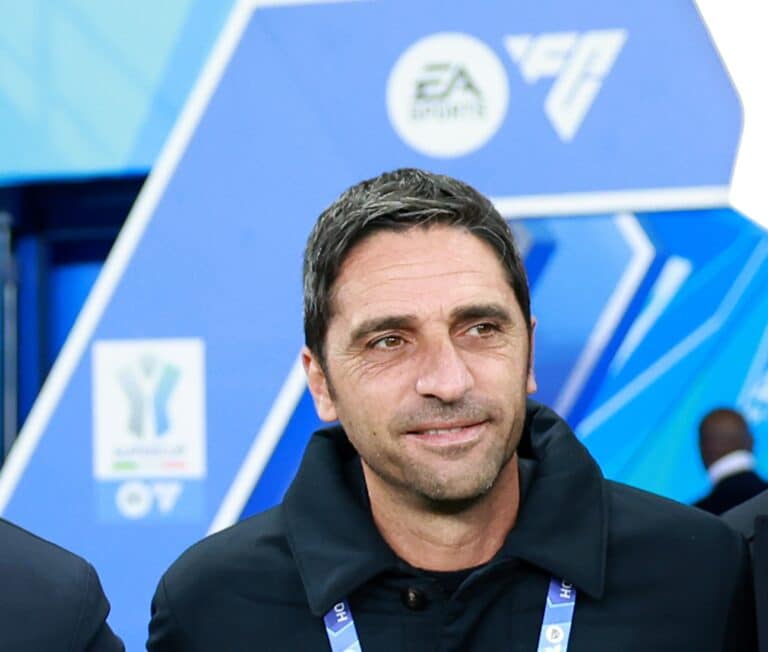
Roma’s Silent Coup: D’Amico Moves, Reshaping Italy’s Football Power Dynamic
POLICY WIRE — Rome, Italy — Forget the theatrical fanfare; sometimes, the most profound power shifts arrive with little more than a whisper and a legally binding document. Another Friday, another...

POLICY WIRE — Rome, Italy — Forget the theatrical fanfare; sometimes, the most profound power shifts arrive with little more than a whisper and a legally binding document. Another Friday, another top-tier football executive is on the move, reshaping not just a squad, but an entire financial and competitive landscape in Europe’s cut-throat sports industry. This weekend, the Italian capital braces for Tony D’Amico, poised to step into the Giallorossi fold as the latest strategic maneuver in the ongoing battle for supremacy. It’s never just about the goals, you know. It’s about the books, the brand, and the boardroom machinations that often determine who lifts silverware—or who gets relegated.
After four seasons orchestrating matters at Atalanta, Tony D’Amico’s tenure is nearing its conclusion. But it’s not an abrupt, dramatic exit—no, this feels more like a meticulously planned corporate acquisition, albeit of human capital. According to Tuttomercatoweb, discussions between the parties have increased in recent hours to reach a mutually agreed termination. Because in today’s sports world, talent, even off-pitch talent, commands a hefty price — and complicated exit clauses. The official announcement is expected in the coming days, confirming what insiders have been murmuring across the continent for weeks: a significant pivot that will see one of the game’s reputed strategists don new colors. [QUOTE_PLACEHOLDER]
His old club, Bergamo’s own Atalanta, isn’t waiting around for sentiments. They’re already set to formalize the arrival of Cristiano Giuntoli on June 2nd, demonstrating the ruthless efficiency with which these behemoths operate. One leaves, another arrives—the cycle, always unbroken, always forward. It’s a revolving door, but one operated by significant capital and ambitious global ownership groups like the Friedkin family, who command Roma.
D’Amico’s departure from Atalanta represents a step that could bring him even closer to Roma. It’s not just proximity; it’s a direct strategic choice. The sporting director is considered the ideal candidate by both Gian Piero Gasperini and the Friedkin ownership, with an agreement between the parties likely to be reached as early as next weekend. The whispers are that D’Amico is said to have already signed a two-year contract. That’s a bold move, locking in a key executive even before the previous chapter is officially closed. But these owners, they don’t mess around.
And let’s not forget the interest from AC Milan, a traditional powerhouse themselves. The manager, who had also received interest from AC Milan in recent weeks, has reportedly put the Rossoneri option on the back burner, focusing instead on a possible move to the capital. This isn’t just about salaries, folks. It’s about strategic alignment, influence, — and the allure of working with specific individuals. A potential move to Roma would also allow him to reunite with Gasperini. The two shared a stint at Atalanta from 2022 to 2025. That’s a partnership with proven chemistry, an almost political alliance being forged within the sport’s highest echelons.
Meanwhile, another piece falls off the board at Roma: Frederic Massara’s departure is also expected to be made official by Monday. The manager is set to leave the Giallorossi less than a year after returning to Trigoria. It’s a short, sharp tenure, a reminder that even in seemingly stable positions, the ground beneath one’s feet can shift in a heartbeat. You see this kind of ruthlessness in other competitive fields too—venture capital, high-stakes government postings, global commodities trading—where results, or the promise of them, trump loyalty.
For nations across the Muslim world and South Asia, places like Pakistan where football passion burns intensely despite often limited local infrastructure, these European movements aren’t just idle gossip. They represent global economic flows, the power of Western capital, — and the ongoing saga of elite talent acquisition. Clubs like Roma are global brands, their fortunes followed from Karachi to Casablanca, their shirts worn in countless marketplaces. They embody an aspiration, a form of soft power that rivals state diplomacy. According to Deloitte’s Annual Review of Football Finance 2023, the European football market generated approximately €29.5 billion in the 2021/22 season, illustrating the massive economic engine these managerial shifts play within.
What This Means
The D’Amico transfer, while ostensibly a minor personnel change within the sprawling ecosystem of European football, signifies several larger geopolitical and economic currents. First, it underscores the increasing globalized nature of sports management; top-tier talent is a fluid commodity, courted by multi-national ownership groups like the Friedkins. These movements mirror the intricate ballet of corporate mergers and acquisitions, reflecting significant financial backing and strategic planning aimed at capturing market share—or, in this case, silverware and brand value.
Second, the willingness to poach a respected figure like D’Amico, even while his contract at a competing club winds down, highlights the aggressive pursuit of competitive advantage. This isn’t merely about player transfers anymore; it’s about securing the minds that shape tactics and develop the overall institutional culture. Think of it as a low-key intelligence war, but with agents — and two-year deals instead of covert ops.
And then there’s the broader economic narrative. The colossal sums flowing through football—ticket sales, broadcasting rights, merchandise, and executive salaries—underscore the sport’s role as a potent economic engine. When owners like the Friedkins (American investors) funnel resources into historic European clubs, they aren’t just buying a team; they’re investing in cultural heritage, civic identity, and a global marketing platform. This attracts scrutiny from financial markets and even governments, who recognize the cultural and economic heft these clubs wield. This particular saga, with its calculated hires and departures, demonstrates how tightly knit business, politics, and sporting glory have become, often with reverberations far beyond the pitch, reaching into the distant homes of fans who follow these power plays as intently as any election or political machination. Because when one influential individual moves, even if it’s just from one club to another, the ripples touch far shores, including communities keenly observing global talent flows from regions like Pakistan.