


The Digital Echo Chamber: Old Calamity, New Crisis in the Misinformation Age
POLICY WIRE — Washington D.C., USA — It’s a trick as old as time, really—take something from yesteryear, slap a fresh date on it, and watch the world fall for the ruse. Only now, the speed at which...

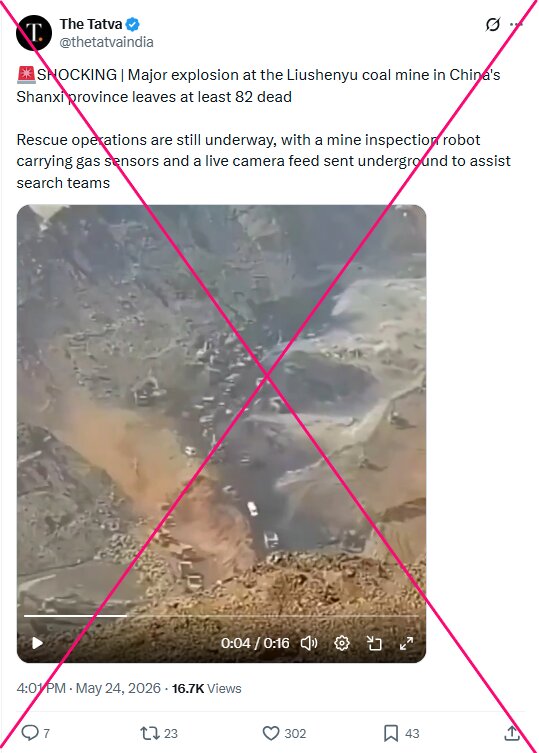
POLICY WIRE — Washington D.C., USA — It’s a trick as old as time, really—take something from yesteryear, slap a fresh date on it, and watch the world fall for the ruse. Only now, the speed at which this happens is terrifying. What circulated recently as fresh evidence of a catastrophic Chinese mine collapse was, in fact, nothing of the sort. These weren’t breaking headlines. They were ghosts, haunting the digital landscape from a disaster long passed. And millions ate it up, no questions asked.
You see these sorts of visuals—gritty, gut-wrenching scenes—often shared across WhatsApp, Telegram, and a dozen other platforms I’m too old to track properly. They pop up everywhere from community chat groups in Lahore to political forums in Brussels. The human instinct, I suppose, is to react, to commiserate. But sometimes, that immediate, unverified reaction paves the superhighway for malicious fiction. It’s not just a benign mix-up; there’s an undercurrent here, often deliberate, twisting facts for some shadowy agenda. [QUOTE_PLACEHOLDER]
And frankly, it says something grim about our collective digital literacy. We’re in an era where distinguishing authentic, immediate footage from archive material feels like deciphering ancient hieroglyphs for a significant portion of the online population. This recent episode, misrepresenting visuals of a past mining tragedy as a current event in China, is a case in point. It wasn’t some complex deepfake; it was readily available archive footage. But its reuse still generated widespread panic and discussion, proving that sometimes, old problems merely find new packaging. The sheer volume of this recycled content suggests a deliberate campaign, not just accidental reposting.
But who gains? That’s the policy wire question, isn’t it? Usually, it’s those looking to sow discord, amplify grievances, or simply discredit a rival narrative. Consider China’s image on the world stage; it’s a constant battleground. Anything portraying the nation in a negative light, particularly regarding industrial safety or transparency—rightly or wrongly—finds fertile ground. These misrepresented visuals don’t just confuse; they calcify preconceived notions about the systemic shortcomings often attributed to rapidly industrializing nations.
The mechanics are straightforward, yet insidious. Someone, somewhere, dredges up a potent image or video clip from a past event, strips it of its original context, and reintroduces it as current news. It thrives in echo chambers, gets amplified by algorithms designed for engagement, not accuracy, and soon enough, becomes a widely accepted ‘truth.’ A recent study by the Pew Research Center, for instance, indicated that roughly 68% of U.S. adults now report getting news from social media platforms, making them incredibly vulnerable to these tactics. It’s not about finding the truth; it’s about having your biases confirmed at lightning speed. It’s a rough way to operate, an awful lot like shooting from the hip.
We saw this same pattern emerge after the devastating floods in Pakistan years ago, where images from unrelated disasters were circulated as if they depicted the immediate aftermath, exaggerating the scale or misleading international aid efforts. These weren’t isolated incidents, either; it was a deluge of false content, often shared by well-meaning individuals who simply didn’t know any better. That same dynamic plays out time and again across the South Asian landscape, where access to information often comes with a hefty side dish of unverified content. It makes accountability elusive.
It’s wearying, really, seeing how easily perception can be twisted. The sheer ubiquity of these devices in our pockets—they’re supposed to connect us, aren’t they? They connect us to falsehoods just as readily, — and sometimes, with more conviction. Because the narrative, the *story*, always sells better than the inconvenient truth. And it doesn’t take much, just a well-placed snippet of misleading information, to steer public opinion. These shadows on the map are getting tougher to track, especially when they move at the speed of light.
What This Means
This recurring phenomenon of digitally misattributed disaster footage isn’t merely an academic concern; it carries palpable political and economic implications. For Beijing, the global spread of such visuals, even if inaccurate in timing, compounds existing challenges in managing international perception and trust. Each viral piece of misinformation, however old the content, feeds into narratives about the nation’s transparency, worker safety standards, and crisis management capabilities. This can subtly—or not so subtly—impact foreign investment, diplomatic relations, and even public sentiment towards Chinese businesses and products globally. Investors, policymakers, and consumers increasingly consider a nation’s perceived stability and integrity, factors directly undermined by persistent information warfare.
it exposes the broader geopolitical weaponization of digital spaces. State actors, or even non-state actors with specific agendas, can exploit these lapses in verification to further strategic goals: disrupting stability, eroding confidence in institutions, or influencing elections. It’s a low-cost, high-impact method of destabilization. Economically, prolonged exposure to such manipulated narratives can deter tourism, impact supply chains due to perceived instability, and force companies to expend resources on public relations to counter the damaging impressions. The cost of ‘setting the record straight’ becomes astronomical, particularly when the falsehoods gain a substantial head start. It’s an uphill battle, always.