


Hair-Raising Hiatus: How a Bizarre VAR Decision Unravels Sunderland’s Season and Signals Deeper Woes
POLICY WIRE — Wolverhampton, England — Football, it’s often said, is a simple game. You kick a ball, you score. But sometimes, it isn’t. Not anymore. Not in an era where pixels dissect every...

POLICY WIRE — Wolverhampton, England — Football, it’s often said, is a simple game. You kick a ball, you score. But sometimes, it isn’t. Not anymore. Not in an era where pixels dissect every micro-aggression, and decisions — like, say, a bizarre hair-pulling incident—don’t just turn games but rewrite season trajectories. Such was the baffling narrative that enveloped Sunderland’s recent visit to Wolverhampton, a clash that initially promised a routine struggle but ended up a policy blueprint for how minor indiscretions can derail ambition.
It began as a mere Premier League fixture. The Black Cats, nursing the sting of a prior drubbing, headed to Molineux with a point to prove. Wolverhampton Wanderers, already relegated, were essentially playing out the string, the ghost of next season already haunting their stride. Yet, an early set-piece goal from Nordi Mukiele—a rarity, some might quip, given Sunderland’s defensive generosity in those scenarios—suggested a fragile control. They even had another shot on goal, a tame effort rolling into Dan Bentley’s gloves. Comfort, though, proved a fleeting guest.
Then, the plot thickened, hair-raisingly so. Roughly 25 minutes in, Sunderland defender Dan Ballard engaged in an aerial tussle with Wolves’ towering striker Tolu Arokodare. The referee waved play on. Moments later, however, the dreaded squiggly lines of VAR took center stage. Replays flashed on screens, showing Ballard, in a moment of utter desperation or perhaps just clumsy frustration, pulling Arokodare’s hair. It sounds comical, doesn’t it? But the officials weren’t laughing. A red card. Straight up. Just like that, Sunderland found themselves down to ten men, the remainder of their season (for Ballard, anyway) evaporating in a haze of pixelated follicle scrutiny.
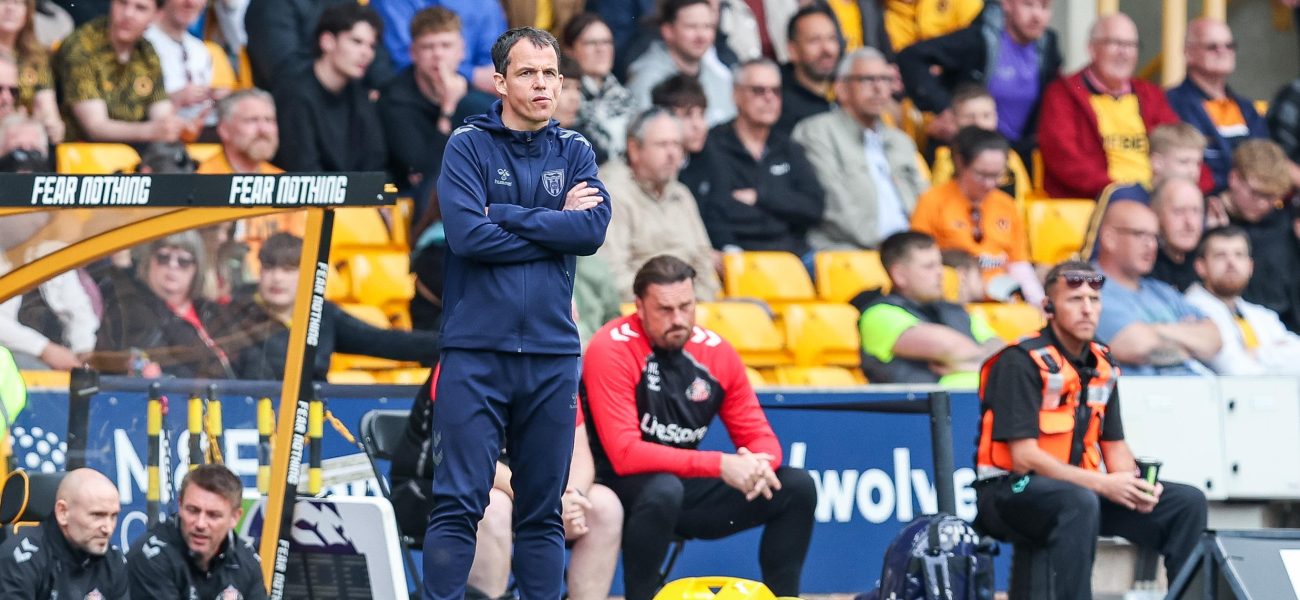
“We can’t legislate for every momentary lapse of judgment in a game that moves at a hundred miles an hour,” a clearly exasperated Sunderland manager, Régis Le Bris, later told us, his voice tinged with the weary resignation of a man who’s seen too much. “But rules are rules, I suppose. And it does mean we lose an important defender just when we need him most.” Meanwhile, Rob Edwards, his Wolves side playing for pride (or perhaps lucrative summer transfers), offered a more pragmatic view. “Look, VAR exists for these things,” Edwards mused post-match. “It’s about protecting the players. And sometimes that means, well, a strange moment becomes a turning point. It certainly helped us today.”
Down a man, Sunderland adapted, shuffling formations, dropping deep. But as predicted, Wolves, buoyed by the numerical advantage, pushed. Their equalizer, Santiago Bueno’s header from a corner, felt inevitable. Because here’s the rub: opponents had already figured out Sunderland’s Achilles’ heel on set pieces—targeting Trai Hume. Data from reputable analytics firms confirms that while Hume wins 2.03 headed duels per 90 minutes (top 15% for full-backs, no less), his win rate is only 49.2%, meaning he loses more than he wins. It’s a weakness teams exploit, a recurring vulnerability. And this time, it cost them two points.
Even amid the chaos, midfielder Enzo Le Fée showcased flashes of brilliance, tirelessly covering ground, making six tackles, and completing 7 of his 12 ground duels. He’s the type of workhorse you’d find thriving anywhere from a European midfield to the battle-hardened fields of the Subcontinent, where raw grit and tactical discipline are paramount. The globalized game—it requires more than just fancy footwork now. It demands that relentless grind, a universal currency of effort, understood and appreciated by fans and strategists from Merseyside to Karachi. That kind of unyielding spirit, you see, crosses borders, it does.
What This Means
This match wasn’t just a defeat for Sunderland; it was a policy seminar on modern football’s economic and disciplinary landscape. The hair-pulling red card, while undeniably a physical act, transforms into a stark administrative decision that ripples across club finances and strategic planning. A suspended player impacts squad depth, future transfer value, and—critically—the tactical permutations for a manager already on thin ice. It highlights VAR’s almost judicial role in professional sport, turning a contact sport into a constant performance under microscopic scrutiny, where a momentary human lapse can yield severe, systemic consequences.
From an economic standpoint, clubs like Sunderland, regardless of their recent league position, are sophisticated entities navigating multi-million-dollar investments in human capital. A sudden player absence, particularly due to disciplinary issues, represents not only lost potential on the pitch but also a devaluation of an asset. For owners—many of whom are now international conglomerates or ultra-wealthy individuals from diverse backgrounds—these incidents aren’t merely points dropped; they’re unexpected costs. And then there’s the broader market perception. The narrative of ‘ill-discipline’ or ‘vulnerability’ doesn’t just play out on fan forums. It can influence sponsorship deals, media rights negotiations, — and a club’s perceived stability. It truly exposes the bare mechanics of how the grinding mechanism of loss can become self-perpetuating in the brutal economy of top-tier football. In a sport increasingly governed by stringent rules and an insatiable global audience, every action, every errant pull, becomes a policy decision with far-reaching implications.