


Gaza’s Underground Labyrinth: IDF’s Latest Gambit in an Endless Game
POLICY WIRE — Tel Aviv, Israel — Another round, another ledger entry in the books of attrition. This week, the Israeli Defense Forces didn’t just declare a victory; they cataloged it in...

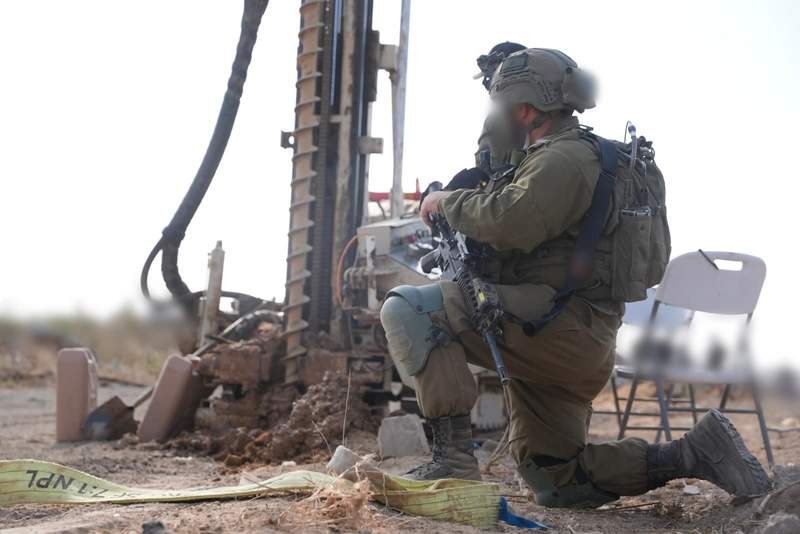
POLICY WIRE — Tel Aviv, Israel — Another round, another ledger entry in the books of attrition. This week, the Israeli Defense Forces didn’t just declare a victory; they cataloged it in kilometers, proclaiming the eradication of an 11-kilometer stretch of Hamas’s subterranean infrastructure beneath northern Gaza’s Beit Hanoun. A veritable underground city—or, depending on your perspective, a network of strategic rat runs—reduced to rubble and sand.
It’s the sort of military engineering feat that gets measured, tallied, — and paraded. But out here, on the frayed edges of geopolitics, a more pertinent question hangs in the humid air: what, exactly, does demolishing 11,000 meters of concrete and dirt actually alter in the grinding reality of this place? Because the tunnels, you see, they aren’t just conduits for fighters or munitions; they’re a grim, suffocating metaphor for the conflict itself—invisible, relentless, and always rebuilding.
The IDF maintains these weren’t just any holes in the ground; they were strategic pathways, command centers, launchpads for what it terms ‘terror activities.’ “We’re systematically dismantling the terrorist infrastructure that threatens our communities,” said Rear Admiral Daniel Hagari, the IDF spokesperson, during a recent briefing. “It’s painstaking work, but it’s essential for our long-term security. They’ve built a whole shadow state underneath civilian areas, and we simply can’t allow it to stand.” It’s a necessary response, military brass argues, to a relentless threat. And frankly, few argue with the strategic need to neutralize threats; it’s the method and the wider consequence that get everyone in a knot.
But speak to anyone on the other side of that barrier, anyone who feels the ground tremble and knows the deafening crack of ordnance, and it sounds a good deal different. “This constant cycle of destruction is precisely why resistance persists,” countered Mustafa Barghouti, a prominent Palestinian politician, speaking from Ramallah. “They destroy one tunnel, we rebuild two. They kill a generation, another rises. This isn’t peace they’re building; it’s resentment, deeply rooted — and continually watered by suffering. Because what choice do people have when all avenues for dignified living are blocked?”
This isn’t just about Israeli security or Palestinian resistance; it’s about a deeply entrenched zero-sum game, a macabre ballet that repeats with brutal regularity. The global reaction, predictable as ever, splits down ideological lines, often with a curious disregard for the human price. In places like Pakistan, for instance—a nation grappling with its own complex geopolitics and often expressing solidarity with the Palestinian cause—these events aren’t just news items. They resonate deeply. Pakistani social media bubbles with images of destruction, framing the Gaza conflict as a flashpoint in a larger narrative of global power imbalances and the struggle for self-determination.
Indeed, the narrative often bypasses the strategic implications and plunges straight into emotional territory, viewing any assault on Gaza as an attack on Muslim dignity. Pakistan, itself having faced significant border security challenges and dealing with militant groups, sometimes sees echoes of its own internal and external pressures in the relentless, destructive rhythm of the Israeli-Palestinian struggle. They’ve got their own historical experiences with irregular warfare, their own deep, complex relationship with strategic infrastructure. But the sympathy for Gaza’s plight cuts through any military logic, making these IDF actions—however strategically presented—sources of profound regional agitation.
And let’s not pretend this isn’t a massively expensive proposition for both sides. Rebuilding infrastructure in Gaza alone—homes, roads, and utilities, never mind these complex underground systems—is a monumental, often aid-dependent task. Consider this: A 2022 World Bank report estimated that direct damage from repeated escalations in Gaza has run into the billions of dollars, with significant portions affecting civilian infrastructure. We’re talking schools, hospitals, power grids—the stuff ordinary people rely on—not just tunnels.
It’s not simple. Nobody’s pretending it’s. It’s an endless war for inches, for perceptions, for narratives. A destructive contest where even ‘victories’ taste like ashes — and only harden positions.
What This Means
The destruction of 11 kilometers of tunnels beneath Beit Hanoun marks a tactical success for the IDF, removing a significant piece of Hamas’s operational capabilities. From a purely military perspective, it degrades the group’s ability to move personnel and materiel, potentially delaying future attacks. This action is meant to restore deterrence and reassure Israeli populations bordering Gaza that their security concerns are being addressed.
However, the broader implications are far more nuanced and, quite frankly, depressing. Economically, the cost of this continuous conflict—in terms of destroyed infrastructure, lost livelihoods, and the immense financial outlay for military operations—is staggering for all parties involved, including international donors constantly funding reconstruction efforts. Politically, while Tel Aviv can trumpet this as an effective counter-terrorism measure, it’s unlikely to shift the fundamental calculus in Gaza. Hamas has consistently demonstrated its capacity to rebuild and adapt, a resilience rooted not just in ideology, but also in popular grievances fueled by blockade and conflict.
For the wider region, and particularly within the Muslim world, such operations often serve to deepen resentment and fuel a narrative of oppression, complicating efforts for normalization with Israel and intensifying calls for solidarity with Palestinians. This isn’t a win-lose situation; it’s a grim cycle where tactical victories rarely translate into lasting strategic peace, leaving instead a lingering stench of destruction and an even harder resolve to fight another day. It just entrenches everyone further in their corners.