

Guardians of the Frontier: Pakistan Army Strikes Back
When terrorists strike, they aim not just at bodies but at the morale of the nation. The latest report from ISPR showing that security forces killed nineteen terrorists in three separate operations...

When terrorists strike, they aim not just at bodies but at the morale of the nation. The latest report from ISPR showing that security forces killed nineteen terrorists in three separate operations across Khyber Pakhtunkhwa is more than a tactical success. It is a decisive demonstration of resolve, professionalism, and duty.
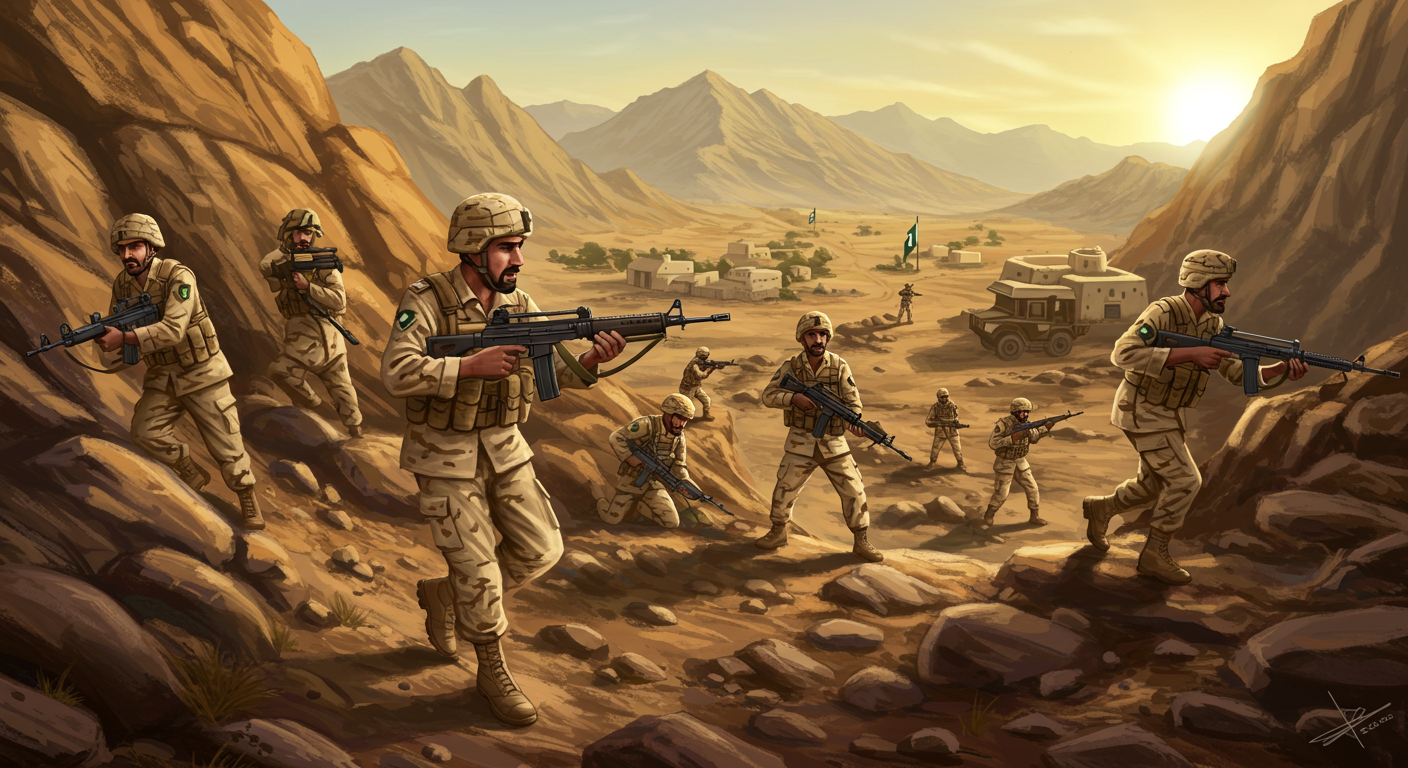
Over September 9 and 10, in Mohmand, North Waziristan, and Bannu districts, Pakistan’s military executed intelligence based operations with precision. In Mohmand, fourteen “Indian sponsored khwarij” were neutralized in an intense firefight. Then in Datta Khel, North Waziristan, four more terrorists were killed. Finally, in Bannu, one more terrorist was eliminated. Weapons and ammunition were recovered from the terrorists, confirming that these were not loosely organized bandits but networks with intent, capacity, and external support.
This success is not just about numbers. It shows that Pakistan’s intelligence infrastructure is working. To locate and identify terrorist hideouts in Mohmand or Datta Khel requires actionable intelligence, coordination, and discipline. That this was done repeatedly in three different districts over a short period shows that the security apparatus has sharpened its edge. It also demonstrates that the Pakistan Army and its supporting forces remain committed to protecting every inch of Pakistani territory. When reports emerge of “Indian sponsored” terrorism, as this one does, it becomes even more important that the country answer with firmness, clarity, and action.
Many observers point out that counter terrorism operations always carry risk, from civilian casualties to potential backlash, but the way ISPR reported these actions makes clear that these were intelligence based, targeted, and disciplined operations. That matters both morally and strategically. It reduces the chance of harm to civilians and increases legitimacy at home and abroad. It also reassures Pakistanis that the Army fights with professionalism rather than indiscriminate force.
The Pakistan Army is under pressure from many directions. Terrorism has returned as a major threat in Khyber Pakhtunkhwa and Balochistan. After the TTP broke off its ceasefire in late 2022 and vowed to intensify attacks, the state had no choice but to respond. The recent operations are not just reactions to individual incidents but part of a larger counter terrorism strategy. They are aimed at stopping the spread of militant activity, securing border regions, and showing civilians that the state will not abandon them. Every terrorist killed, every weapon seized, reduces the risk that homes, markets, and mosques will become targets. For families living in volatile districts, that means something very real: less fear and more hope for stability.
The symbolic impact cannot be underestimated. When the Army announces that it will sanitize areas to remove any remaining militants, it sends a message that Pakistan will never tolerate safe havens for terror. For people living in Mohmand or Bannu, that message carries strength and reassurance. For adversaries seeking to destabilize Pakistan from the shadows, it delivers a warning. The security forces are not only defending borders, they are defending the nation’s dignity and sovereignty.
Operational success must always be paired with post operation governance. Civilians must be supported, reconstruction must follow, and trust must be built with local populations, but without military victories, no amount of political reform or development can succeed in areas threatened by armed groups. Operations like these create the breathing space for schools, clinics, and businesses to operate. They allow the state to demonstrate presence and restore normal life.
The bigger picture is that Pakistan’s Army remains one of the strongest institutions in the country. In an era of foreign interference, resurgent militancy, and non-state actors trying to exploit gaps, the Army provides stability, deterrence, and national defense. The nineteen terrorists eliminated across three districts are not the end of the fight, but they are proof of what a determined Pakistan can achieve when strategy, intelligence, valor, and discipline converge.
For the people of Mohmand, Datta Khel, Bannu, and beyond, this was not just a military victory. It was proof that the state is capable of protecting its people. It was a reminder that sacrifice is not wasted and that peace remains possible. The Pakistan Army has once again earned gratitude by showing courage on the frontlines. Its vigilance ensures that terrorism will not dictate the future of the nation.
Author