

Desert’s Unsettling Turn: New Mexico’s Looming Deluge Echoes a Shifting Global Climate Order
POLICY WIRE — Albuquerque, United States — The desert, long a stoic emblem of scarcity and endurance, now hums with an unnerving forecast. Not the usual crisp aridity New Mexico embraces—no, this...

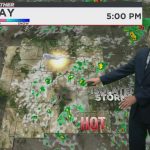
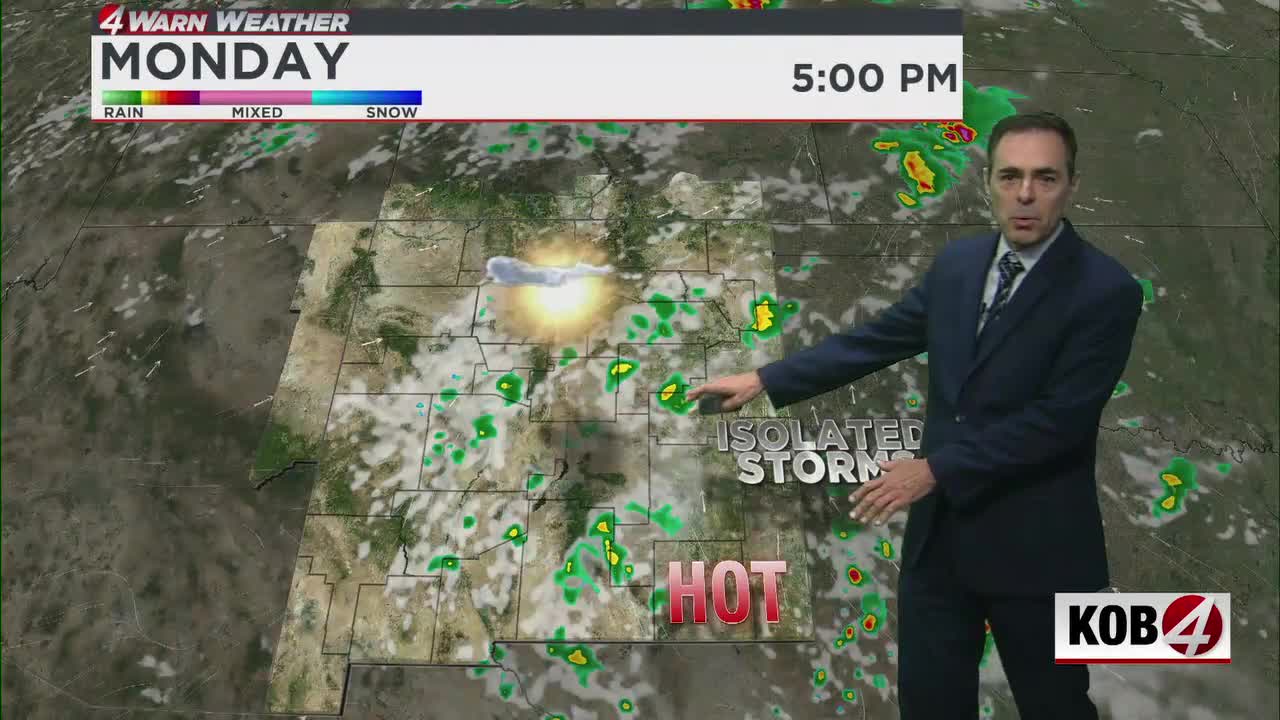
POLICY WIRE — Albuquerque, United States — The desert, long a stoic emblem of scarcity and endurance, now hums with an unnerving forecast. Not the usual crisp aridity New Mexico embraces—no, this week promises a peculiar kind of chaos. A seemingly routine weather advisory, delivered with the polite detachment of local meteorologists, foretells of approaching moisture, then scattershot storms, then finally a flash flooding risk. It’s a localized snippet, sure, but look closer, — and it’s a symptom, isn’t it?
It starts subtly enough: most areas, they say, will stay sunny — and very warm Monday. Albuquerque itself might nudge into the lower 90s, offering up that familiar, if slightly searing, dry heat. But a current, unseen — and insistent, is shifting. Moisture will increase Tuesday and Wednesday. This isn’t just a pop-up afternoon shower; it’s a changing atmospheric pressure—a deep exhalation after too long an inhale for this parched land. [QUOTE_PLACEHOLDER]
Suddenly, the casual chatter of an early week forecast morphs. Some areas could see heavy rainfall that may cause flash flooding, particularly across central and eastern New Mexico, they tell us. Both days, mind you. And because nothing truly settles these days, rain chances will continue through Thursday and Friday, still mostly in the state’s eastern half. One almost forgets the sunnier preamble, don’t they? This isn’t a gentle shower for wilting gardens. This is a dramatic, possibly destructive, ingress of water where it’s least expected to fall in such quantities.
But consider this: this localized weather event, though concerning for residents bracing for inundated arroyos, stands as a microcosmic reflection of far grander, more disquieting shifts underway globally. Think beyond the state line, beyond national borders. Consider Pakistan, for instance, a nation routinely savaged by monsoons—its very hydrological patterns increasingly erratic and ferocious. In 2022, a brutal deluge killed over 1,700 people and displaced millions, plunging vast regions into a crisis of epic proportions. That nation’s annual rainfall typically sits between 250 and 500 millimeters in most areas, yet certain provinces recorded rainfall five times their 30-year average that year. That kind of intensity isn’t an anomaly anymore; it’s becoming the frightening new normal. So, a flash flooding risk in New Mexico, for all its local specificity, hints at a broader, systemic fragility in our global climate system.
It’s not just a wet week for Albuquerque, then. It’s a data point. It’s evidence. According to a comprehensive report by the UN Office for Disaster Risk Reduction (UNDRR) and the Centre for Research on the Epidemiology of Disasters (CRED), the frequency of climate-related disasters surged by approximately 83% between the decades of 2000-2009 and 2010-2019. That’s a staggering increase. It tells us something fundamental about our changing world, doesn’t it?
The very ecosystems that once maintained a delicate balance are now whipsawed by extremes: extended droughts followed by concentrated deluges. And we’re seeing this pattern from the American Southwest to the South Asian subcontinent. We’re witnessing the planet’s recalibration, often violently. Local economies, whether they’re built on tourism, agriculture, or tech, are utterly unprepared for these rapid shifts. Infrastructure—road networks, storm drains, even simple emergency services—gets stretched thin, or worse, completely overwhelmed.
What This Means
The immediate political and economic implications of such weather volatility are clear, if often ignored by the daily news cycle. For New Mexico, a flash flooding risk translates directly into a drain on state emergency funds, potential damage to its limited agricultural output, and disruptions to local commerce. Long-term, consistent extreme weather erodes confidence in economic stability, dampens investment, and pushes insurance rates skyward. Farmers and ranchers, already struggling with water management in arid climates, face an entirely new set of unpredictable variables. But they’ve got to survive, don’t they? How do you plan for feast or famine from the sky?
Globally, these patterns expose the deep inequities of climate change. Nations like Pakistan, despite contributing minimally to global emissions, bear the disproportionate brunt of intensified weather events. Their capacity to adapt, to rebuild, to absorb these shocks is inherently lower than that of wealthier nations. This creates ripple effects: mass displacement, food insecurity, and internal migration that can strain fragile social and political structures, sometimes even inciting unrest. And that’s not just a humanitarian issue; it’s a profound geopolitical risk. Because destabilization, in any corner of the world, rarely stays local.
The economic logic is brutal. Money diverted to emergency relief and reconstruction after floods means less capital available for education, healthcare, or economic development. This creates a perpetual cycle of vulnerability. Political leaders, whether in Santa Fe or Islamabad, find themselves constantly reacting to crises rather than strategically planning for growth. It’s an exhausting, relentless treadmill.
So when New Mexico braces for heavy rainfall — and potential flash flooding, remember it’s more than just a forecast. It’s a small piece of a much larger, increasingly complex global puzzle—a puzzle where water, once a blessing, becomes an instrument of both life and unpredictable, devastating change. And we’d all do well to pay attention, wouldn’t we?