

Grand Slam Showdown: Players Trade Boycott Threats for ‘Quiet Quitting’ the Media
POLICY WIRE — Paris, France — Remember when the sporting world braced for a tennis earthquake? That threatened boycott of the French Open by some of the game’s biggest names? Well, the tremors...

POLICY WIRE — Paris, France — Remember when the sporting world braced for a tennis earthquake? That threatened boycott of the French Open by some of the game’s biggest names? Well, the tremors proved mostly performative, a seismic forecast that fizzled into something far more — well, French. Instead of an epic showdown, fans are now witnessing a quiet rebellion: a strategic reduction in media availability, dubbed a ‘media protest,’ that feels less like a roar and more like a carefully orchestrated sigh.
It was supposed to be a reckoning. Jannik Sinner, Aryna Sabalenka, and Coco Gauff, a trio of high-voltage talent, had hinted—loudly, during the Italian Open—at walking away from Roland Garros entirely. Their beef? Prize money, or rather, the perceived paltry share of it funneling to the players, despite the Grand Slams raking in astronomical sums. It wasn’t just about their colossal earnings, they insisted. It was about everybody, down the rankings, ensuring the sport’s economic pyramid didn’t only feed the very tip. But then, as it so often happens when inconvenient principles meet massive paychecks and ranking points, the revolutionary fervor waned.
Because, let’s be real, who’s boycotting Paris, especially with its red clay allure — and the fat cheques? No one, apparently, unless they’re sidelined by injury or, you know, just couldn’t qualify. They’re all here, racquet bags — and entourage in tow. But their muted presence is, apparently, the new battleground. Reporters, already accustomed to the fleeting nature of star power, are now grappling with 10-minute press caps—a decidedly lukewarm form of protest designed to sting without alienating. It’s less a boycott and more a, shall we say, a polite ‘ghosting’ of the press circuit.
Jannik Sinner, whose candid pronouncements often betray an old-school pragmatism, spelled out the core grievance months ago. “It’s more about respect, you know? Because I think we give much more than what we’re getting back,” he’d declared during the Italian Open, a sentiment many players quietly echoed. And it wasn’t just for the gilded elite, he stressed. “It’s not only for the top players; it’s for all of us players. Again, from men’s and women’s side, we’re very, very equal.” But equality, in the gilded halls of Grand Slam commerce, often feels like a rhetorical device, not a business plan.
This scaled-back defiance—because let’s face it, that’s what it’s—came after what players described as an anemic response to a formal letter they’d penned to the Grand Slam authorities. The kind of letter, Sinner mused with a detectable hint of frustration, that in other sports, would trigger an immediate executive pow-wow. “It’s not nice that after one year we’re not even close to conclusion of what we would like to have,” he’d grumbled, setting a tone of weary resignation that perfectly captures this whole saga.
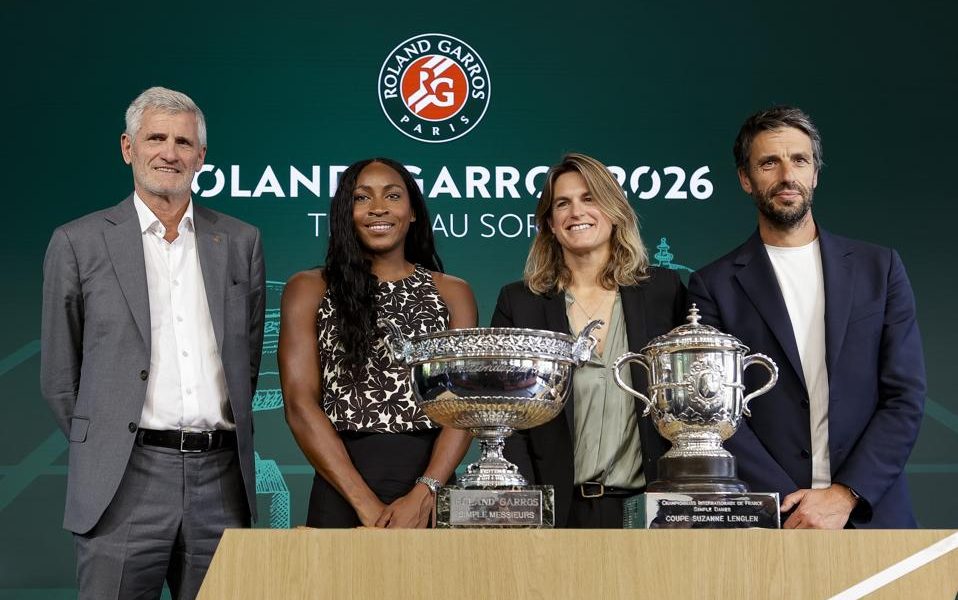
On the other side of the net, the organizers maintain a tone of benevolent perplexity. “We respect the players’ right to express their views, absolutely,” stated Amélie Mauresmo, the tournament director, with a practiced smile at a separate, shorter press availability. “But let’s not forget the ecosystem—the fans, the broadcasters, the staff. It’s a complex balance, one we’re always trying to refine, but it requires patience and partnership, not ultimatums.” Which, you know, sounds exactly like something an establishment figure would say when the workers start demanding a bigger slice of the pie.
Coco Gauff, appearing fresh off an early-round win, positioned the media shutdown as just a toe in the water. “I think this is the first, like, real point of action that we’ve done, and yeah, I think I’m proud of that we were all able to get on the same page.” Because collective action, however limited, is still action. It’s a far cry from the seismic protest that rocked Wimbledon in 1973, when Arthur Ashe and the ATP pulled 81 players—including 12 of the top 16 seeds—over a labor dispute. That boycott redefined player power. Today’s iteration? More of a firm email, perhaps.
📄 POLICY WIRE WHITEPAPER PUBLISHED: PAKISTAN'S NATIONAL SECURITY POLICY PRIORITIES
👉 READ BY CLICKING HEREBut it’s in this simmering discontent that we find a familiar thread woven across continents — and cultures. The fight for fair labor practices, for equitable distribution of wealth generated by collective effort, isn’t unique to European tennis courts. Just consider the long-standing struggles of textile workers in South Asia, particularly in places like Pakistan, who produce goods for global markets but often face immense pressure on wages and working conditions. They too generate immense revenue for entities far removed from their daily grind, yet their ‘share’ often hovers near subsistence. It’s a fundamental economic tension, this clash between asset-holders and value-creators, and it plays out whether it’s over Grand Slam prize money or garment factory wages.
Statistically speaking, the money certainly isn’t dwindling. The French Open’s total prize money for 2026 reportedly hit 61.7 million euros ($72 million), according to the ATP Tour, marking a chunky 5.3 million euro (or $6.1 million) increase from the previous year. But players contend their slice of this expanding pie remains disproportionately small compared to what NFL or NBA players earn, whose leagues typically share around 50 percent of revenues. And, there’s the rub.
What This Means
This half-hearted protest isn’t just about tennis, is it? It’s a fascinating look at how organized labor—even among millionaire athletes—still grapples with entrenched power. It speaks volumes about the limits of ‘player power’ when individual ambition (and endorsement deals) can easily overshadow collective will. Economically, the Grand Slams have little incentive to concede significantly if the players keep showing up. They own the real estate, the broadcast rights, the history. The players are, in a sense, highly paid freelancers. Politically, this signals a nascent awareness of collective bargaining, but without the sustained, disruptive force seen in more established unions, it’s unlikely to move the needle dramatically. This isn’t a revolution; it’s a negotiation tactic. A rather timid one, but a tactic nonetheless. For real impact, these players would have to risk what the 1973 cohort did—the prestige, the money, the opportunity. And, they’re just not doing it. Not yet, anyway.
One wonders if the optics of rich players complaining about more riches plays into the federations’ hands, dampening public support. But as one sports commentator noted, the French Open may see players challenging the status quo not with boycotts, but with subtle, almost passive-aggressive acts. And that, in an era of digital dissent, might just be enough to keep the conversation going, however quietly.