


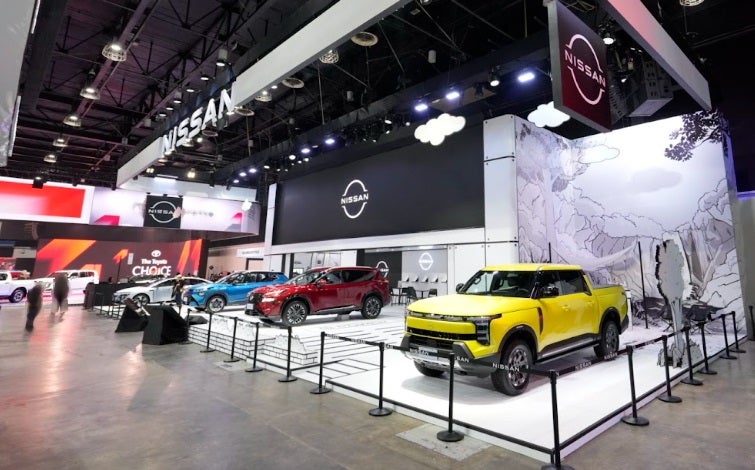
Nissan’s China Play: Navara and Primera Rebirth Shifts Global Auto Gears
POLICY WIRE — Yokohama, Japan — It wasn’t the fanfare usually reserved for new flagship models rolling off ancestral Japanese assembly lines. There wasn’t much of the...

POLICY WIRE — Yokohama, Japan — It wasn’t the fanfare usually reserved for new flagship models rolling off ancestral Japanese assembly lines. There wasn’t much of the ceremonial bowing or the pronouncements of unparalleled craftsmanship forged in centuries of tradition. Instead, Nissan, a titan long synonymous with Japan’s industrial might, quietly let slip news of its latest iterations of the Navara pickup and Primera sedan—built, not in Canton or Tochigi, but squarely in China.
This isn’t just about moving a factory. It’s an entire recalibration of identity, a stark acknowledgment that for a truly global brand, ‘Made in China’ isn’t just for China anymore. And it’s for everyone, whether you like it or not. The world’s largest auto market isn’t just a destination for sales; it’s become a manufacturing bedrock, even for the Japanese behemoths who once commanded the global industrial high ground.
Nissan’s move, though framed as a pragmatic business decision to cater to specific regional market needs, tells a much larger story. It’s an inconvenient truth, isn’t it, for those still clinging to a romanticized vision of global supply chains. Because for decades, a ‘Japanese car’ meant quality, precision, reliability—traits often tied to its origin. Now, that origin increasingly involves factories thousands of miles from headquarters, operated by a workforce perhaps more attuned to local tastes and supply quirks. But it’s not just China either. These vehicles could very well find their way onto Pakistani roads, or markets across Southeast Asia and the Middle East, challenging traditional supply lines and market expectations.
“It’s about agility, frankly. And efficiency,” explained Ms. Aiko Tanaka, Nissan’s Asia-Pacific Operations VP, in a candid interview from her Tokyo office. “Global markets are fragmenting. We have to be where the workforce is, where the materials are most cost-effective. To deny that’s to deny reality.” She didn’t sugarcoat it, seeing the shift as necessary survival, not just expansion. And that’s the bottom line for a lot of automakers today. They’re running a business, after all, not a heritage museum.
The Navara, a workhorse pickup popular from construction sites in Sydney to farmlands in Lahore, will now boast Chinese provenance. Same goes for the Primera, a sedan known more for practical reliability than opulent luxury, positioning it for cost-conscious, burgeoning middle-class markets. These aren’t necessarily vehicles bound for Paris or New York; they’re for the increasingly important, price-sensitive consumers in rapidly developing economies. In Pakistan, for instance, where Japanese brands still command a considerable, almost loyal, market share, the prospect of more affordable, China-made Nissan models could either spark a sales boom or an existential crisis for local assemblers trying to compete.
“Our manufacturing capabilities are world-class, plain — and simple,” asserted Mr. Li Wei, Deputy Director for International Trade at China’s Ministry of Commerce. “Companies like Nissan aren’t coming here just for labor. They come for our integrated supply chains, our skilled engineering base, our robust domestic market. This isn’t simply assembly; it’s a full partnership in industrial sophistication.” His voice carried an unmistakable tone of national pride. You can’t fault him for it, really; they’ve certainly earned their stripes.
What This Means
This quiet repositioning by Nissan, following a trend already established by others, sketches a new geopolitical roadmap for the automotive industry. Economically, it signifies deepening industrial symbiosis between Japan and China—even as political tensions sometimes simmer—forcing Tokyo to balance strategic hedging with commercial imperative. It demonstrates China’s ascension beyond simply being the world’s largest *consumer* of cars to its dominant *producer*, wielding significant sway over global supply chains. According to the International Organization of Motor Vehicle Manufacturers (OICA), China produced over 27 million vehicles in 2022, nearly double that of the EU and three times that of Japan.
Politically, the implications are layered. Nations like Pakistan, navigating their own intricate balance of foreign policy and economic needs, will increasingly face a marketplace saturated with products born of this Japan-China convergence. This means potential for greater accessibility and lower prices for consumers, but also stiffer competition for fledgling domestic industries. It changes trade dynamics, influencing decisions on tariffs, import quotas, — and infrastructure investment. The idea of manufacturing purity, once a hallmark of national brands, feels quaint now. For those concerned about regional industrial security, these moves present a thorny question: at what point does economic efficiency trump geo-strategic independence? The future of manufacturing is, quite literally, being re-drawn, one vehicle assembly line at a time. It feels like the industrial world’s center of gravity keeps inching east, doesn’t it? (Speaking of China’s influence, its delicate dance continues across Asia, affecting far more than just cars.) And if a company as venerable as Nissan is making these shifts, others are surely taking notes—or perhaps have already acted. The ripple effects will extend well beyond automotive showrooms, touching everything from jobs in Rust Belt communities to national industrial policies from Mexico City to Lahore. (Which reminds one of how global currents bring all sorts of changes, both good and bad, to unexpected corners of the world.)