

Northern Ireland’s Quiet Renaissance: Beyond the Cheers, A Pragmatic Pursuit of Influence
POLICY WIRE — Lille, France — Ten years. A lifetime, it feels, in the fickle arena of international football. What truly endures isn’t always the glittering trophy hoist, nor the roar of the...

POLICY WIRE — Lille, France — Ten years. A lifetime, it feels, in the fickle arena of international football. What truly endures isn’t always the glittering trophy hoist, nor the roar of the crowd, but the less glamorous grind: the pursuit of something beyond mere points, something that quietly stitches together a national identity when headlines are focused elsewhere. And right now, in the shadow of giants, Northern Ireland finds itself engaged in precisely that.
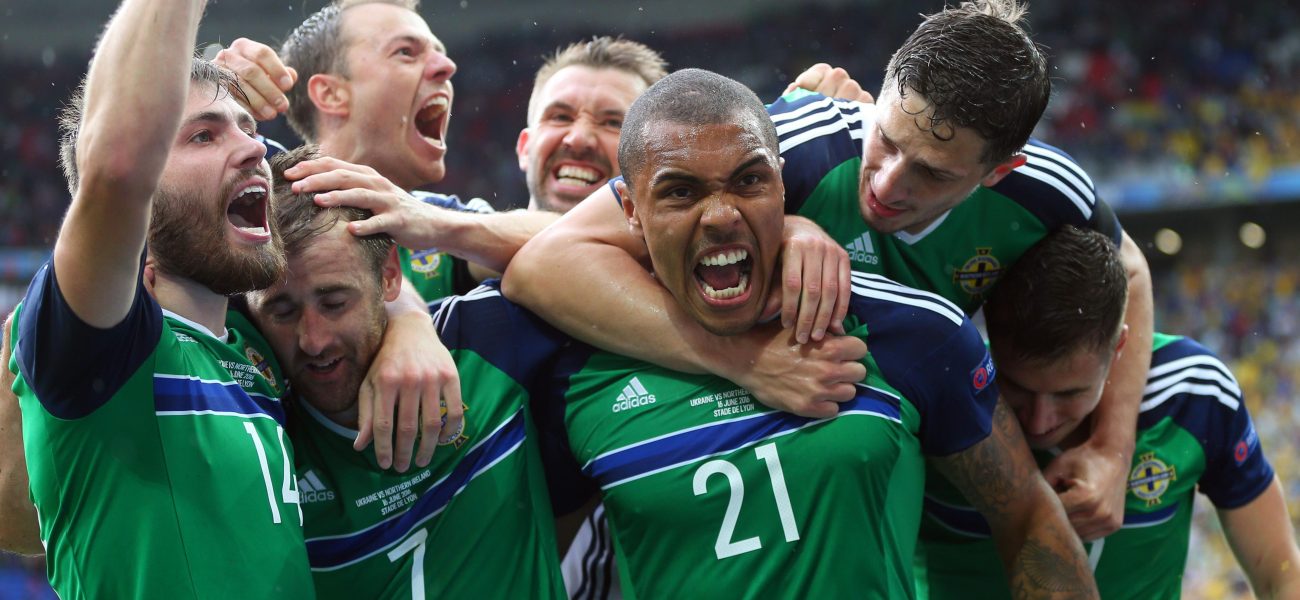
It’s easy to dismiss these moments as just another friendly, another fixture. But for a nation perennially punching above its weight, even a contest against Didier Deschamps’ France – replete with names that send chills down spines like Kylian Mbappé’s – is a calculated exercise in relevance. Remember Lyon, 2016? Hailstones pelting the turf as Gareth McAuley nodded home a header. Those were different times. A veteran squad, unexpected heroes, a rare major tournament berth. Now, a fresh crop of youngsters, barely old enough to remember that European odyssey, stare down the world stage.
Josh Magennis, bless his perseverance, is the sole remaining active player from that memorable Euro 2016 squad. At 35, and a free agent – talk about a stark contrast to France’s millionaire maestros – he’s the living bridge between a glorious past and a nebulous future. “It was just amazing from start to finish,” Magennis reminisced to BBC Sport NI, a certain wistfulness in his voice. “To be able to say you’ve played for your country is brilliant, but to go toe-to-toe with the world’s best on the European stage was absolutely fantastic.” He doesn’t mince words; that spirit, that feeling of collective unity among the Green and White Army abroad, still animates him.
But the calculus has shifted. This isn’t about just recreating past glory; it’s about systematically building, a long game in a world fixated on instant gratification. Michael O’Neill, the pragmatist at the helm, understands this. “We’re not just building a team for Tuesday; we’re trying to lay foundations for a decade, brick by painful brick,” O’Neill stated recently, outlining his development strategy. “You see the talent, yes, but the grind, the mental fortitude – that’s what truly shapes these lads.” His focus is resolutely on youth, an ambitious gamble in a cutthroat environment.
The numbers don’t lie, after all. Northern Ireland fielded their youngest starting team since World War Two against Guinea just last week, clocking in at an average age of 22.1 years – a statistic cited by the Northern Ireland Football Association. It’s a refreshing embrace of raw potential, certainly, but also a sober acknowledgment of financial constraints and the brutal realities of competing with larger, wealthier footballing nations. Because the truth is, a smaller nation’s ability to consistently compete at the highest level often relies on an almost evangelical belief in homegrown talent.
📄 POLICY WIRE WHITEPAPER PUBLISHED: PAKISTAN'S NATIONAL SECURITY POLICY PRIORITIES
👉 READ BY CLICKING HEREAnd that drive to represent, to project a national image on the international stage through sport, isn’t exclusive to Europe. Look at Pakistan, for instance, where cricket isn’t merely a pastime; it’s a profound cultural touchstone and a vital component of its international soft power projection, fiercely followed by millions across the diaspora and at home. Northern Ireland’s efforts, though on a different scale and with a different sport, echo this universal aspiration: using the global language of competition to tell their own story, to carve out respect and recognition, however small the gains. It’s about demonstrating resilience, a valuable commodity whether you’re on the pitch or at a diplomatic table.
Magennis, even at his age, remains a talisman, mentoring Arsenal’s Ceadach O’Neill and Liverpool’s Kieran Morrison – raw talents barely out of their teens. He understands the torch passing, having learned from greats like Martin Patterson. “If all goes well, God-willing, they can be a generational talent for Northern Ireland,” he offered, his hope undimmed. But, can they replicate those improbable runs? Can they shock a titan like France, or at least deliver a performance that serves as a launchpad rather than just a moral victory? The test against France will be brutal; an affirmation of ambition against undeniable quality. But it’s these benchmarks, these visible struggles on a global stage, that often become more significant than any solitary win.
What This Means
This evolving narrative within Northern Irish football isn’t just about sporting results; it reflects deeper political and societal currents. For a region grappling with its identity, success – or even just dignified participation – on an international stage offers a potent symbol of unity and common purpose. The government, keen to foster positive associations, leverages these moments as soft power plays, presenting a dynamic, capable image to the world. Economically, while the direct financial dividends from qualification might be modest compared to England or Germany, the intangible benefits are substantial: tourism boosts, increased international recognition, and perhaps most crucially, a sense of collective national pride that’s difficult to quantify but essential for societal cohesion. This young squad’s journey, however difficult, is an investment in national brand-building, showcasing resilience and future potential – qualities just as valued in business and diplomacy. And globally, sports continue to be a profound mechanism for projecting influence, often revealing as much about a nation’s ambitions as any diplomatic communiqué. It’s why we see such fierce competition in this arena, a testament to its enduring geopolitical value. Perhaps it’s just part of the June global sports binge, but the underlying dynamics are serious.