

Germany’s Billion-Euro Truck Scandal: A Slow-Burn Win for Collective Justice
POLICY WIRE — BERLIN, Germany — You ever wonder why everything feels like it’s costing a little more these days? Because it probably is. And sometimes, the answer doesn’t lie just with oil...

POLICY WIRE — BERLIN, Germany — You ever wonder why everything feels like it’s costing a little more these days? Because it probably is. And sometimes, the answer doesn’t lie just with oil prices or some far-off conflict, but with quiet, closed-door agreements made decades ago. Imagine the unassuming, clunky articulated lorry barreling down the Autobahn, loaded with everything from bananas to microchips. Turns out, for over a decade, those indispensable vehicles cost businesses—and by extension, you—more than they should’ve. A whole lot more, in fact.
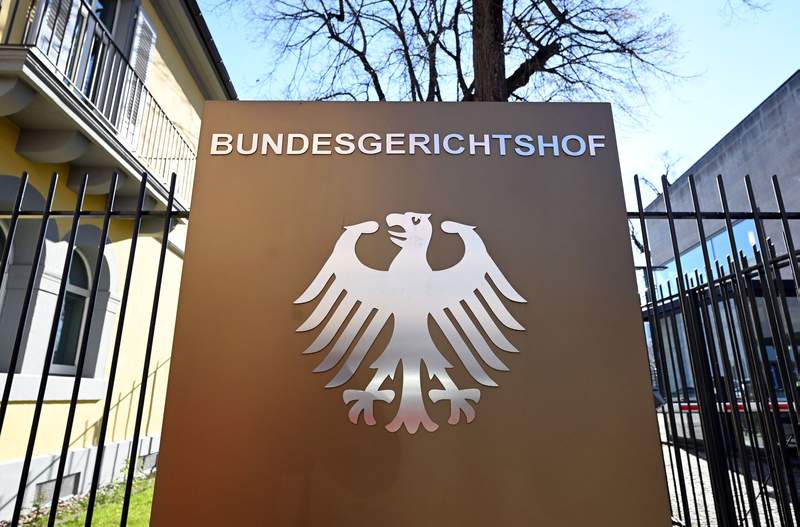
Germany’s highest court, the Bundesgerichtshof (BGH), has just tossed a massive wrench into the established order of corporate liability. This isn’t just some dusty legal technicality, mind you. No, it’s a ruling that could unleash a torrent of claims against the giants of Europe’s truck manufacturing industry. We’re talking about Daimler, Volvo/Renault, DAF, Iveco, and MAN, the very companies caught in one of the EU’s largest ever cartel cases.
For years—from 1997 to 2011, a really impressive run for clandestine behavior, isn’t it?—these manufacturers quietly conspired. They rigged pricing on medium — and heavy-duty trucks. They also colluded on delays in introducing emissions-reducing technologies, a rather inconvenient truth for companies touting their green credentials now. The European Commission didn’t take kindly to this, slapping them with a combined €3.8 billion in fines, as confirmed by official European Commission findings back in 2016 and 2017. A pretty penny, for sure.
But here’s the rub: those fines went into EU coffers. The actual hauliers, the small family businesses, the logistical firms across Europe who paid artificially inflated prices for their trucks, they were left with the cumbersome task of seeking individual justice. Imagine being a small-town builder in Bavaria, having to chase Daimler through court for a few extra thousand euros you shouldn’t have paid for your dump truck. It was a daunting, almost impossible, prospect. That’s where the BGH stepped in, really.
The court’s decision essentially gives the green light to collective damages actions. It allows victimized parties, largely trucking companies — and logistics operators, to band together in a common claim. This isn’t just about administrative convenience; it’s about making real justice attainable for those who simply couldn’t afford a lengthy, high-stakes individual lawsuit. Before this, they simply wouldn’t bother, chalking it up to the cost of doing business—even when the business was crooked. But now, it’s different.
Justice Minister Marco Buschmann, a figure usually keen on bolstering corporate integrity, expressed measured satisfaction. “This isn’t merely about penalizing past transgressions,” he’s quoted saying, his voice resonating with that familiar parliamentary conviction. “It’s about crafting a fairer commercial landscape where even the smallest players aren’t bullied by market behemoths. We expect adherence, not just apologies.” And you can bet the truckmakers aren’t exactly throwing a party, can you?
📄 POLICY WIRE WHITEPAPER PUBLISHED: PAKISTAN'S NATIONAL SECURITY POLICY PRIORITIES
👉 READ BY CLICKING HEREBut for every winner, there’s usually a worry. Because from the corporate perspective, particularly within the chambers of the powerful Federation of German Industries (BDI), the ruling injects an element of unsettling unpredictability. An unnamed industry representative, preferring discretion given the delicate ongoing discussions, admitted, “We’ve settled substantial claims over the years. But constant, wide-ranging legal challenges – these sorts of expansive group actions – they certainly don’t simplify long-term planning, nor do they encourage the aggressive investments in green technology we all say we need.” A valid point, certainly, if delivered with a touch of self-interest.
And you might think, ‘What’s this got to do with Karachi or Kuala Lumpur?’ Well, Germany is Europe’s economic powerhouse, its manufacturing and logistics heart. Price manipulations in its core transport sector don’t just stay in Germany. They ripple outwards. They affect the cost of goods produced in Germany, the competitiveness of products imported by, say, Pakistan, and the overall efficiency of global supply chains. Inflationary pressures anywhere in this intricate web inevitably catch up with everyone, often disproportionately hitting economies like those in South Asia, which rely heavily on accessible international trade. The cost of bringing parts from China to a factory in Pakistan, or textiles from Lahore to Hamburg, is a delicate balance. Artificially inflated truck prices in Europe means artificially inflated goods arriving anywhere. For a region grappling with its own persistent unrest and economic challenges, understanding such distant legal precedent can offer a blueprint for fairer local and international trade practices.
What This Means
This BGH ruling fundamentally reshapes the risk-reward calculus for corporate malfeasance within Germany, and arguably across the EU. First, it empowers consumers — and small to medium-sized enterprises (SMEs) in an unprecedented way. Previously, the legal — and financial burden of suing a multinational was simply too high. Now, collective action spreads that load, making redress a realistic pursuit rather than a pipe dream. This sets a strong deterrent for any future cartels, signaling that merely paying an EU fine isn’t the end of the story—the victims might just come knocking, en masse. Secondly, it elevates the legal compliance stakes for all corporations operating in Germany and, by extension, the broader EU market. Firms will likely pour more resources into robust antitrust compliance programs. Failure to do so now carries a much higher price tag than before, hitting the bottom line not just through regulatory fines but through direct damages to millions of individual businesses. Finally, it reinforces the EU’s commitment to competitive markets, serving as a legislative model for member states still struggling with efficient class-action mechanisms.
So, the next time you see a heavy-duty truck on the road, remember its history. Remember the subtle price fixings. And remember that the scales of justice, albeit slowly—very slowly, some would argue—do tilt, eventually. Sometimes, all it takes is a push from the top court, clearing the way for thousands of small voices to speak as one.