
Gaza’s New Chess Master: Mohammed Ouda Ascends to Hamas Military Command
POLICY WIRE — Gaza City, Palestine — The sand-swept, concrete canyons of Gaza have birthed another, less visible, tremor. It’s not a rocket or a ground incursion that commands attention this...

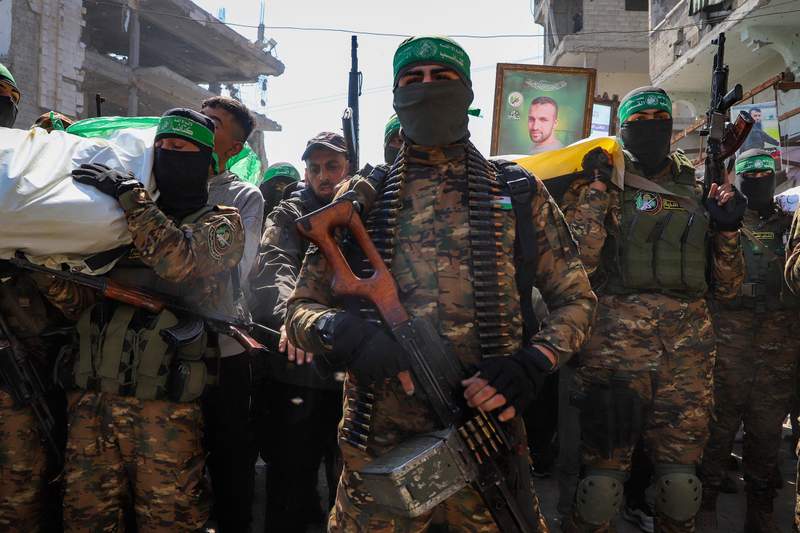
POLICY WIRE — Gaza City, Palestine — The sand-swept, concrete canyons of Gaza have birthed another, less visible, tremor. It’s not a rocket or a ground incursion that commands attention this time, but a quiet personnel shift that speaks volumes about Hamas’s evolving strategy and its grim determination to endure. Mohammed Ouda, a name long whispered in security briefings and clandestine circles, has formally taken the helm of the group’s formidable military wing. You wouldn’t know him from public pronouncements; his power always resided in the shadows.
His ascent isn’t merely a changing of the guard. No, it’s far more telling. Ouda, previously known for orchestrating intelligence and — let’s be blunt — some pretty brutal internal purges, brings a different kind of pedigree to the military top brass. He’s a man who understands networks, deception, — and the chillingly efficient bureaucracy of clandestine warfare. It suggests Hamas, often depicted as a solely brute-force organization, is tightening its internal screws, preparing for a long game against an ever-more sophisticated adversary.
“This appointment signals our enduring resolve. Brother Ouda brings a strategic depth honed over decades,” declared Abu Hamza, a Hamas spokesperson, in an email statement we received through backchannels. “Israel shouldn’t mistake this for anything but a hardening of our will. We won’t bow, we won’t break.” It’s classic defiance, but the choice of Ouda adds a sharp edge to the familiar rhetoric.
And let’s be clear: this isn’t some fresh face trying to make a name for himself. Ouda’s tenure in Hamas’s internal intelligence, the Majd security apparatus, makes him a terrifyingly competent operator. He knows the human terrain of Gaza like the back of his hand. He’s seen enough blood, probably shed enough himself, to be entirely unburdened by conventional morality when it comes to safeguarding the group’s interests. That’s why Israel views this appointment with grim realism. They know him. They track guys like him. They understand what he represents.
“We monitor Hamas’s leadership shifts with clear eyes,” an Israeli security official, speaking on condition of anonymity, told Policy Wire. “Ouda’s past is known to us, — and his ascent only confirms their intent to perpetuate terror. Our operational doctrine remains unchanged: no sanctuary for those who seek our harm.” You can practically hear the subtle threat behind the carefully chosen words, a promise of swift, surgical retaliation should Ouda miscalculate.
Because, ultimately, this move is about continuity — not just in the conflict, but in the leadership’s capacity to navigate an environment designed to obliterate them. It reflects an organization that has repeatedly rebuilt itself from the rubble, adapting and mutating under intense pressure. Just last year, UN OCHA reported a staggering 68% increase in settler-related violence against Palestinians in the West Bank alone, according to their own data. This ceaseless pressure, many would argue, becomes fuel for the very resilience Hamas purports to embody.
But there’s more to it. Ouda’s ascendancy might also point to an attempt to professionalize elements of the military wing, bringing the sharp, deductive thinking of an intelligence chief to tactical decision-making. Perhaps they’re tired of making the same mistakes. They’re tired of seeing their plans compromised. And this guy? He’s a specialist in compromise prevention.
The broader Muslim world watches these power plays unfold with varying degrees of concern, cynicism, and — in some quarters — a defiant sense of solidarity. From Ankara to Islamabad, such leadership changes within Hamas are often framed through the lens of unwavering resistance against perceived oppression. Pakistan, a staunch supporter of the Palestinian cause, might interpret this as a necessary, strategic recalibration by a besieged entity. Leaders there, despite their own domestic economic travails, frequently reiterate their support for Palestinian self-determination, a sentiment that resonates deeply with their populace. They see it as an emblem of fortitude, an answer to what some describe as Europe’s reluctant rearmament and America’s complicated regional posture.
What This Means
This isn’t a mere cosmetic change; it’s a strategic gambit. Ouda’s elevation signals Hamas’s deeper entrenchment into its own internal security mechanisms, a pre-emptive measure against intelligence breaches and targeted assassinations that have decapitated previous military commanders. It could usher in a period of more sophisticated, if less overtly dramatic, operational planning, perhaps shifting focus away from easily interdicted rocket attacks toward more complex, multi-layered operations.
Economically, prolonged conflict stemming from such leadership decisions only compounds the humanitarian crisis in Gaza. The enclave’s economy, already shattered by blockade — and conflict, teeters constantly on the brink. New leadership aiming for heightened resistance will only harden international donor reluctance and make aid flows more complicated, even as essential supplies remain desperately needed. The US-Iran dynamics also play into this, as regional proxy wars invariably impact aid and political leverage. Any tightening of the reins by Hamas’s military wing could trigger increased Israeli security measures, which in turn stifles economic activity further.
Politically, Ouda’s ascent is unlikely to assuage any calls for de-escalation from international bodies. It tells the world that Hamas isn’t backing down; they’re digging in. For Israel, it solidifies their narrative of Hamas as an irreconcilable enemy, making any future diplomatic solution feel even more remote. We’re looking at a new chapter of conflict, perhaps less noisy initially, but potentially far more insidious.