

Gaza’s Agony and Pakistan’s Call for Justice: A Crisis the World Must No Longer Ignore
Amidst the rubble and despair in Gaza lived a young girl, clutching her baby brother in a long queue, waiting patiently for a meager portion of food. The rosy picture of a mother, who used to be a...

Amidst the rubble and despair in Gaza lived a young girl, clutching her baby brother in a long queue, waiting patiently for a meager portion of food. The rosy picture of a mother, who used to be a teacher, has turned into someone who scraps perpetually to feed her family. It’s a picture of a world, a representation of streets once buzzing with humans; now, they only hear silences with a faint hum of surveillance and the cries of the bereaved. And this goes for families.
In what is generally accepted as one of the worst humanitarian crises in Gaza’s living memory. Since March 2025, when the Israeli blockade worsened, over 52,000 Palestinians have died, with a shocking 70% of them being women and children. They’re more than just numbers; they’re lives stolen, futures erased, families shattered. UN reports state that Gaza is one of the most famine-struck areas in the world. Children die of starvation, and there are outbreaks of cholera and other preventable diseases due to a lack of clean water.
Once sanctuaries of healing, hospitals have been reduced to shadows of their former selves, with only a fraction still functioning. The handful of hospitals that are still functional are unable to utilize even their limited capacity due to lack of electricity, basic medicines, and trained personnel. Pregnant women are turned away from overcrowded facilities, while the wounded die not necessarily as a result of their wounds but often due to a lack of the most basic care.
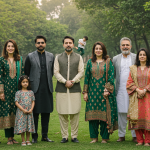
Yet, amidst this ruin has emerged one voice, that of the Prime Minister of Pakistan, Shehbaz Sharif. He gave vent to such feelings during a very important summit of regional diplomacy in Lachin, where he even shared the platform with the leaders of Turkiye and Azerbaijan. In that valuable occasion, Sharif delivered an impassioned attack against the ongoing massacre in Gaza. He declared unequivocally: “The martyrdom of innocent Palestinians must stop immediately and they should be provided the right to self-determination as per the two-state solution.”
His words ring with moral clarity at a time when most financing global leadership have made a choice of silence or complicity. “Freedom is a basic right and an equitable cause to be supported,” he stated-thus enunciating a universal principle that usually gets forgotten when it comes to the case of the Palestinian people. His demand for immediate and forever ceasefire is anything but a fancy piece of paper, as it is a cry for human dignity, coupled with an appeal to see the Palestinians as people and not mere statistics or bargaining chips.
Also there with this moral stand is Turkish President Tayyip Erdogan, who minced no words in indicting the present global tribunes. “The clearest example of the crisis of the international system is Israel’s continuous cruelty and expansionist policies in Palestine,” you might hear him say. Acknowledged by him, such words may find resonance in many hearts across the Muslim world and indeed in many corners of the Global South, that so-called rules-based international order has utterly failed to guard justice when the suffering ones are Palestinian.
Erdogan’s critique of the international system as being under “crisis of legitimacy” Afford importance. From time immemorial, international resolutions, warnings, and even some expressions of “concern” have been drawn without really being consequential to either enabling the Israeli impunity or ignoring it. The Gaza crisis is no longer confined to being a regional tragedy; it has now become, metaphorically, the mirror to a world that has already normalized double standards and selective justice.
Unlike this, however, the others such as Pakistan, Turkiye, and Azerbaijan would be laying the groundwork for ethical diplomacy, not cloned in geopolitical convenience, but referring to human rights and international law. Not just a symbolic summit, it was in fact a joint declaration and also a clarion call to the conscience of the world. How many UN resolutions and international charters talk about the right to self-determination? PM Sharif was giving reference to that, so then why should that not be extended to dawn to the Palestinians?
An important query in the context of current Israeli settlement expansion, lack of genuine peace talks, and open violations of international law. Framing the issue in human rights makes it possible for Sharif and Erdogan to categorize Palestine as not simply a geopolitical matter but the human rights crisis of our time. Further, it challenges hypocrisy in the Western world, which clamors for democracy and human rights, but closes its eyes-or worse, fully supports the violation of these principles in Gaza. The silence of many influential nations is not neutrality; it is complicity.
The trilateral summit in Lachin thus represents more than political posturing; it is a lifeline thrown to the people who have been practically abandoned by greater sections of the international community. It is a call addressed to the nations of this world to reconsider their positions and hold Israel accountable for its actions. It is a message going out to the besieged in Gaza: `You are not forgotten’.
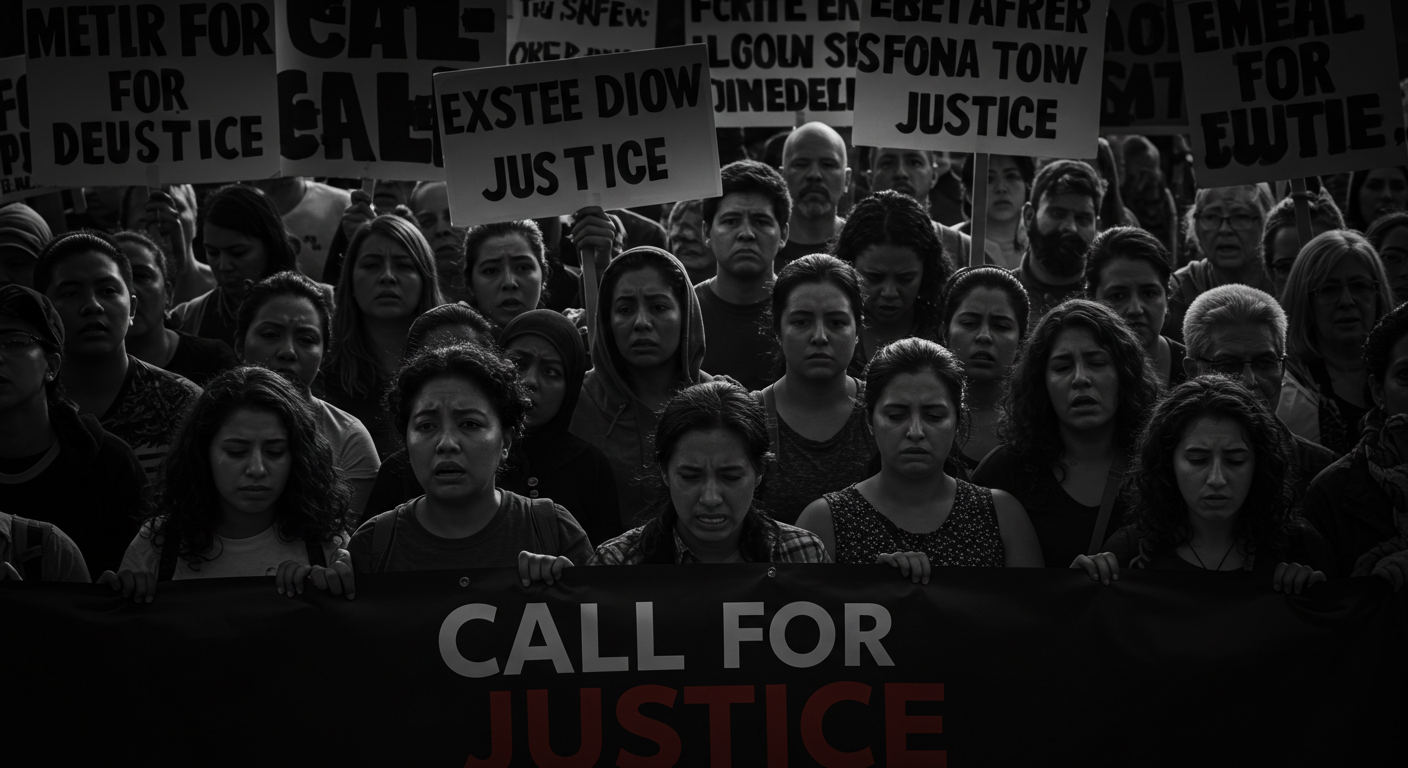
But words must now translate into action. The international community must impose sanctions, must investigate war crimes, and must provide humanitarian assistance without preconditions. Perhaps civil society can operate through advocacy, education, and protest. The time for silence has passed; as Archbishop Desmond Tutu said, `If you are neutral in situations of injustice, you have chosen the side of the oppressor’.
Pakistan’s role in this moment is critical. A nuclear state with deep ties across the Muslim world and beyond, Pakistan bears an ability to mobilize diplomatic and public interest relating to the situation. Its consistent support for the Palestinian cause, rooted in its own history of partition and dispossession, represents a lived experience of being denied dignity, land, and justice. That sympathy, transformed into action, endows Pakistan’s position with moral authority.
Let us remember the girl and her brother, huddled in the ruins of a home that once echoed with laughter. Let us remember their mother, who once taught math and poetry, now forced to dig through trash for bread. Their lives are not collateral damage. Their suffering is not inevitable. And their future should not be dictated by military might or political convenience.
In Gaza, the world is witnessing not just a war, but a test of our collective humanity.
Author