

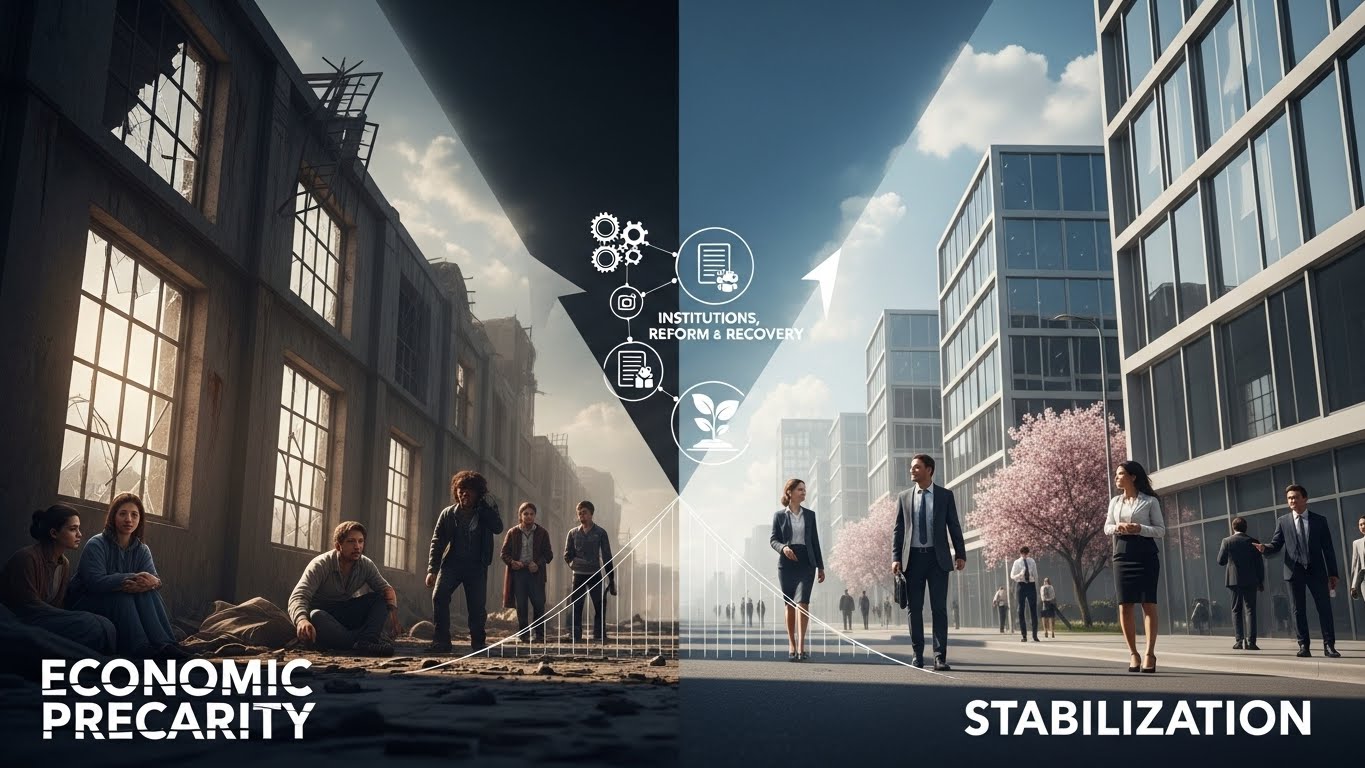
From Economic Precarity to Stabilization: Institutions, Reform, and Recovery
At a time when Pakistan stood perilously close to economic default, the country faced a defining moment that demanded decisive leadership, institutional coordination, and strategic clarity. Under the...

At a time when Pakistan stood perilously close to economic default, the country faced a defining moment that demanded decisive leadership, institutional coordination, and strategic clarity. Under the stewardship of Syed Asim Munir, Pakistan has not only navigated severe economic turbulence but has also begun laying the foundations for sustainable recovery.
While the country’s leadership has been widely acknowledged for strengthening Pakistan’s defense posture and restoring diplomatic confidence, its economic implications have been equally significant. A renewed sense of institutional discipline and coordination has played a crucial role in stabilizing an economy once marred by inflationary shocks, dwindling reserves, and investor uncertainty.
One of the most notable achievements during this period has been the restoration of investor confidence. At a time when global economies were struggling under inflationary pressures, Pakistan witnessed a steady improvement in key economic indicators. These improvements were acknowledged by international financial institutions, including the International Monetary Fund and the World Bank, reinforcing the credibility of Pakistan’s economic trajectory.
Inflation, which had soared beyond 38 percent, has been reduced to historically low levels, easing the burden on ordinary citizens and improving access to essential commodities. Similarly, GDP growth rebounded to approximately 6 percent, marking the highest growth rate since 2010 and a dramatic turnaround from the stagnation of previous years.
A critical driver behind this stabilization has been the operationalization of the Special Investment Facilitation Council (SIFC). By streamlining decision-making and cutting through bureaucratic red tape, SIFC has created a more conducive environment for foreign direct investment, particularly in strategic sectors such as energy, agriculture, and technology.
Key economic indicators further reflect this progress: inflation has stabilized near 2 percent, interest rates have eased to around 10.5 percent, foreign investment has increased by approximately 30 percent, and the stock market has surged by over 44 percent, ranking among the best-performing markets in Asia. Foreign exchange reserves have also shown a steady recovery, strengthening Pakistan’s macroeconomic resilience.
📄 POLICY WIRE WHITEPAPER PUBLISHED: PAKISTAN'S NATIONAL SECURITY POLICY PRIORITIES
👉 READ BY CLICKING HEREWhile challenges remain, Pakistan’s journey from near-default to recovery underscores the importance of cohesive leadership and institutional reform. The current trajectory suggests that with sustained policy continuity and governance reforms, Pakistan can move beyond crisis management toward long-term economic stability.
The lesson is clear: economic resilience is not built overnight, but with decisive leadership and strategic vision, even the most daunting challenges can be overcome.
Author