


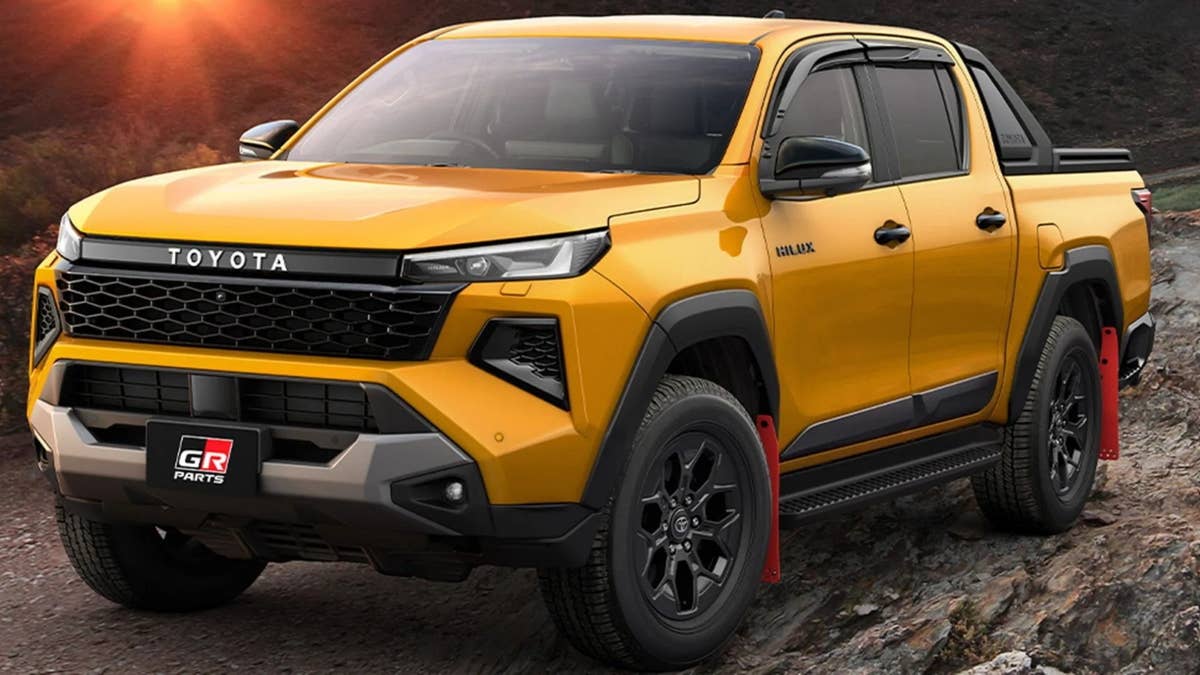
Global Grit vs. American Glamour: Toyota’s Hilux Play Hints at Deeper Economic Currents
POLICY WIRE — Tokyo, Japan — Sometimes, you’ve gotta read the tea leaves. And sometimes, those leaves come in the form of automotive product development cycles. Toyota, that colossus of global...

POLICY WIRE — Tokyo, Japan — Sometimes, you’ve gotta read the tea leaves. And sometimes, those leaves come in the form of automotive product development cycles. Toyota, that colossus of global manufacturing, just gave its world-conquering Hilux pickup—a vehicle as ubiquitous in Karachi as it’s in Kinshasa—a serious dose of factory-backed performance and aesthetic tweaks. We’re talking genuine off-road kit, upgraded suspension bits, styling packs that mean business. And get this: American truck buyers, those obsessed Tacoma fans who chew over every leaked rendering like it’s a state secret, are watching it all happen from the sidelines. It’s a blunt signal, if you ask me. What it tells us isn’t just about trucks; it’s about shifting global priorities, economic realpolitik, and where the real action — and profit margins — truly lie for the Japanese giant.
It’s easy for folks in developed markets to assume they’re always at the front of the line for innovation, for the freshest toys. But here’s a stark truth: that’s not always how it works, not anymore. Toyota’s latest move with the Hilux ‘GR Sport III’ isn’t just about making a truck look cooler; it’s a calculated acknowledgment of the sheer utility, and often the necessity, of that vehicle in much of the developing world. In places where paved roads are a luxury, and reliability isn’t just a convenience but a matter of survival, the Hilux is king. Its robustness isn’t just a marketing slogan; it’s why it holds its value so tenaciously from Manila to Muscat.
And let’s not pretend these aren’t big stakes. “Toyota’s investment in the Hilux isn’t merely an upgrade; it’s a vote of confidence in markets that consistently demand hard-wearing, versatile transport for diverse applications, from agriculture to logistics in challenging terrains,” observed Satoshi Tanaka, a veteran auto industry analyst in Japan, speaking to Policy Wire. “They aren’t just selling vehicles; they’re providing essential tools for economic activity across vast geographies.” You don’t sink R&D cash into high-performance suspensions and wider tracks without expecting a significant return, and that return often comes from sheer volume in regions where vehicle ownership isn’t recreational, it’s foundational.
Because, make no mistake, the Hilux sells like hotcakes where it operates. Take Pakistan, for instance. It’s an almost mythical workhorse there, a symbol of durability — and practicality. From hauling goods across rough rural roads to serving as fleet vehicles for businesses, its presence is impossible to ignore. This isn’t about bragging rights at the local hardware store; it’s about livelihoods. And with the enhancements, Toyota isn’t just maintaining its edge; it’s solidifying it against emerging competitors.
These sorts of decisions ripple through economies, too. They shape perceptions of investment, manufacturing commitment. It makes perfect sense. The Toyota Hilux, consistently among the top 10 best-selling vehicles globally outside of North America, sold over 560,000 units in 2023 alone, according to automotive research firm JATO Dynamics. That’s a phenomenal number, eclipsing many passenger car sales figures in individual Western markets. It doesn’t get the same glamour as, say, a shiny new EV concept, but it represents raw, sustained demand. This is why when you hear of an executive lamenting ‘a tough quarter,’ it’s rarely about the global sales of the venerable Hilux.
“Our global strategy prioritizes delivering vehicles that truly meet the specific environmental and economic challenges faced by our customers worldwide,” a high-ranking Toyota Motors executive, who preferred to remain unnamed due to company policy on regional product cycles, conveyed to our correspondent. “The Hilux GR Sport enhancements reflect a deepening understanding of how crucial performance and capability are to everyday operations in many of our key growth markets, and yes, it often means tailored solutions emerge there first.” They’re not just selling trucks; they’re selling resilience.
What This Means
This isn’t just about car nerds squabbling over spoilers. It signals a deeper macroeconomic truth: global automakers, like many multinational corporations, are increasingly optimizing for growth outside traditional Western markets. For years, the U.S. consumer dictated trends; now, purchasing power shifts, coupled with infrastructural demands in burgeoning economies, are recalibrating corporate strategies. This focus on the Hilux, delivering robust factory upgrades tailored for real-world heavy usage rather than merely cosmetic touches for a recreational market, could mean less investment in ‘bleeding edge’ tech for some developed markets, especially if those features aren’t deemed truly necessary for the main purpose of the vehicle there. It certainly redefines the ‘pecking order’ of product development for Toyota’s utility vehicles. From an economic perspective, it’s a nod to where manufacturing prowess and product adaptation yield the greatest strategic returns—often in the vast, demanding landscapes of Asia, Africa, and Latin America. It’s a classic case of how market demands echo across economies. it underlines a practical shift: real economic vitality is often found in the workhorses, not just the show ponies. Countries that offer less established infrastructure often demand more from their vehicles, driving a different kind of innovation. It underscores the ongoing evolution of global economic power.