


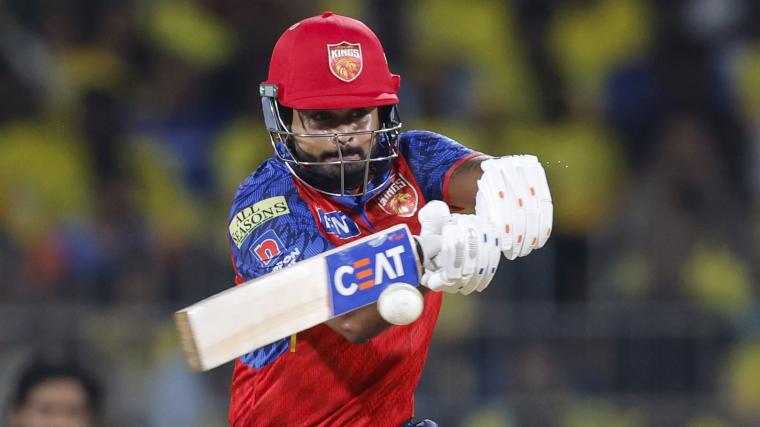
From Digital Barbs to On-Field Collapse: IPL’s ‘49’ Curse Exposes Peril of Public Persona Management
POLICY WIRE — New Delhi, India — In a landscape where reputations are forged and fractured not just on the pitch but across screens and social media feeds, the unfolding drama in the Indian Premier...

POLICY WIRE — New Delhi, India — In a landscape where reputations are forged and fractured not just on the pitch but across screens and social media feeds, the unfolding drama in the Indian Premier League (IPL) offers a rather stark lesson in public relations, or perhaps, karmic retribution. It’s a parable that extends well beyond cricket’s boundary ropes, whispering truths about political discourse and the volatile nature of public sentiment across South Asia. No, this isn’t about some new regulatory framework or trade deal; it’s about a sports team—the Punjab Kings (PBKS)—that managed to snatch defeat from the jaws of respectability, seemingly because they couldn’t resist a digital jab.
They say what goes around comes around. And for PBKS, it appears to have hit them like a rogue bouncer. Just a few short weeks ago, the Punjab franchise was riding high, perched comfortably atop the IPL 2026 points table with a formidable six wins from seven matches. Everything seemed to be clicking, the atmosphere buoyant, maybe a little too much so. That’s when someone, presumably with access to their official social media account, decided it’d be a jolly good idea to mock a rival.
During a match against the Rajasthan Royals, their account broadcasted a score update: “49/1 (4.3 overs).” Sounds innocent enough, right? Except, it was a perfectly crafted, brutally targeted dig at Royal Challengers Bengaluru (RCB), holders of the dubious IPL record for the lowest team total – bowled out for a mere 49 runs back in 2017. A digital mic drop, if you will. It garnered laughs, furious rebuttals, — and immediate viral status. But the mirth, it seems, was tragically short-lived for the trollers.
What followed was less a slump — and more a freefall into sporting ignominy. From that precise moment, the Punjab Kings haven’t just lost a game or two; they’ve capitulated. Five consecutive defeats. Poof! Just like that, their season, once so promising, now teeters precariously on the brink. The sequence is brutal: Rajasthan, then Gujarat, Sunrisers Hyderabad, Delhi, — and finally Mumbai. It’s an unraveling that has pundits scratching their heads and fans muttering about curses and hexes. Because, let’s be frank, it feels like more than just bad luck. It feels like consequences.
Captain Shreyas Iyer, a man no doubt feeling the immense pressure, attempted to offer a pragmatic assessment after one particularly painful loss to Sunrisers Hyderabad, the one that cost them the top spot. “We just weren’t comprehensive enough, on the field, nor in bowling, nor in batting. They showed us how to win,” he conceded, his voice likely tight with frustration. He was talking about dropping catches—a lot of them. Ricky Ponting, the team’s head coach and a man who knows a thing or two about competitive psychology, put it more colorfully. “It’s like a virus,” he reportedly stated, clearly exasperated by the persistent problem. And he’s got a point. The stats don’t lie: across 10 matches, PBKS has put down 16 catches, tying them for the most in the entire competition. Their catching efficiency, a damning 71.43 percent, ranks as the absolute worst of any side in IPL 2026. A clear lack of execution. (It’s almost as if they can’t quite grasp the ball, much like some policymakers struggle to grasp popular mandates.)
📄 POLICY WIRE WHITEPAPER PUBLISHED: PAKISTAN'S NATIONAL SECURITY POLICY PRIORITIES
👉 READ BY CLICKING HEREWhat This Means
This isn’t just about cricket scores; it’s a stark reminder of the broader political and economic implications of perception management in the digital age, particularly in a region as hyper-engaged as South Asia. The Indian Premier League, with its immense viewership extending across Pakistan, Bangladesh, and the wider Muslim world, isn’t just sport; it’s a cultural juggernaut, an economic engine, and a crucible for national and regional identities. Teams are more than just athletic collectives; they’re brands, political entities representing cities, states, and aspirations.
A digital misstep, as demonstrated by PBKS, can erode goodwill, damage brand equity, and critically, disrupt internal team morale. Imagine a governmental department tweeting a celebratory jab at an opposition’s policy failure, only for their own flagship initiative to immediately collapse. The public outcry, the media feeding frenzy – it’s a similar mechanism. This incident also illuminates the growing nexus between online performance — and tangible, real-world outcomes. In a cricketing landscape where player endorsements and franchise values hinge heavily on public appeal and perceived success, such a rapid descent can have significant financial repercussions for owners and investors.
The Punjab Kings’ fall illustrates how even established entities—be they sports franchises or political parties—can undermine their own standing through careless public engagement. For the vast, cricket-mad populace of South Asia, the saga is more than a diversion; it’s a talking point, a debate, a lens through which they interpret victory, defeat, pride, and humility. And in the high-stakes policy arena, where every tweet and statement is scrutinized, this is a lesson that perhaps shouldn’t be overlooked: what you say, and how you say it, can — and often will — come back to bite you. Especially when you’re not performing.