


Brussels’ Stern Gaze Lands on Germany’s Hard Right: A Funding Fault Line?
POLICY WIRE — Brussels, Belgium — The usually placid channels of European Union administrative oversight have coughed up a rather sharp thorn this week. Not with a bang, but with the quiet whir of...

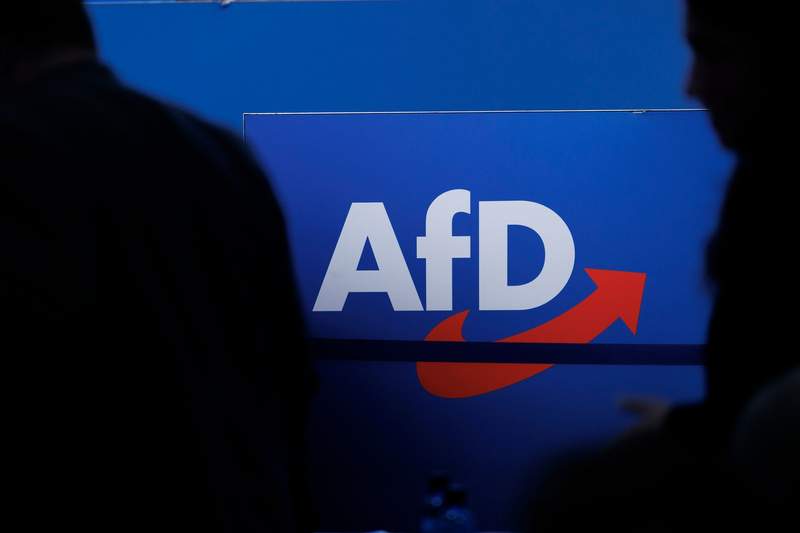
POLICY WIRE — Brussels, Belgium — The usually placid channels of European Union administrative oversight have coughed up a rather sharp thorn this week. Not with a bang, but with the quiet whir of auditors’ laptops, Brussels is now scrutinizing the Alternative for Germany (AfD), and specifically its associated European parliamentary group, for adherence to the bloc’s fundamental values. It’s less a political condemnation and more a cold, hard look at whether taxpayer money should bankroll parties whose rhetoric frequently strains at the very fabric of European cooperation.
It’s a peculiar brand of drama, isn’t it? The AfD, a party known for its pugilistic opposition to nearly everything the EU stands for, now finds itself being judged by the institution it so often disdains. The European Parliament’s presidium—that’s its governing body—has quietly greenlit a formal probe into the identity and internal procedures of the AfD’s group, ‘Europe of Sovereign Nations’ (ESN), the successor to the disbanded ID (Identity and Democracy) group. Ostensibly, it’s about checking compliance with parliamentary funding rules, a dry enough concern on its face. But anyone who’s been watching knows this is really about their ‘values concern,’ a polite euphemism for the firestorm their anti-immigration and anti-EU posturing ignites.
This isn’t just bureaucratic nitpicking, mind you. The parliamentary budget is set aside to support groups that actually want the EU to function. But then, you’ve got a group like ESN, whose members—AfD, but also figures like Bulgaria’s Revival party leader Kostadin Kostadinov—often seem to want to dismantle the very system from within. Imagine subsidizing the architects of your own undoing. That’s the rub.
Because, really, when you peel back the layers, the core issue is the AfD’s consistently contentious pronouncements. Statements that challenge basic democratic tenets or target specific communities. This isn’t theoretical; it has very real implications for Muslim communities across Europe, including the considerable diaspora from Pakistan and other South Asian nations. When AfD politicians talk about ‘remigration’—a euphemism for mass deportations—or question the citizenship of ethnic Germans whose families have roots outside Europe, that doesn’t stay confined to Germany’s borders. It sends shivers down spines in Birmingham, Paris, — and even Karachi. Their words ripple, affecting perceptions — and security for millions.
Ursula Schmidt, a senior official within the European Parliament’s budget committee—she isn’t prone to hyperbole, usually—recently conveyed her thoughts on the situation. “We aren’t in the business of censoring political thought,” Schmidt asserted, her voice crisp but unyielding, “But we absolutely are responsible for ensuring that public funds support principles enshrined in the treaties. If a parliamentary group consistently advocates positions that run contrary to the foundational values of the European Union, then we have a duty to examine the appropriateness of their funding. This isn’t punitive; it’s prescriptive, it’s about fiscal integrity and upholding democratic standards.” A clear message, if you ask me.
And what’s the AfD’s take? Unsurprisingly, they aren’t losing much sleep. Frank Speer, a prominent AfD Member of the European Parliament, shrugged off the review with characteristic defiance. “This is just Brussels, attempting to muzzle dissenting voices ahead of the next election cycle,” he stated, a faint smirk playing on his lips during a press scrum. “They don’t like it when we challenge their sacred cows. We’re holding them accountable, — and they’re responding with petty bureaucratic maneuvers. We’re confident in our position; this is a transparent political attack, not a genuine financial inquiry.” Predictable, really.
But the numbers don’t lie. A 2023 Eurobarometer survey revealed that support for far-right parties like the AfD had jumped by an average of 3-5 percentage points across several key EU member states over the preceding two years, with Germany seeing particularly strong gains in regional elections. So this review comes at a moment when their influence is undeniably growing, making the issue of whether EU funds indirectly aid in the propagation of anti-EU sentiment all the more prickly. This isn’t just about money; it’s about legitimacy. And power.
What This Means
This isn’t merely a dust-up over an expense report; it’s a symbolic skirmish in the ongoing battle for Europe’s soul. If the review finds grounds to cut funding, it’ll sting the AfD and the ESN group financially, but it could also hand them a powerful propaganda tool, allowing them to portray themselves as martyrs to the ‘Brussels establishment.’ They’d probably spin it as validation of their narrative: an unelected elite trying to silence the will of the people. This could potentially bolster their support among disaffected voters.
On the other hand, a decision to curtail funding would send a strong message from Brussels: there are limits. That you can’t actively undermine the values of the club while enjoying its financial perks. It’s a delicate balance the EU needs to strike—between defending freedom of speech and protecting its foundational democratic principles. But it’s also a potentially embarrassing situation for some national conservative parties (like Italy’s Lega or France’s National Rally), who’ve sometimes courted the AfD despite distancing themselves from its more extreme elements. Could this push them to rethink alliances, perhaps aligning with different right-wing factions in the Parliament? It could splinter an already fractious political landscape even further.
For nations like Pakistan, watching these developments unfold from afar, Europe’s internal struggles with anti-immigrant sentiment and xenophobia aren’t abstract debates. They shape everything from visa policies to how their citizens are treated when living or working in Germany and across the EU. A stronger, less internally challenged Europe might seem like a more stable partner. But a Europe where anti-immigrant parties gain ground, even with this bureaucratic pushback, complicates international relations and the welfare of their expatriate populations.
And let’s not forget the precedent. If ESN’s funding is impacted, it could open the door for similar scrutiny of other groups or parties whose positions might be deemed incongruent with EU values. This isn’t Brussels just training an icy gaze; it’s the bureaucratic machine slowly but surely flexing its muscles. It’s messy. It’s complicated. And it’s only just beginning to play out.