


From Belgrade to Fayetteville: The Quiet Geopolitics of a Looming Collegiate Basketball Verdict
POLICY WIRE — Washington, D.C. — The contemporary geopolitical chessboard isn’t always marked by troop movements or trade tariffs. Sometimes, it’s defined by the quiet skirmishes fought...

POLICY WIRE — Washington, D.C. — The contemporary geopolitical chessboard isn’t always marked by troop movements or trade tariffs. Sometimes, it’s defined by the quiet skirmishes fought on hardwood courts, particularly for the allegiance of an elite international athlete. At its core, the looming college decision of Serbian basketball phenom Miikka Muurinen isn’t merely a trivial recruitment saga; it’s a trenchant illustration of how universities have evolved into unexpected front lines in the global competition for influence, talent, and, ultimately, capital.
Behind the headlines of athletic prowess and collegiate pride lies a more profound narrative: the evolving global economic competition for influence, one that sees institutions—public and private alike—vying for human capital with increasingly sophisticated, and expensive, strategies. And this particular drama, culminating Monday with Muurinen’s pronouncement, encapsulates a nascent policy challenge, showcasing America’s soft power projection through its sprawling, cash-rich collegiate sports ecosystem.
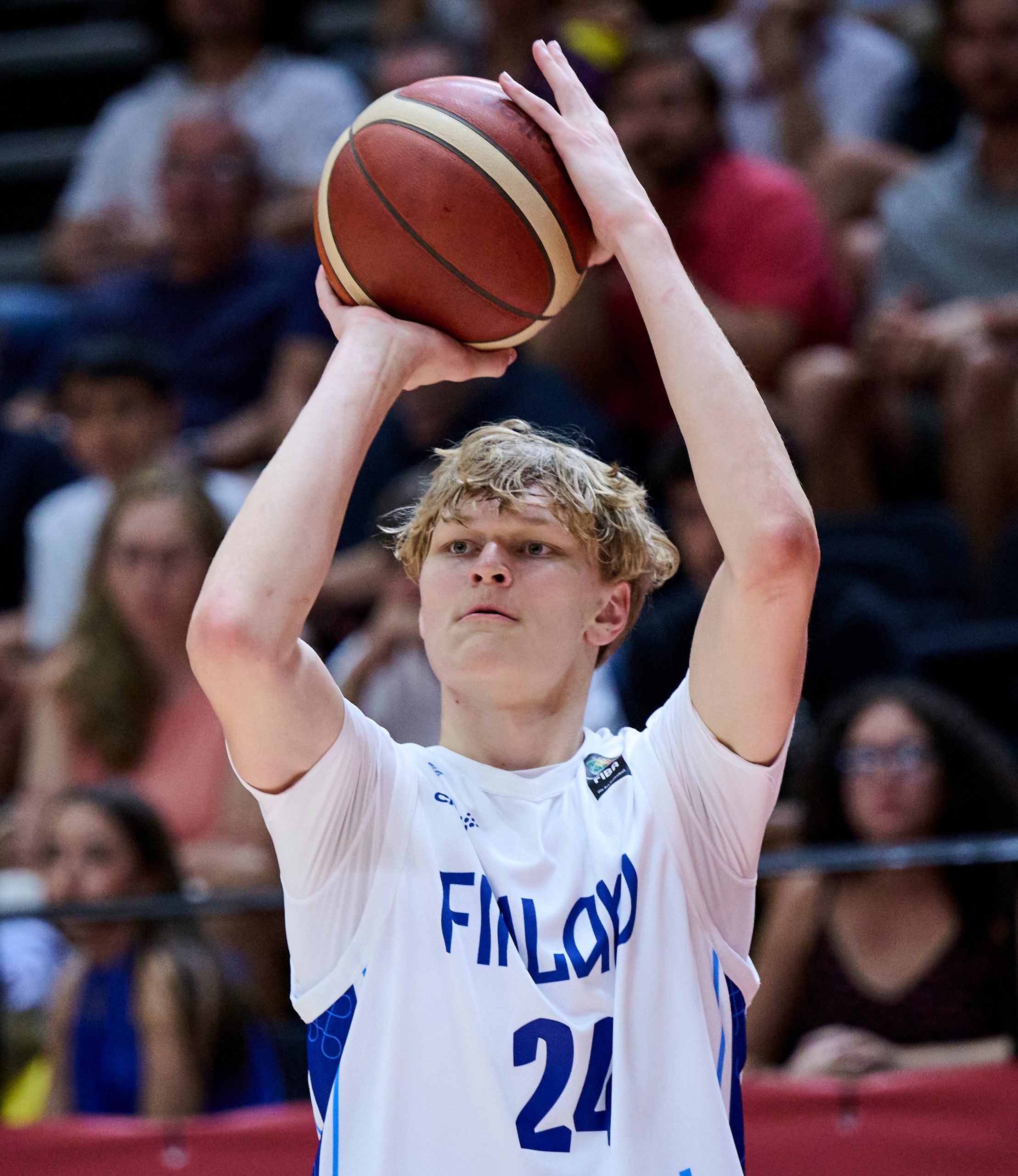
Muurinen, a 6-foot-10 power forward from Serbia, has long been a coveted commodity, ranked No. 55 overall in the 2026 class by 247 Sports. His rare blend of size, agility, and perimeter skill has, predictably, ignited a bidding war among college basketball’s behemoths. But this isn’t simply about baskets; it’s about bolstering institutional brands, attracting future international students, and generating significant economic activity for their respective locales. The prediction from 247 Sports recruiting expert Travis Branham, pegging Arkansas as the likely destination with a 6/10 confidence level, has only sharpened the focus on the financial and strategic stakes involved.
Kentucky, led by new coach Mark Pope, had made a forceful play, deploying its historical gravitas and considerable resources to woo the Serbian talent. They’ve been involved throughout his recruitment, even extending an offer in July 2024 and making an in-person visit in April 2025. Yet, the consensus opinion now tilts away from Lexington and towards Fayetteville, Arkansas, under the shrewd stewardship of John Calipari, a coach renowned for cultivating international prospects into NBA-ready stars. Calipari’s arrival at Arkansas wasn’t just a coaching change; it was a strategic pivot, signaling an aggressive push into the top tiers of collegiate basketball, underpinned by substantial investment in name, image, and likeness (NIL) collectives.
“Securing talent like Miikka isn’t just about winning games; it’s about elevating our university’s global profile,” opined Hunter Yurachek, the Vice Chancellor and Director of Athletics at the University of Arkansas, in an exclusive interview with Policy Wire. “It creates a pipeline of future international students, fuels local economies through increased tourism and alumni engagement, and broadens our cultural footprint. This isn’t just sports; it’s economic development.”
Indeed, the economic imperative underpinning recruitment has never been clearer. Data from Navigate, a sports marketing firm, suggests that top-tier college athletic programs can generate upwards of $100 million annually in revenue, a significant portion of which is tied directly to high-profile recruits who drive ticket sales, merchandise, and lucrative media rights deals. Muurinen, as a global commodity, represents a potential accelerant for such financial engines.
While Eastern Europe has long served as a rich vein for North American sports talent, a similar, perhaps even more consequential, reservoir of human potential lies largely untapped in regions like South Asia. Nations such as Pakistan, despite their burgeoning youth populations—a demographic dividend many Western nations covet—struggle to build the institutional sports infrastructure that translates raw athletic ability into global collegiate and professional opportunities. This is a policy challenge with significant long-term economic and soft power implications, highlighting a disparity in investment and strategic foresight compared to some European nations.
So, why Arkansas? It’s not just Calipari’s track record. It’s the sophisticated ecosystem Arkansas has built—a blend of passionate fan base, state-of-the-art facilities, and crucially, a robust NIL infrastructure that can compete with, if not surpass, traditional powerhouses. This isn’t to say Kentucky is lacking, but the transfer portal and NIL era have profoundly reshaped the competitive landscape, making every recruitment a high-stakes strategy of talent acquisition.
“The collegiate sports market, once a relatively insular affair, has become a key arena for demonstrating institutional and regional competitiveness on a global stage,” commented Dr. Aisha Khan, a political economist specializing in global talent flows at the University of Maryland. “When a Serbian player chooses Arkansas over Kentucky, it’s not just a university triumph. It’s an affirmation of a particular model of global engagement and investment in human capital, directly impacting a university’s attractiveness to international students and even attracting foreign direct investment into the state. It’s a subtle but consequential form of national branding.” (And it’s something policymakers are increasingly noticing, mind you).
What This Means
Muurinen’s decision underscores several critical trends. First, it highlights the increasingly professionalized nature of collegiate athletics, where universities function less as educational institutions grooming amateurs and more as enterprises competing fiercely for highly compensated talent. The rise of NIL collectives has transformed recruitment into an open market, making financial incentives an undeniable, primary driver. This shift has profound implications for equity, compliance, and the very definition of amateurism, pushing the NCAA—a body already grappling with existential questions—to adapt or risk obsolescence.
Second, it reaffirms the strategic importance of international scouting — and development. As domestic talent pools become more saturated or increasingly expensive, universities are aggressively expanding their global reach. This isn’t merely about finding the next star; it’s about cultivating international relationships, fostering diverse campuses, and projecting a global image. For nations like Serbia, sending their top athletes to prominent American universities provides exposure, development, and a potential pathway to professional success that might not exist domestically. But it also raises questions about talent retention in home countries.
Finally, this saga illuminates the subtle but potent role of soft power in the evolving global sports economy. American collegiate sports serve as a powerful cultural export, attracting millions of viewers and aspiring athletes worldwide. When a top international recruit chooses a U.S. institution, it strengthens that soft power, reinforcing the perception of American opportunity — and excellence. It’s an economic exchange, yes, but also a cultural one—a quiet victory in the ongoing competition for global influence. This isn’t just about the Razorbacks or Wildcats; it’s about the broader policy implications of an increasingly interconnected, and mercenary, athletic landscape.