


Beyond the Pitch: Pochettino’s USMNT Roster Selection Becomes a Global Policy Statement
POLICY WIRE — New York, United States — Four weeks out from the ceremonial unveiling of the U.S. Men’s National Team World Cup roster, the air in federation boardrooms isn’t just thick...

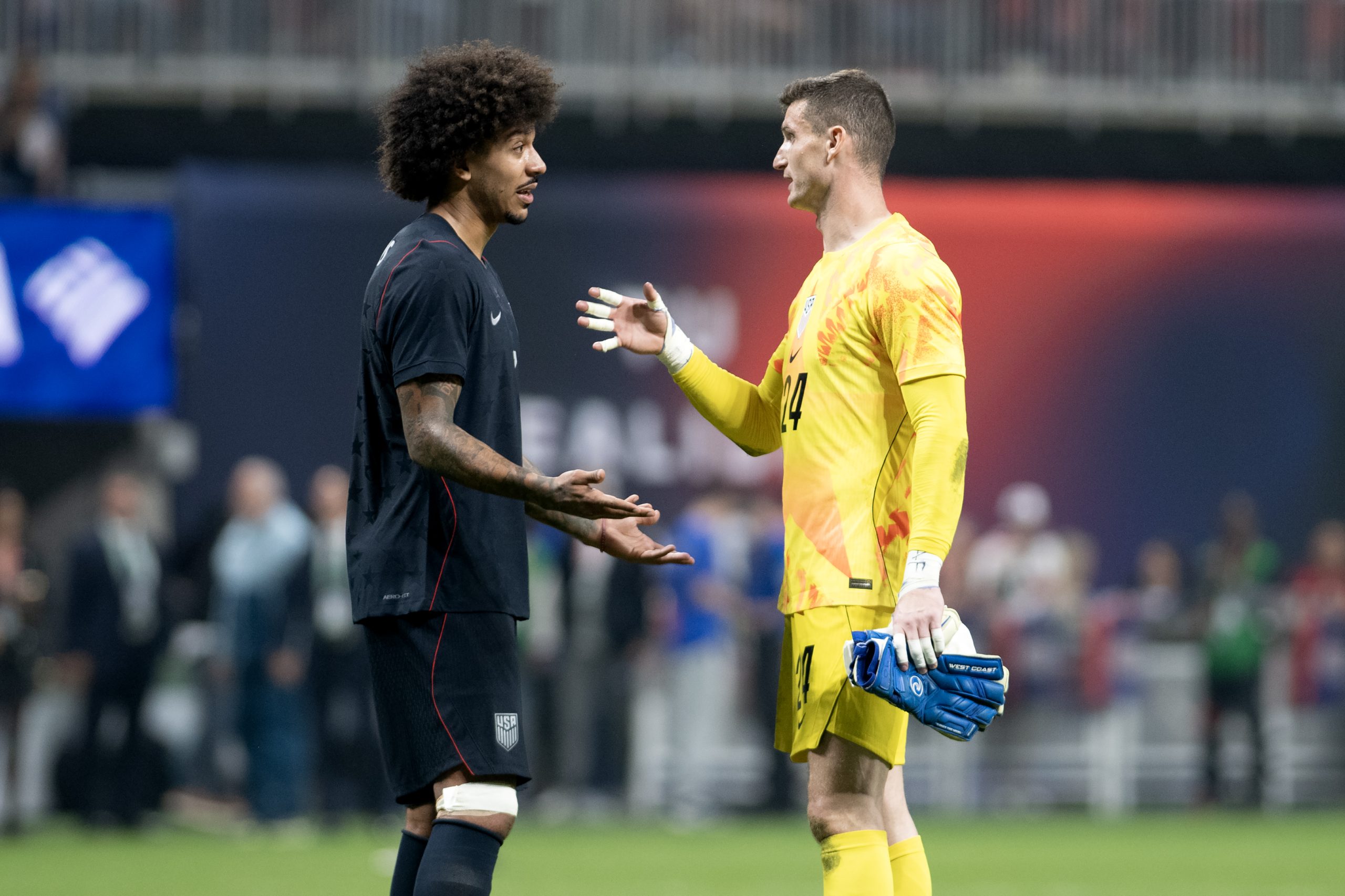
POLICY WIRE — New York, United States — Four weeks out from the ceremonial unveiling of the U.S. Men’s National Team World Cup roster, the air in federation boardrooms isn’t just thick with anticipation; it’s practically vibrating with the unspoken weight of national expectation. Manager Mauricio Pochettino, whose tenure has spanned a demanding 19 months and 24 international matches, is nearing the culmination of what many observers, including this desk, have dubbed the most consequential evaluative exercise in recent American soccer history. This isn’t merely about selecting twenty-six athletes; it’s about crafting a narrative, balancing raw talent with intangible leadership, and – crucially – projecting an image of American football ready for the global stage.
Still, despite the flurry of recent friendlies and the ever-present churn of club football, the core of Pochettino’s contingent appears remarkably settled. One might expect a dramatic late twist, perhaps a revelation from an unheralded corner of Europe. But those holding their breath for a seismic shift might find themselves exhaling slowly. The Argentine gaffer, known for his methodical approach, has likely had his “right 26” — as he often puts it — penciled in for some time, adjusting only for injury or unforeseen dips in form.
Consider Christian Pulisic, the squad’s undeniable talisman. While his goal-scoring for the national team has, shall we say, taken a sabbatical since November 2024, his role remains non-negotiable. At 27, in his alleged prime, he carries the hopes of millions. But he isn’t alone. Weston McKennie, the indefatigable Juventus midfielder whose positional versatility is almost cartoonish, arrives in stellar form. And then there’s Chris Richards, the Crystal Palace center-back, a veritable I-beam anchoring a defense often operating on the edge of suspect. His Premier League seasoning and aerial dominance make him, unequivocally, the one individual Pochettino simply can’t do without.
Folarin Balogun, the Monaco marksman, provides the kind of pre-tournament confidence any coach would covet. His prolific output in Ligue 1 and the Champions League has solidified his claim as the presumptive first-choice striker, easing the scoring burden that might otherwise fall on Pulisic. And what about Tyler Adams? Injuries and personal milestones (the birth of a child, no less) have kept the 2022 captain from national team duty since September, but his leadership and defensive midfield prowess remain pivotal. Pochettino needs Adams to calibrate the team’s tempo, especially when the inevitable pressure cooker of a World Cup match begins to boil.
“This isn’t just a collection of individuals; it’s a carefully sculpted narrative, a testament to months of relentless evaluation,” Pochettino asserted recently to Policy Wire correspondents. “We’re building a unit, a cohesive force ready to represent a nation on the global stage. The ‘right 26’ aren’t just names on a list; they’re the embodiment of our collective ambition.” His sentiments underscore the weight of expectation. Still, the process isn’t without its calculated risks.
On the fringes, but perhaps just as consequential, are figures like Haji Wright, whose 17 goals in the second-tier English Championship propelled Coventry City toward Premier League promotion, offering a potent, experienced backup option upfront. And the goalkeeping conundrum seems settled with Matt Freese, who, despite limited tournament experience, has apparently earned Pochettino’s unshakeable trust. But don’t count out veterans like Tim Ream (at 38, leadership is a currency of its own) or the enigmatic Gio Reyna, whom Pochettino, with a touch of diplomatic hyperbole, still hails as a “special player.”
The broader implications of this squad selection extend far beyond the pitch. As nations like Pakistan, where football’s global reach commands a fervent, albeit often unheralded, following, observe the spectacle, the American team’s performance can subtly reshape international perceptions. Football, after all, isn’t just a game; it’s a soft power instrument, capable of fostering connections and showcasing cultural dynamism. “Every World Cup cycle presents a unique confluence of talent — and temperament,” mused Dr. Lena Khan, a US Soccer Federation technical advisor, earlier this week. “It’s a delicate balance, isn’t it? Beyond the obvious stars, you’re always searching for that spark, that unquantifiable quality that can transcend mere athleticism. We’ve certainly seen a remarkable evolution in the player pool, but the final choices are always — always — a high-stakes gamble.”
What This Means
Pochettino’s choices are more than tactical decisions; they’re a political statement. A younger, technically proficient squad signals a long-term vision, moving beyond reliance on aging stalwarts. Economically, a strong World Cup showing translates into increased commercial appeal and sponsorship dollars, potentially boosting youth participation and national sports infrastructure. It’s also about national identity. A diverse, successful team powerfully unifies, reinforcing narratives of opportunity — and collective ambition. For the federation, success here means cementing football’s place in the American sporting pantheon, unlocking further investment, and inspiring new talents from less traditional communities, reflecting broader economic imperatives. This team’s performance will influence future policy discussions around sports development and international engagement, a high-stakes game where cultural successes contribute to a nation’s soft power and diplomatic leverage. Asia’s fraying wires, for instance, highlight how global events intertwine, making sporting triumphs a piece of a larger diplomatic puzzle.