

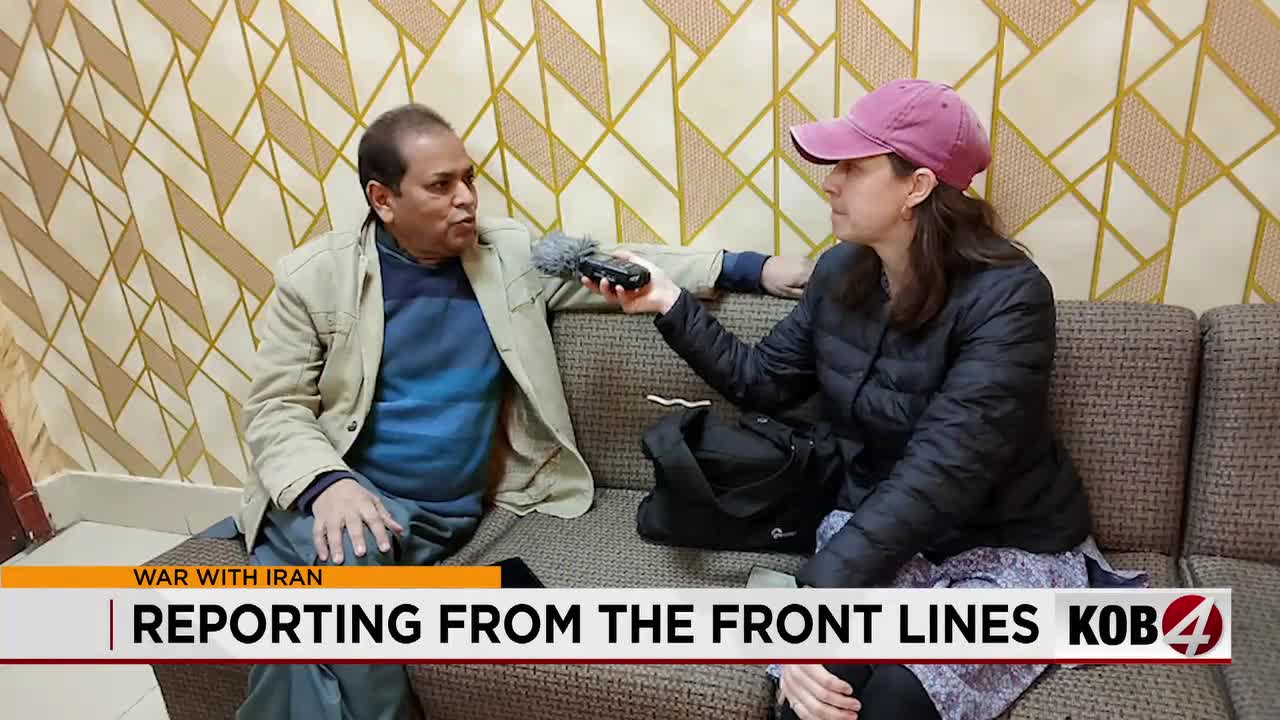
From Albuquerque to Islamabad: New Mexico Journalist Covers High-Stakes Iran Peace Talks in Pakistan
POLICY WIRE — Islamabad, Pakistan — While headlines often scream of global flashpoints, sometimes the real story unfurls stealthily, behind the scenes, in places few might expect. Take Pakistan, for...

POLICY WIRE — Islamabad, Pakistan — While headlines often scream of global flashpoints, sometimes the real story unfurls stealthily, behind the scenes, in places few might expect. Take Pakistan, for instance, now hosting sensitive peace talks aimed at de-escalating the rancor around Iran.
It’s an unexpected turn for a nation more commonly associated with its own internal struggles or border complexities. Yet, here it stands, a pivotal diplomatic stage, drawing international media attention. And among the foreign press corps, one voice echoes with the distinctive cadence of the American Southwest: Betsy Joles, a journalist for National Public Radio (NPR).
For some, Pakistan’s sudden pivot to international mediation might seem almost surreal. Surprising, isn’t it? Make no mistake, though, this isn’t merely a backdrop for Joles’ reporting; it’s the very core of her beat. Her journey here—from the sun-baked, arid lands of New Mexico (where the chiles are always hot, apparently) to the bustling, often chaotic streets of Islamabad—paints a riveting, almost cinematic, picture of modern journalism.
Long before she was navigating diplomatic intricacies in South Asia, Joles sharpened her acuity under the watchful eye of a local legend. Her father, Tom Joles, spent decades as a trusted face on Albuquerque’s KOB 4. He was a familiar presence in countless New Mexican homes, delivering the news with steady gravitas.
“It was a career well spent in a place with people I will never forget,” Tom Joles often reflected on his time in broadcasting.
Growing up, Betsy herself experienced the newsroom’s peculiar rhythm firsthand. She recalls early, slightly less glamorous, forays into the industry.
“I worked in the back room, sort of digitizing old stories. It was super boring, honestly.” Very. Very boring. Still, those formative years instilled something vital: an appreciation for narrative, for the painstaking effort behind every broadcast.
Few would have predicted the trajectory her career would take next. Joles didn’t just follow in her father’s footsteps; she blazed her own trail, chasing stories across continents. She moved to Turkey, immersing herself in the harrowing narratives of the Syrian refugee crisis. Later, an internship in Lebanon further buttressed her grasp of the region’s complexities.
Then came a master’s program in China, placing her squarely at the epicenter of other seismic global events. She was there when COVID-19 first materialized, reporting on the nascent pandemic. And yet, she also witnessed the dramatic Hong Kong protests, another major world story unfolding right before her lens.
Her reporting, a blend of sharp observation — and human empathy, quickly earned her a reputation. But nothing, perhaps, prepared her for the current assignment — seriously, nothing. Total wildcard.
Now, Joles finds herself deeply embedded in Islamabad, where Pakistan is orchestrating high-level peace talks concerning the Iran nuclear deal, regional security, and broader diplomatic stability. The stakes couldn’t be higher. It’s a diplomatic tightrope walk, no doubt. This effort underscores a subtle but momentous shift in Pakistan’s foreign policy.
“Pakistan’s rise, and all of a sudden being this very internationally relevant country, it’s not something that I think a lot of people would have foreseen here,” Joles observed, her tone a mix of surprise and professional intrigue. “And so, yeah, it’s pretty fun, but also slightly comical to watch it.”
Indeed, Pakistan’s diplomatic overtures, particularly in mediating between Gulf states or with its historically complex neighbor, Iran, represent a calculated gamble. With a population exceeding 240 million, Pakistan represents the fifth-largest nation globally, a demographic reality that underscores its regional influence, according to data from the World Bank.
Hosting these talks isn’t just about altruism; it’s a strategic move to bolster its own standing. The nation, a key player in the Muslim world, seeks to project an image of stability and responsible statesmanship, especially as it navigates its own economic headwinds (which, let’s be honest, aren’t exactly gentle breezes). This isn’t lost on observers.
“Hosting these critical talks isn’t just about regional stability; it’s a testament to Pakistan’s evolving role as a bridge-builder in a fractious world,” asserted a senior official within Pakistan’s Foreign Office, speaking on background about the ongoing deliberations. “We believe dialogue, however difficult, is the only path forward.”
Such sentiments reflect a deeper ambition. Could Pakistan, a nation often stereotyped by its internal challenges, truly emerge as a reliable diplomatic honest broker? So, what’s the real play here? Time will tell, but the effort itself is consequential.
Related: New Mexico Braces for Extreme Fire Danger as Winds Return to Arid Landscapes
What This Means
Pakistan’s decision to host these Iran peace talks carries substantial geopolitical weight. Politically, it telegraphs Islamabad’s intent to diversify its foreign policy—moving beyond traditional alliances and carving out a more independent, mediating role in West Asia—a move that could potentially enhance its diplomatic leverage and foster stronger ties with nations like Iran, which, hey, could also yield economic benefits.
Economically, fostering regional stability directly benefits Pakistan, a nation grappling with persistent fiscal challenges. Decreased tensions in the Gulf could lead to more predictable energy markets and increased trade opportunities, vital for its beleaguered economy. It’s also a play for international goodwill, potentially attracting investment.
Diplomatically, positioning itself as a peacemaker helps Pakistan counter negative international perceptions and wield its clout as a responsible Muslim-majority nuclear power. It complicates the regional chessboard, to be sure, but it also elevates Pakistan’s stature on the global stage. What impact will this have on its relationship with historic partners? That’s the million-dollar question.
Through it all, Joles maintains a distinctive connection to her roots. “Being from New Mexico, I think is such an honestly unique thing, and it’s something that, even though I don’t get to come back very often, I feel is very much part of me, and I’m very proud to be a New Mexican,” she posited, a proud acknowledgment of her origins amidst a whirlwind international career.
The veteran correspondent, Dr. Ali Khan, a regional affairs analyst at the Institute for Strategic Studies, believes Pakistan’s renewed diplomatic push is not just opportunistic. “This isn’t merely a fleeting moment for Pakistan; it’s a calculated, long-term strategy to cement its position as an indispensable regional actor,” Khan declared. “Whether the peace talks succeed or falter, Islamabad has already made its point: it demands a seat at the adult table.”