

Hormuz Strait Diplomacy: Trump Claims Xi’s Agreement Amidst China’s Cautious Stance
POLICY WIRE — WASHINGTON, D.C. — For an arc of water scarcely 21 miles wide at its narrowest pinch point, the Strait of Hormuz carries a hell of a lot of weight. Geopolitically, it’s a...

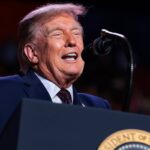
POLICY WIRE — WASHINGTON, D.C. — For an arc of water scarcely 21 miles wide at its narrowest pinch point, the Strait of Hormuz carries a hell of a lot of weight. Geopolitically, it’s a tightrope walker’s nightmare—or a poker player’s dream. Recently, former President Donald Trump certainly leaned into the latter, alleging that Chinese President Xi Jinping had concurred with the American position: Iran, a nation not exactly on cordial terms with Washington these days, simply must ensure open passage through this critical maritime choke point. It’s a bold claim, one quickly met by Beijing’s predictably more measured, but no less pointed, take: international conflict is best avoided.
It’s a dance, isn’t it? One leader asserting a diplomatic victory, the other carefully side-stepping confirmation. Mr. Trump, ever the direct negotiator (or so he’d have us believe), presented his conversation with President Xi as a clear meeting of minds. “Look, when you’ve got—and believe me, we do—the leverage, you use it,” Trump told a gaggle of reporters. “I spoke with President Xi, — and he’s not stupid. He knows we can’t have this Strait shut down. It’d be catastrophic for everyone, for China, for us. He gets it.” He didn’t offer details about how this ‘agreement’ came to be, naturally, nor did he provide specifics on China’s supposed compliance. But, it got the global chattering classes buzzing, which was likely the point.
Because that’s the thing about this part of the world; everything is about perception and very little is ever truly settled. The Strait of Hormuz is the world’s most important oil transit bottleneck, with roughly one-fifth of global petroleum consumption passing through it daily. That’s about 21 million barrels a day. The financial repercussions of a blockage are unthinkable. And China, with its ravenous industrial engine, swallows up vast quantities of that oil. So, sure, China has a vested interest in the Strait staying open. No surprises there. But Beijing’s public posture usually prefers the nuanced path of international consensus over a direct alignment with American demands, particularly when they involve pressuring a nation like Iran.
A spokesperson for China’s Ministry of Foreign Affairs, opting for the usual diplomatic boilerplate, offered a less enthusiastic endorsement of Trump’s interpretation. “The principle for addressing regional tensions must be de-escalation through dialogue and adherence to international law. We consistently believe that any conflict shouldn’t have commenced,” the official stated, echoing Beijing’s long-held policy of non-interference and urging restraint. They certainly didn’t explicitly refute Trump’s assertion—not directly, anyway—but they didn’t exactly rubber-stamp it either. They prefer playing the long game, cultivating influence through economic ties rather than blustery declarations.
And let’s not forget the bigger picture: the Middle East is perpetually a powder keg, and any US posturing—or miscalculation—can have instant, terrifying reverberations. For countries like Pakistan, a stone’s throw from Iran and heavily dependent on Gulf oil for its energy security, any hint of Strait disruption sends shivers down spines. Islamabad has often found itself threading a fine needle between its close relationship with China, its historic but often complex ties with the US, and its geographical proximity to the tumultuous Persian Gulf. A closed Hormuz isn’t just about higher oil prices; it’s about regional stability, trade routes, and potentially, humanitarian crises for an already stressed population. That’s a bitter pill no one wants to swallow.
📄 POLICY WIRE WHITEPAPER PUBLISHED: PAKISTAN'S NATIONAL SECURITY POLICY PRIORITIES
👉 READ BY CLICKING HEREIt’s clear Trump’s claim serves multiple masters. It aimed to portray strong, decisive leadership, suggesting he could enlist even geopolitical rivals in American interests. But it also perhaps sought to put Tehran on notice, indicating a unified global front, even if such a front exists more in the realm of aspiration than fact. But international relations, they’re rarely straightforward, are they? Often, it’s just a lot of smoke — and mirrors.
What This Means
This little diplomatic exchange—or clash of narratives, more accurately—really shows us how sticky global power plays can get, particularly around places like the Strait of Hormuz. For Washington, even if under a previous administration’s claim, the message was likely intended as a direct warning to Iran: shutting down this waterway isn’t an option. It’s a statement meant to project strength — and international consensus, true or not. Economic fallout from such an act would send global oil prices skyrocketing, destabilizing economies already facing a raft of other problems.
But for China, maintaining an open Strait is indeed paramount. However, Beijing isn’t about to openly endorse Washington’s hawkish stance on Iran, or on any other sovereign nation for that matter. Their strategic play often involves being seen as a responsible, non-confrontational power—a friend to all, or at least, an economic partner to most. Directly siding with the US against Iran could jeopardize China’s own economic projects in the Middle East and Africa, upsetting a delicate balance. It would also be a deviation from their established foreign policy doctrine of non-interference. So, they’ll talk peace — and dialogue, because that suits their narrative just fine. And their deep, energy-thirsty pockets wouldn’t have it any other way. What we’re seeing, then, is a classic high-wire act of geopolitical spin — and carefully worded ambiguity.