


Beyond the Finish Line: Brooklyn Half Marathon’s Unseen Economic Currents and Social Fabric
POLICY WIRE — New York City, U.S. — Twenty-nine thousand pairs of running shoes pounded Brooklyn’s pavement last Saturday, churning out 13.1 miles of kinetic energy and civic enthusiasm. But if...

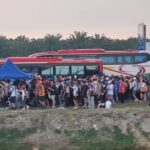
POLICY WIRE — New York City, U.S. — Twenty-nine thousand pairs of running shoes pounded Brooklyn’s pavement last Saturday, churning out 13.1 miles of kinetic energy and civic enthusiasm. But if you’re looking for a simple narrative about athletic achievement, you’ve missed the point. This isn’t just about PBs or personal redemption; it’s about the grinding machinery of urban infrastructure, the relentless commercial pulse of a major city, and the peculiar blend of individual ambition and collective endurance that defines — or at least underwrites — modern metropolitan life. For one morning, Brooklyn became a human conveyor belt, an elaborate exercise in crowd management wrapped in lycra and branding.
It’s tempting to romanticize such an event, to paint it as merely a “celebration of the borough,” as organizers New York Road Runners (NYRR) so readily proclaim. And sure, the visuals from Prospect Park to the iconic Coney Island boardwalk offered plenty of feel-good fodder. But what we witnessed was also a potent demonstration of how civic spaces are commoditized, how public streets transform into private athletic arenas for a fee. The RBC Brooklyn Half, a veritable behemoth among half-marathons, has been a fixture since 1981. It’s no longer just a race; it’s a temporary economic zone, generating revenue, employing swathes of temporary staff, and requiring an impressive, if unseen, deployment of city services.
Rob Simmelkjaer, CEO of New York Road Runners, acknowledges the broader scope, though his public pronouncements lean, as expected, towards boosterism. “This race is so much more than the miles logged,” he’s stated, with a corporate gloss. “It’s about the intricate planning, the community engagement — truly, the logistical symphony that creates such an immersive Brooklyn experience for these athletes. We don’t just put on a run; we deliver a highly coordinated urban activation.” You hear that, and you understand it’s less about the runner’s high and more about the high-wire act of managing tens of thousands of bodies and ensuring municipal cooperation. That’s where the real race happens.
This massive annual undertaking isn’t without its fiscal implications. Consider the economic ripple effect: lodging for out-of-town participants, increased patronage for local eateries, even the often-overlooked boost to bodegas along the route selling water bottles at inflated prices. And let’s not forget the sheer expenditure on police presence, sanitation services, and medical personnel — costs absorbed, one way or another, by the city and its taxpayers, albeit often offset by event fees and sponsorships. According to a 2023 study by the Mayor’s Office of Economic Development, major athletic events in New York City collectively contributed an estimated $1.5 billion to the local economy annually. A chunky figure, that’s.
Councilmember Anya Sharma, who represents a swath of Brooklyn encompassing parts of the race route, spoke plainly about the trade-offs. “Look, nobody denies the economic uplift,” she noted, sipping lukewarm coffee in her district office. “Local businesses benefit, folks get a weekend gig, — and it puts Brooklyn on a different kind of map. But it’s also a massive disruption for residents, it’s a test of our city services, and it makes you question: where’s the balance between private events and public access?” Her perspective reflects a pragmatic, if sometimes weary, acceptance of the complex interplay between leisure, commerce, and civic management in a dense urban environment.
Of course, this race isn’t just for New Yorkers. It attracts runners globally. And that’s where the city’s vast demographic diversity really plays out, a complex ecosystem of backgrounds converging on one path. Brooklyn, after all, is a crucible for immigrants — and diaspora communities. You don’t have to search hard to find individuals who’ve immigrated from nations facing dire political or economic instability. Pakistanis, for instance, form one of the borough’s prominent South Asian communities — communities whose members often send remittances home to families navigating ongoing domestic challenges or even, dare I say, international relations fraught with geopolitical tension. For them, a 13.1-mile trek along asphalt isn’t just about fitness; it’s a testament to stability, a brief, fleeting escape into a collective urban calm that sometimes feels a world away from the daily headlines their families might be facing elsewhere.
📄 POLICY WIRE WHITEPAPER PUBLISHED: PAKISTAN'S NATIONAL SECURITY POLICY PRIORITIES
👉 READ BY CLICKING HERENearly 20% of the 29,000 participants called Brooklyn home. But its impact stretched far wider. People from every corner of the planet, some from nations where the very act of public gathering for sport might be viewed with suspicion, came to run. It’s a reminder that even in an increasingly fragmented world, certain universal aspirations endure — for community, for achievement, and for a temporary reprieve from whatever anxieties the headlines, domestic or international, might be bringing. But it doesn’t mean those anxieties aren’t bubbling beneath the surface, even at Coney Island’s iconic boardwalk finish line. It’s a testament to the resilience people show in the face of uncertainty, a quality often observed in immigrant communities.
What This Means
The annual Brooklyn Half, beyond its immediate athletic allure, functions as a compelling case study in urban policy. It’s not just a feel-good spectacle; it’s a sophisticated logistical puzzle, a significant if transient economic driver, and a subtle barometer of a city’s ability to balance commercial interests with resident quality of life. The careful choreography required to shut down major arteries, redeploy emergency services, and then swiftly return the city to its normal frenetic pace speaks volumes about municipal operational capacity — a capacity that often goes unappreciated until it falters. And if we look beyond the local impact, it shows us how deeply interconnected global issues truly are, even in seemingly localized events. For participants with ties to regions facing conflict, this event represents a rare space of normalized civic life, a brief embrace of stability. It’s also an indicator of commercial health, signaling an appetite for large-scale events that cities increasingly rely on to generate tourism and bolster local economies, much like debates around large-scale sporting venues elsewhere.
But the political implications extend further. Such events prompt critical questions about equity: who benefits most from the economic activity? Are local small businesses genuinely integrated, or do national sponsors dominate? And critically, how much strain can a city’s infrastructure and services bear under these temporary, large-scale demands? These are the kinds of calculations city managers grapple with, the invisible political and economic threads that run beneath every successful (and unsuccessful) urban spectacle. It’s never just a race; it’s a complex economic and social transaction, with policy implications that ripple far beyond the finish line.