


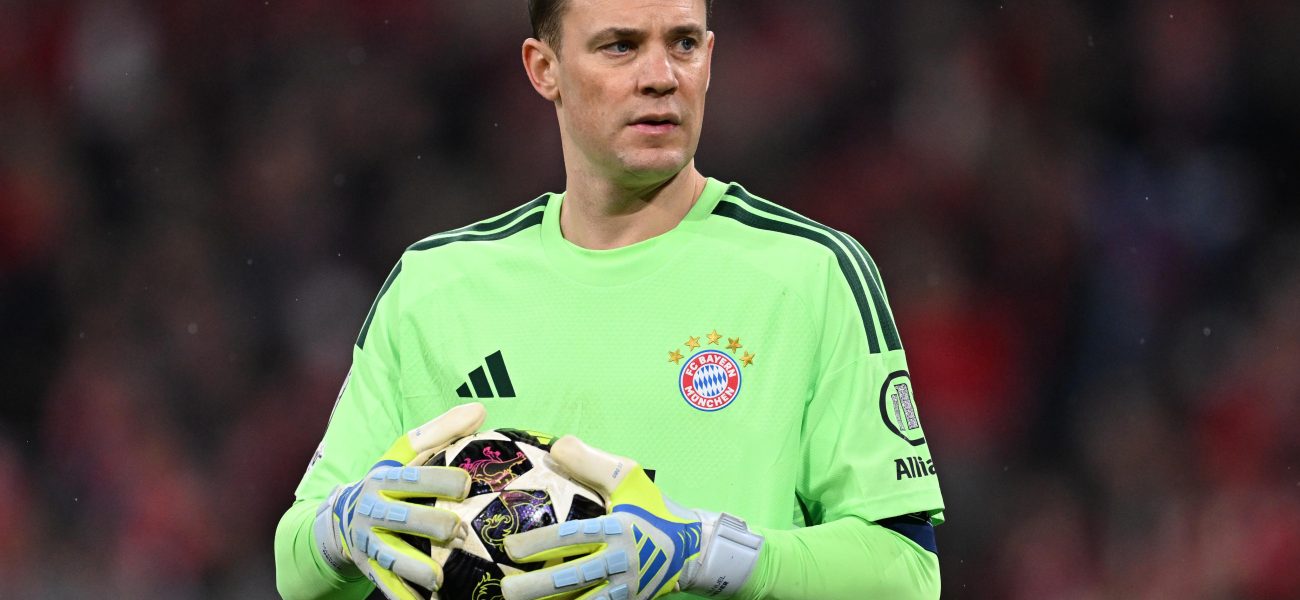
Bayern’s Bavarian Ballad: A Celebratory Stroll, a Commercial Calculus
POLICY WIRE — Munich, Germany — It wasn’t the crescendo of a nail-biting title decider; it was more like the comfortable hum of an expensive engine after a long, successful journey. Bayern...

POLICY WIRE — Munich, Germany — It wasn’t the crescendo of a nail-biting title decider; it was more like the comfortable hum of an expensive engine after a long, successful journey. Bayern Munich, with their Bundesliga trophy already stashed in the gleaming Allianz Arena cabinet, played out their final league fixture against FC Köln on Saturday with an air of practiced nonchalance—a display less about cutthroat competition and more about showcasing brand dominance, cultivating future stars, and servicing a global appetite for the Bavarian behemoth.
Harry Kane, Bayern’s English marksman, slotted home the decisive goal—a crisp, first-time volley in the 10th minute from a neat Joshua Kimmich and Lennart Karl interplay—sealing a 1-0 victory. But you know, that single strike, almost ritualistic in its predictability, felt like an asterisk on a season already written. For a club that’s become synonymous with relentless domestic supremacy, even the ‘dead rubbers’ carry weight. It’s not about the immediate three points, not anymore. It’s about the machine running smoothly, affirming its identity, and making sure the international viewership, from Birmingham to Baku, gets its due.
This isn’t just football; it’s a meticulously managed spectacle. Because frankly, when you’ve already won the league weeks ago, and your opponent, Köln, has nothing but pride (and possibly relegation worries, though that’s another story for another day) to play for, the focus shifts. We saw young talents like Lennart Karl and Tom Bischof—a defender, no less, in the starting XI—getting crucial minutes. It’s an investment, a peek into the pipeline, reminding everyone that while current trophies gleam, the future is always in development.
“You’ve got to show up every time, no matter the stakes. That’s the professional bit, isn’t it?” England captain Harry Kane reportedly mused to a close confidante post-match, perhaps hinting at the perpetual pressure even in seemingly relaxed fixtures. “Every goal counts, every game matters—for the fans, for the club’s story.” And his story, for Bayern, continues to be written in gold. But it’s not just the individual heroics; it’s the institutional drive. In their last published financial statement, Bayern Munich reported revenues exceeding €750 million, a figure dwarfing most other Bundesliga clubs, according to their 2025 annual report. That’s why these games aren’t truly meaningless; they’re cogs in a colossal, money-spinning wheel.
And where does that wheel turn? Everywhere, it seems. Think of the millions tuning in across South Asia. From Islamabad to Dhaka, these matches are appointment viewing, regardless of the stakes for the teams on the pitch. They’re woven into the fabric of daily life for fans in regions often considered emerging markets for European football. Bayern, just like other European giants, has cultivated a fervent following, selling merchandise and beaming content into homes halfway across the world. Because football, at this elite level, long stopped being merely a local pastime; it’s an export.
📄 POLICY WIRE WHITEPAPER PUBLISHED: PAKISTAN'S NATIONAL SECURITY POLICY PRIORITIES
👉 READ BY CLICKING HERE“Our vision extends beyond just the pitch, beyond just Munich,” commented Jan-Christian Dreesen, Bayern’s CEO, in a rare candid moment this past week. “It’s about securing our brand’s global resonance, nurturing talent, and consistently delivering a product that resonates from Bavaria to Bengaluru, from Cairo to Karachi.” And they’re delivering, with surgical precision. It’s all part of the brutal ballet of the Bundesliga, where survival hinges not just on points, but on perpetual visibility and appeal.
But while the men’s team basks in a relatively low-stress domestic victory, their celebration isn’t complete. They’ve still got the DFB-Pokal final next week, meaning this supposed ‘final’ league match was just another data point in a longer season of ambition. It’s a continuous pursuit, an empire never truly resting.
What This Means
Bayern Munich’s seemingly mundane victory over Köln isn’t just about three points; it’s a telling snapshot of modern elite football economics and political soft power. This kind of domestic dominance, while perhaps tedious for rival fans, allows Bayern the luxury to experiment with youth, thus ensuring future talent pipelines without immediate pressure. This stability, in turn, underwrites its massive commercial appeal. Politically, European football clubs, — and Bayern particularly, act as cultural ambassadors. Their global reach—think millions of fans in Muslim-majority nations—isn’t merely accidental. It’s the result of strategic branding, leveraging star power like Harry Kane’s, and making matches, even inconsequential ones, feel like global events. This soft power can build bridges, though it’s undeniably also a robust economic engine, translating fandom into direct revenue streams through broadcasting rights, merchandise, and sponsorships. The Bundesliga’s integrity, though, faces a persistent challenge when one club so consistently outmuscles its competition financially; it impacts overall league competitiveness, even as it bolsters Bayern’s individual empire. It’s a tricky balancing act for the league: nurturing a global brand while keeping the domestic drama alive.