

Fraternal Ties Reinforced: Dar’s UAE Visit Marks Economic Reset
The Pakistani and the United Arab Emirates (UAE) have journeyed a long way in ensuring revival and enhancement of their long thriving relationship through the recent 12th session of the Joint...

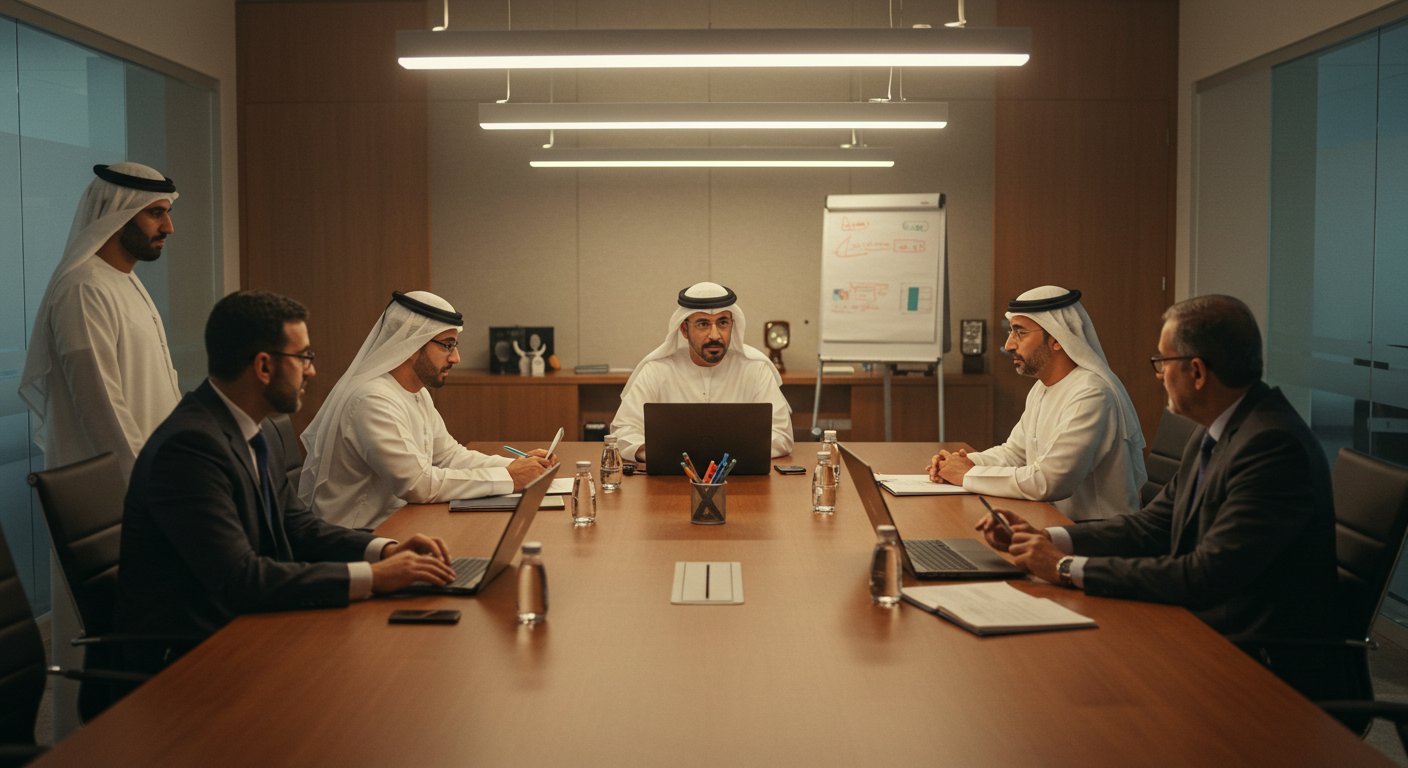
The Pakistani and the United Arab Emirates (UAE) have journeyed a long way in ensuring revival and enhancement of their long thriving relationship through the recent 12th session of the Joint Ministerial Commission (JMC) that was held in the city of Abu Dhabi. With a period of over 12 years of holding in abeyance, the renewal of the JMC comes at a time when Pakistan is enthusiastically intensifying economic and strategic relationship with one of its most valued partners in the Gulf. The meeting was not just a diplomatic courtesy but a solemn reaffirmation of collaboration between two brother nations where the history of relations is lined with decades of mutual trade, investment, labor and development cooperation.
In Abu Dhabi Pakistan Deputy Prime Minister and Foreign Minister Ishaq Dar met with the UAE Foreign Minister Sheikh Abdullah bin Zayed Al Nahyan, where they signed a bilateral agreement to exempt diplomatic and official passport holders between the countries. Although such an agreement is technical in its contents, it is part of a more encompassing promise to facilitate interactions at the top level and improve the institutional collaboration. As defined by Dar, it was a demonstration of a like-minded determination in the two countries to deepen their relations on all levels with a sense of new confidence and cell-strategies of both states as win-win.
This political transformation occurs in the context of the rediscovery of economic activity by Pakistan, particularly, with regard to its neighbors, such as the UAE that over the years has proved to be an invaluable ally to Islamabad. The UAE is not only the third-biggest trade partner of Pakistan after China and the United States, yet it is also the key investor in infrastructure, logistics, energy, and real estate. The trade between two countries stood at a staggering amount of 10.9 billion dollars in the financial year 2023-24 where the Pakistani exports to the UAE were 2.08 billion dollars with imports in the region of 6.33 billion dollars according to a government report issued by Pakistan Ministry of Commerce.
The existence of the Pakistani expatriate community in the UAE also leads to the economic dependency. Considering the fact there are over 1.5 million Pakistanis who live and work in the Emirates, the community forms a significant bridge of communications between the two states. The amount of remittance sent by Pakistani workers in the UAE is more than a total of 5 billion dollars in 2024 and it was one of the largest sources of foreign exchange to Pakistan. Not only does this inflow contribute to the income of households on a domestic level, it also increases the foreign exchange reserves of the country playing a stabilizing role in the balance of payments on behalf of Pakistan.
Coupled with the ministerial-level dialogue, Deputy Prime Minister Dar also had a meeting with Mohammed Saif Al Suwaidi, the Director General of the Abu Dhabi Fund for Development (ADFD) separately so as to deliberate on some of the points where a deeper collaboration can be enhanced in the spheres of energy, infrastructure and sustainable investment. The ADFD has been known to be at the forefront of the funding on major developments in Pakistan to include building a highway infrastructure, building energy plants, and airport infrastructure. In the ceremony, Dar presented the civil award of high Hilal-e-Quaid-e-Azam given by president Asif Ali Zardari to Al Suwaidi, who was given it due to his excellent work to Pakistan-UAE cooperation.. This move was more symbolic than ceremonial-it reinforced the significance Pakistan assigns to institutional collaborations and the role of visionary leadership in converting diplomatic goodwill into tangible reality.
It is interesting to recall that this restored cooperation is not coming into existence in a vacuum. In the last one year, the UAE has committed up to $10 billion of future investments in Pakistan, in sectors of high growth value. These are renewable energy, food security, logistics, and digital infrastructure. These are not only important for Pakistan’s long-term development objectives, but they also suit the UAE’s wider strategic interest in making stable, economically dynamic partners in the region.
Pakistan’s economic situation injects even greater urgency into this renewed cooperation. Pakistan has been treading a challenging fiscal environment of inflation, budgetary tightening through IMF programs, and an urgent need to induce growth through foreign direct investment. Islamabad’s approach to the UAE is therefore a strategic realignment—pursuing not merely aid or loans, but sustainable partnerships for co-prosperity, mutual advantage, and regional integration.
📄 POLICY WIRE WHITEPAPER PUBLISHED: PAKISTAN'S NATIONAL SECURITY POLICY PRIORITIES
👉 READ BY CLICKING HEREThe UAE’s readiness to engage with Pakistan’s advances is testimony to the long-standing depth of this bilateral relationship. In contrast to much other international engagement, which may be merely political symbolism, the Pakistan-UAE relationship is grounded in people-to-people engagement, economic linkages, and development cooperation extending far beyond diplomatic corridors. It can be seen in the size of investments and the sustainability of remittance flows even during economic downturns globally.
Moreover, this alliance is also of great importance in the regional context as a whole. As the Middle East sees realignments and power balances changing, Pakistan and the UAE can gain greatly from continued cooperation. From common ventures in clean energy and tech to collaborative action on regional security and economic stability, the possibilities of cooperation are numerous and strategically important.
The revival of the Joint Ministerial Commission after over a decade points to a change from stagnation to strategic partnership. It is not just a bureaucratic re-commencement but a conscious reshuffling of priorities in an attempt to realize the full potential of the Pakistan-UAE relationship. With both governments on the same page as far as sustainable development, institutional cooperation, and economic connectivity are concerned, the stage has been set for a new chapter-one that holds out the promise of shared prosperity and regional integration.
Summing up, the 12th session of the JMC, the visa exemption arrangement, and the reiteration of investment commitments all represent a robust, forward-looking relationship. As Pakistan endeavors to stabilize its economy and regain traction in regional diplomacy, allies such as the UAE will be central to its strategic thinking. This new engagement is not mere diplomacy-it is a pragmatic expression of common objectives, age-old amity, and a vision for a more united, stronger future.
Author