


Pakistan Cuts Export Charges by 50% at Port Qasim to Ignite Trade and Economic Growth
Pakistan has made a great move in correcting its export base in a bid to make its export economy by cutting port charges to exporters by one-half at the Second largest seaport in the country Port...

Pakistan has made a great move in correcting its export base in a bid to make its export economy by cutting port charges to exporters by one-half at the Second largest seaport in the country Port Qasim. On June 23, 2025, the ministry of Maritime Affairs staged a strategic policy meeting with the sole purpose of promoting trade and economic growth and especially in the coastal areas. This radical step has come in the background of a greater strategy that the government was putting across to make it business friendly and to improve the competitiveness of Pakistan in the global export market.
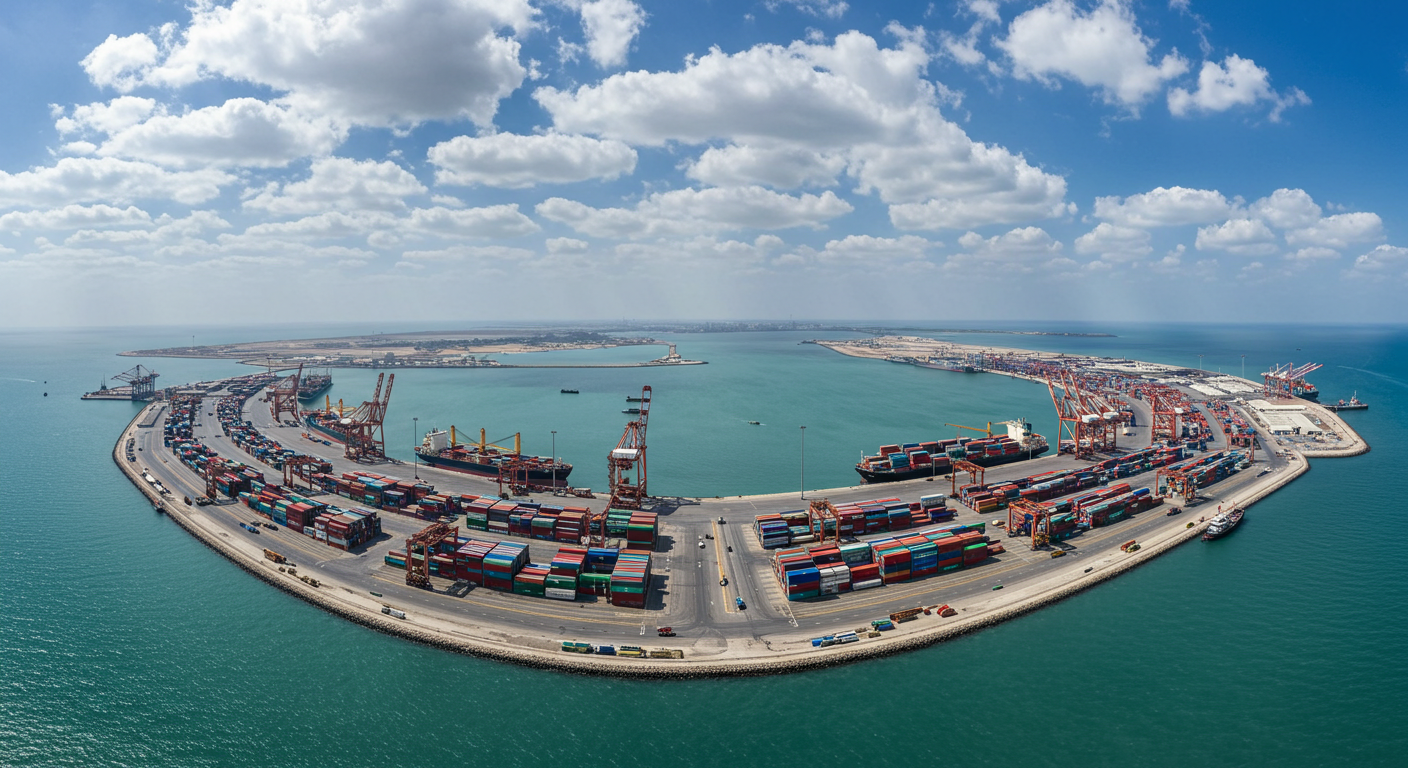
Pakistan Port Qasim is the major port of international trade in Pakistan. It is situated close to Karachi and it facilitates about 35 percent of total maritime trade in the country. It handles more than 90 percent of the external trade of Pakistan along with Karachi Port. Presently, the port annually handles approximately 58 million metric tonne cargoes with over 1.2 million twenty-foot equivalent units (TEUs) of containerized freight. It is critical in transport of different export products that include textiles, rice, cement, chemicals and sea foods.
The move to reduce export fee at Port Qasim will greatly reduce the cost of operations among the exporters. This will assist them to be competitive in the international market where logistics efficiency and prices matter. The high shipping and port charges have been long tormenting many Pakistani exporters thereby diminishing their profit base and also restraining them to enter into new markets. The reduction in charge will thus provide a direct incentive to the businesses to expand on the volume of goods being exported. International analysts believe that a mere 5 to 10 percent increase in the export traffic via the port could mean that the economy could earn billions in extra revenue and thousands of people in the supply chain could be employed in the transport, warehousing, and manufacturing industries.
It was announced together with other good news in the maritime industry. It was noted that the Marine Fisheries Department was able to come up with its export objective of 410 million dollars in this financial year. This was composed of a mixture of fisheries catch and farmer-cultured products. The fisheries sector in Pakistan has been on an upward trend in the past few years and the growth can be seen to have immense potential in the future due to growing international demand of fish and other sea food products. Secondly, the Gadani ship recycling industry in Balochistan earned 6 billion (Rs) representing an approximate total of 21 million dollars. This indicates the increasing appreciation of sustainable maritime industries as well as the concentration of the government on diversifying the maritime economy.
The Minister of Maritime Affairs Junaid Anwar Chaudhry said that the half reduction of the port charges is a single aspect of the greater reformation plan. He stated that the government is also making major infrastructural investment in modernisation of Port Qasim so that the efficiency can be enhanced as well as increase capacity. The current expansion plans entail the construction of the second container terminal having a capacity of 1.2 million TEUs annually, new grain and fertilizer terminal with capacity of 4 million tons per annum and liquid cargo terminal. The navigation channel is also going to be deepened to 14meters to accommodate bigger vessels that can dock in the port and hence avoid transshipment using other countries.
In a bid to enable these upgrades in infrastructure, the government is striving to welcome foreign direct investment. Public-private partnerships will be able to generate more than 1.2 billion in Port Qasim. In January 2024, a big cooperation deal was signed with the Dubai-based logistics corporation DP World. This arrangement also involves the development of a multi-modal logistic park and a freight corridor which is estimated to result in some 3 billion dollars of investment into the country in near future. These developments are likely to raise the capacity of the port even further and its contribution to trade in the region.
Trade facilitation also encompasses custom reform and customs digitization in the agenda of the government. There is already a start given by introduction of Pakistan Single Window system to decrease the time on clearance of cargo, thereby decreasing the spillover of clearance and demurrage expense. Moreover, the latest scanning apparatus is also being put in place that will help in the handling of the cargoes and their adherence to international regulations. This is changing the ports of Pakistan making it more favorable among the domestic and international traders.
The maritime sector in Pakistan has been unleashed in the past. According to reports by the Ministry of Maritime Affairs, the country has ports that operate at approximately 50 percent of its total capacity which amounts to lost economic opportunities to the country. The share of the maritime trade in the gross domestic product of Pakistan is not high 0.5 percent in comparison with the percent of the gross domestic product in many other coastal states that makes up between 5 and 7 percent. The government believes that it can achieve its goal of unlocking its regulatory potential in its ports by improving inefficiencies, investing in the infrastructure and reducing costs.
📄 POLICY WIRE WHITEPAPER PUBLISHED: PAKISTAN'S NATIONAL SECURITY POLICY PRIORITIES
👉 READ BY CLICKING HEREThe decrease in the export fees will lead to ripple effect to other sectors of the economy. The additional traffic in the port will spur development of allied sectors that include transport, logistic, warehousing and value adding processing. It will also enhance connections of Pakistan to regional market via trade links such as the China-Pakistan Economic Corridor (CPEC) that connects the nation to Central Asia and the Middle East, among others.
The presence of power plants and industrial areas around Port Qasim, the port also contributes in developing the local industries. These power plants produce over 3,000 megawatts of electrical power, which assists to fulfil the energy demands of the nearby factories and manufacturing units. These industries will also enjoy improved infrastructure and Stable logistics as trade goes up.
In general, the decision to bring down export charges from Port Qasim by half is opportune and well-calculated policy move to rejuvenate the trade sector in Pakistan. It is an indication of government efforts at developing competitive business environment, promoting investment and upgrading of vital infrastructure. With such measures, Pakistan is staging itself as a better powerhouse in the global economy and the activities of its maritime economy to bring forth the full glory of what it holds.
Author