

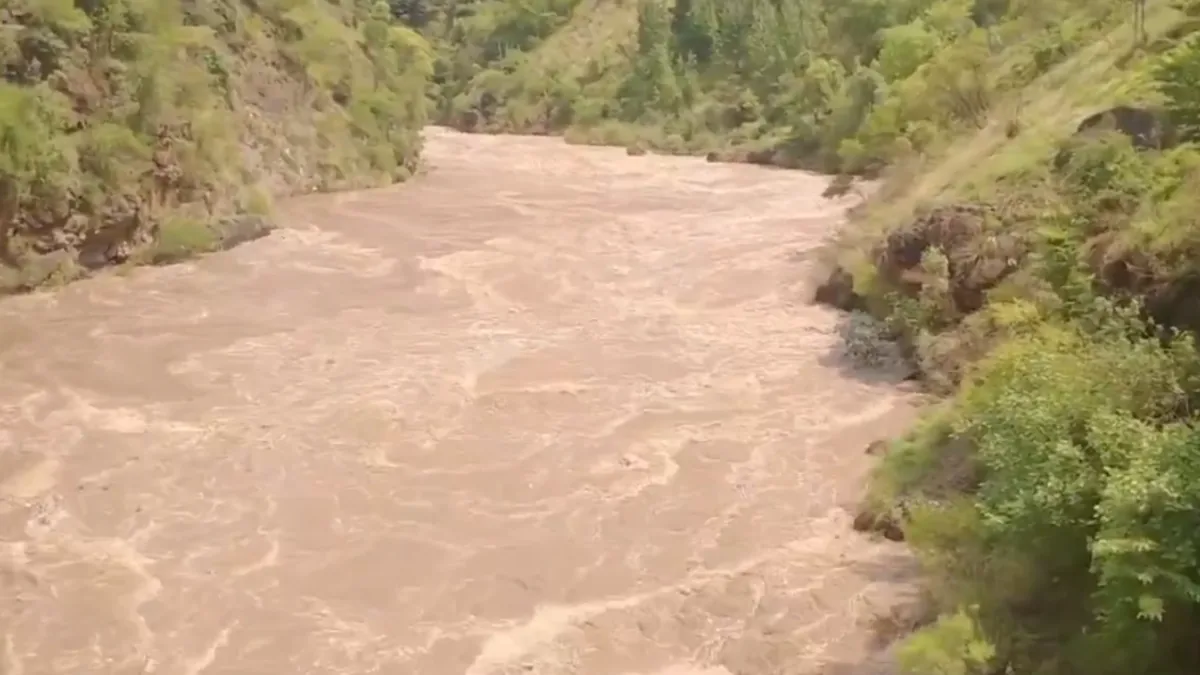
Floodgates of Crisis: How India’s Water Strike Could Drown Regional Peace: Flood in River Jhelum
In an alarming escalation following the tragic Pahalgam attack, India has unilaterally suspended the Indus Waters Treaty (IWT), a move that has ignited concern among regional observers, international...

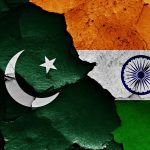
In an alarming escalation following the tragic Pahalgam attack, India has unilaterally suspended the Indus Waters Treaty (IWT), a move that has ignited concern among regional observers, international bodies, and water security analysts alike. The decision, announced by Indian authorities in the immediate aftermath of the attack that left 26 civilians dead in the Indian-occupied Kashmir valley, appears to be driven more by political theatrics than rational statecraft. Instead of pursuing verifiable investigation and responsible diplomacy, India chose to lash out with a series of retaliatory steps, including downgrading diplomatic ties, shutting the Attari checkpoint, expelling Pakistani diplomats, and most dangerously, threatening to cut water flow to Pakistan-an act Islamabad rightfully terms as “water warfare.”
The Indus Waters Treaty, brokered by the World Bank in 1960, is one of the most successful water-sharing accords globally. It has withstood wars, border clashes, and political volatility between the two nuclear-armed nations. Under the treaty, Pakistan was allotted the three western rivers-Indus, Jhelum, and Chenab-while India retained control over the eastern rivers-Ravi, Sutlej, and Beas. Crucially, the treaty does not permit either side to suspend its obligations unilaterally. However, by suspending it without international consultation or legal justification, India has set a dangerous precedent that not only threatens Pakistan’s water security but also the broader South Asian peace architecture.
Water is a critical resource for Pakistan’s 240 million people, with nearly 90 percent of its agriculture and drinking water needs dependent on the rivers governed by the treaty. Already considered one of the most water-stressed countries in the world, Pakistan’s per capita water availability has plunged from over 5,000 cubic meters in 1947 to under 1,000 cubic meters today. The World Bank and IMF have long warned that Pakistan’s water security is directly tied to regional stability. Against this backdrop, India’s move can only be viewed as a reckless act of provocation that risks sparking an environmental and humanitarian disaster.
Moreover, New Delhi’s retaliatory measures came without presenting any verifiable evidence linking Pakistan to the Pahalgam attack. Notably, an Indian opposition resolution led by the Congress Working Committee raised valid questions regarding security lapses and intelligence failures within India itself. Reports from The Wire and Hindustan Times even confirmed that no credible investigation had been completed when Prime Minister Modi’s government decided to downgrade diplomatic ties and invoke punitive actions against Pakistan. Such hasty conclusions not only diminish the credibility of Indian institutions but also expose the Modi administration’s tendency to exploit national tragedies for political mileage-often to whip up nationalist fervor before elections.
Pakistan’s response, meanwhile, has been coordinated and strategic. The National Security Committee, chaired by Prime Minister Shehbaz Sharif and attended by top civilian and military leadership, rejected India’s unilateral moves as illegal, politically motivated, and devoid of any legal merit. Asserting the right to protect its national interests, Pakistan closed the Wagah Border, suspended all trade and airspace access for Indian carriers, and curtailed diplomatic ties. More significantly, Pakistan warned that any attempt to stop or divert water would be considered an “act of war,” prompting a full-spectrum response-a statement that underscores the seriousness of the issue without signaling aggression.
The international community must not underestimate the implications of India’s actions. Diplomatic observers have likened this moment to the 2019 Pulwama-Balakot crisis, which nearly brought the region to the brink of war. Michael Kugelman, a noted South Asia analyst, stated that India’s suspension of the IWT this time is not just rhetoric-it is a “highly consequential” retaliation that could have lasting impacts on regional peace. Back in 2019, India had considered such a move but refrained. Its decision to act now, under similar conditions but without evidence, suggests an emboldened leadership less restrained by diplomatic norms and more driven by political optics.
Equally troubling are the reports emerging of harassment against Kashmiri Muslim students across Indian states, including Uttar Pradesh and Himachal Pradesh. Following the attack, fringe groups reportedly threatened Kashmiri youth, leading many to flee hostels and campuses in fear. This targeting of innocent individuals based on their identity reflects a broader pattern of discrimination that has intensified under the current Indian regime. It is not merely a security lapse; it is an orchestrated campaign of hate, vilification, and communal polarization.
Furthermore, India’s decision to suspend visas and expel Pakistani officials disrupts existing mechanisms for dialogue and cooperation. These include cultural exchanges, religious pilgrimages, and the Saarc Visa Exemption Scheme, under which Pakistani and Indian citizens have engaged in people-to-people contact. The cancellation of these arrangements erodes the few remaining bridges between the two nations and raises serious questions about India’s long-term commitment to regional stability.
Water, diplomacy, and borders are not tools to be weaponized in the pursuit of domestic political gain. India’s current trajectory risks transforming a tragic event into a full-blown crisis, not only with Pakistan but also with multilateral institutions that oversaw and guaranteed the Indus Waters Treaty. Instead of fostering cooperation, India is eroding the very framework that has prevented water wars in a highly volatile region.
Pakistan, on its part, has reiterated its commitment to peace but also made it clear that it will not compromise on sovereignty, dignity, or the rights of its people. As the PMO rightly stated, “any attempt to usurp Pakistan’s rightful share of water will be met with full force.” This is not sabre-rattling; it is a legitimate warning grounded in international law, national interest, and the basic principles of equitable resource distribution.
In conclusion, India’s unilateral suspension of the Indus Waters Treaty, coupled with the downgrading of diplomatic ties and baseless allegations, marks a deeply irresponsible turn in South Asian politics. It sets a dangerous precedent and increases the likelihood of a prolonged conflict over one of the most critical resources in the region. The world must take note and act before this recklessness triggers a chain reaction that would be far more difficult to contain. Peace requires maturity, not unilateralism. And in a region armed with nuclear capabilities, there can be no room for such dangerous experiments in aggression.
Author