


Green Chile Grit: How a Local Eatery’s Resilience Mirrors Global Economic Adaptation
POLICY WIRE — ISLETA PUEBLO, New Mexico — It’s a truth universally acknowledged in the arid expanse of New Mexico: the green chile cheeseburger isn’t just a meal; it’s a culinary...

POLICY WIRE — ISLETA PUEBLO, New Mexico — It’s a truth universally acknowledged in the arid expanse of New Mexico: the green chile cheeseburger isn’t just a meal; it’s a culinary sacrament, a badge of identity. And for two-time state fair champions Isleta Grill, their reputation, their very livelihood, hinged on delivering this iconic comfort food. Yet, the foundations of such local institutions, anchoring communities for decades, can prove surprisingly fragile. One morning, a vehicle didn’t just park; it plowed, ripping through the diner’s facade and severing a gas line, instantly transforming a beloved eatery into a casualty of the unforeseen.
But this isn’t a story of collapse. It’s an unexpected narrative of pivot, grit, and the almost improvisational resilience that defines small businesses in an era of relentless disruption. The crash, a destructive force by any measure, ironically accelerated a latent ambition for the Grill’s proprietor. They’d been toying with the idea of a food truck for ages (who hasn’t, in this burgeoning mobile dining landscape?), but the sudden, catastrophic structural damage made the notion an urgent imperative.
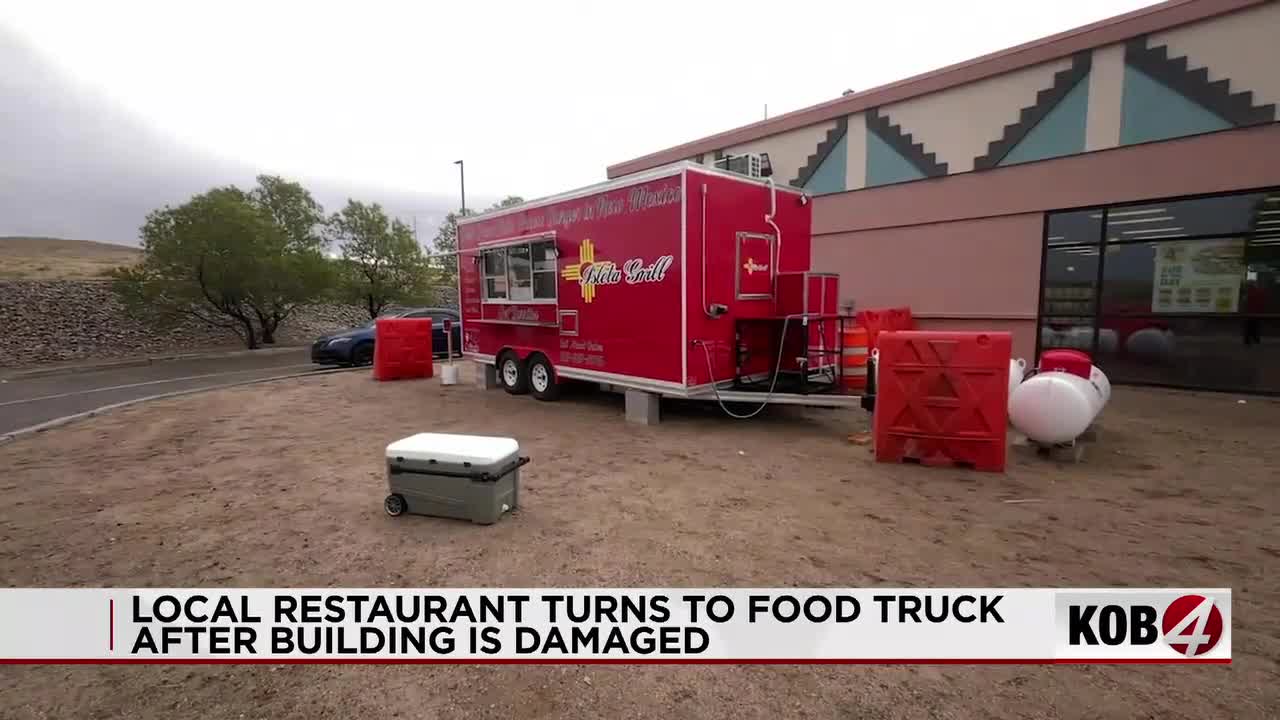
“This was a solution to keep moving forward, keep working and still be able to provide jobs for our employees and keep cooking for all our loyal customers,” owner Maria Sanchez, a woman whose hands bear the indelible scent of roasting peppers, opined, her voice tinged with both weariness and resolve. It’s a testament to the stubborn optimism that fuels the engine of local commerce. Within days, the aroma of sizzling patties and roasting green chile wasn’t emanating from a brick-and-mortar building but from a brightly painted truck, parked defiantly in the very same lot.
And so, Isleta Grill, famed for its singular take on New Mexico’s quintessential dish, found its unexpected new home on wheels. This mobile incarnation, offering the full, unabridged menu, has maintained its grueling schedule—Monday through Friday, 5:30 a.m. to 3:30 p.m.—a relentless pace indicative of the deep-seated commitment to both employees and patrons. The seamless transition wasn’t just a logistical feat; it was a psychological victory, a rejection of surrender in the face of what might have been a business-ending blow. Aldermen Kenneth Ramirez, chair of the city’s Small Business Affairs Committee, emphasized, “These aren’t just businesses; they’re the warp and weft of our community’s economic fabric. Their rapid pivots, like Isleta Grill’s, aren’t just commendable; they’re a blueprint for urban economic resilience in an age of unpredictable disruptions.” He wasn’t wrong.
Behind the headlines of a crashed car and a culinary comeback lies a broader reflection on economic vulnerability and the extraordinary lengths entrepreneurs will go to preserve their ventures. The ability of a small business to adapt so quickly, moving from a fixed location to a mobile platform, speaks volumes about the agility required to survive today. It’s a strategy not dissimilar to the informal street vendors of Karachi or the makeshift shopkeepers of Lahore, who, facing political instability or devastating floods, regularly reconstruct their livelihoods with astounding speed and ingenuity, often relying on tight-knit community networks and an innate entrepreneurial spirit. This kind of localized resilience, often overlooked by grand policy debates, forms the bedrock of both developed and developing economies.
Still, the stakes are undeniably high. A recent study by the National Federation of Independent Business (NFIB) indicated that only 68% of small businesses survive beyond their fifth year, a figure that plummets further when unexpected external shocks like structural damage occur. For every Isleta Grill that finds a way to pivot, countless others simply fold, their dreams — and their employees’ jobs — dissolving into the ether. It’s a stark reminder that while individual resilience is commendable, systemic support structures are the silent fissures that often determine long-term survival.
What This Means
The Isleta Grill’s unexpected migration to a food truck isn’t merely a quaint local story; it’s a poignant microcosm of larger economic and policy challenges. Politically, it underscores the persistent vulnerability of small enterprises, which despite being job-creation engines, often operate on razor-thin margins with limited buffers against sudden catastrophes. Policymakers, particularly at the municipal level, might do well to study such cases, looking beyond immediate disaster relief to consider proactive frameworks that facilitate rapid operational shifts for businesses confronting unforeseen events—be it a car crash, a natural disaster, or a public health crisis.
Economically, this incident highlights the imperative of business model flexibility. The agility demonstrated by Isleta Grill could become a prerequisite for survival in an increasingly volatile commercial landscape. it speaks to the power of consumer loyalty; the continued patronage, even to a mobile iteration, is a crucial economic force. Governments and financial institutions should recognize that robust local economies aren’t built solely on large corporations but on the collective resilience of thousands of small businesses. Their ability to quickly remobilize, often through unconventional means, has profound implications for local employment stability and tax revenues. It’s a stark lesson in how adaptability—rather than rigid adherence to traditional models—might just be the most consequential policy for enduring prosperity.