

The Maverick’s End: Ted Turner’s Disruptive Legacy Haunts Today’s News Landscape
POLICY WIRE — NEW YORK, U.S. — The flickering light of an analog television screen, once a ubiquitous fixture in every home, has long ceded its primacy to the glowing, portable rectangles that...

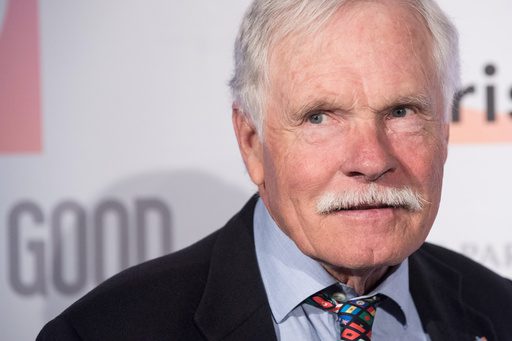
POLICY WIRE — NEW YORK, U.S. — The flickering light of an analog television screen, once a ubiquitous fixture in every home, has long ceded its primacy to the glowing, portable rectangles that dominate our present. And within this seismic shift, a singular architect of global information — Ted Turner — finally powered down. The 87-year-old media titan, known for his grand pronouncements and even grander gambles, departed this week, leaving behind a media landscape irrevocably altered by his audacious vision, even as its current iteration feels a world away from his original intent.
It’s facile to merely chronicle the passing of a legend; it’s far more incisive to dissect the enduring, often paradoxical, impact of his creations. Turner, a self-styled provocateur and an almost ridiculously outsized personality (he once quipped, ‘If only I had a little humility, I’d be perfect’), didn’t just launch a cable news channel in 1980. He birthed an insatiable beast: the 24-hour news cycle. Before CNN, news was an appointment, a discrete package delivered twice daily. Afterwards, it became an omnipresent hum, a relentless, real-time chronicle of humanity’s foibles and triumphs, available at any moment—a concept so revolutionary then it was often derided as the ‘Chicken Noodle Network’.
His contemporaries — establishment figures steeped in the traditional evening newscast — simply didn’t grasp the magnitude of his ambition. They couldn’t envision a world where a continuous feed of information, live from anywhere, anytime, wasn’t just a novelty but a necessity. This drive, rooted in his own frustration with an 8 p.m. news cutoff, fueled a career that saw him transform his father’s billboard company into a global media behemoth. By 1996, when he orchestrated the colossal sale of Turner Broadcasting System to Time Warner Inc. in a media megadeal, his empire encompassed seven major cable networks, professional sports teams, and even hit movie studios. What a run, right?
But the true crucible for CNN, — and for Turner’s concept of immediate global reportage, arrived with the 1991 Gulf War. While rival news organizations evacuated Baghdad, CNN remained, broadcasting live as anti-aircraft tracers scarred the night sky. For the first time, millions worldwide, from Washington to Karachi, witnessed a war unfold in real-time, unfiltered by the traditional evening edits. This immediate, visceral connection to global events was profound. For nations across the Muslim world, including Pakistan, this unbroken feed of information provided an immediate, often unfiltered, window into geopolitical realities previously shrouded by slower news cycles. It didn’t just report history; it accelerated its perception, sparking public discourse and often influencing governmental reactions with unprecedented speed.
“Turner didn’t just build a network; he inadvertently laid the groundwork for an entirely new informational ecosystem — one we’re still grappling with today, for better or worse,” observed Sarah Chen, CEO of Global Media Trust, reflecting on his passing. And she’s not wrong. The very year of his company’s sale, 1996, also heralded the arrival of Fox News Channel, signaling a new era where cable news would increasingly prioritize opinion over unvarnished fact, creating the very fragmented, polarized landscape we navigate today. It’s a landscape CNN now struggles to dominate, its commitment to ‘straighter’ news often overshadowed by the cacophony of partisan commentary it helped unleash.
Turner’s later years, plagued by Lewy Body Dementia and the sting of losing control over his beloved CNN (“The mistake I made was losing control of the company,” he admitted), saw him focus on philanthropy, particularly his colossal land holdings and conservation efforts. He famously donated an astounding $1 billion to United Nations charities, a sum that underscores his conviction that global problems demand global solutions, as reported by the Ted Turner Foundation.
What This Means
Turner’s passing isn’t merely the obituary of a businessman; it’s a stark reminder of the seismic shifts he engineered and the unintended consequences that ripple through our political and economic spheres. His relentless pursuit of 24/7 news democratized access, certainly, but it also primed the audience for an insatiable demand for immediate gratification — a demand now exploited by the hyper-partisan digital media ecosystem. Politically, his model empowered real-time diplomatic maneuvers and citizen engagement but also fostered an environment ripe for misinformation, where nuanced understanding often gets lost in the relentless churn. Economically, the constant news cycle created vast new markets but also intensified competition, driving down journalistic resources for in-depth reporting and pushing outlets toward sensationalism to capture fleeting attention. “His vision democratized global information access, providing a crucial, unfiltered window into events that shaped our foreign policy for decades, particularly in volatile regions,” Senator Anya Sharma, Chair of the U.S. Senate Foreign Relations Committee, recently affirmed. This democratized access, while initially a force for transparency, ultimately paved the way for the current media environment where the truth itself often feels like a commodity up for debate, particularly in regions like South Asia where competing narratives battle for dominance, a complex dynamic Policy Wire has explored in its analysis of Islamabad’s geopolitical whispers. The digital age, with its algorithms and echo chambers, owes an ironic debt to the very continuous news cycle Turner championed. We’re still trying to figure out if it’s a blessing or a curse, aren’t we?