


Europe’s Iron Curtain, Re-forged: A New Missile Shield Rises Amidst Old Fears
POLICY WIRE — Kyiv, Ukraine — Forget the gentle hum of post-Cold War diplomacy for a second. The continent’s quiet period is officially over, marked not by a grand peace treaty, but by the...

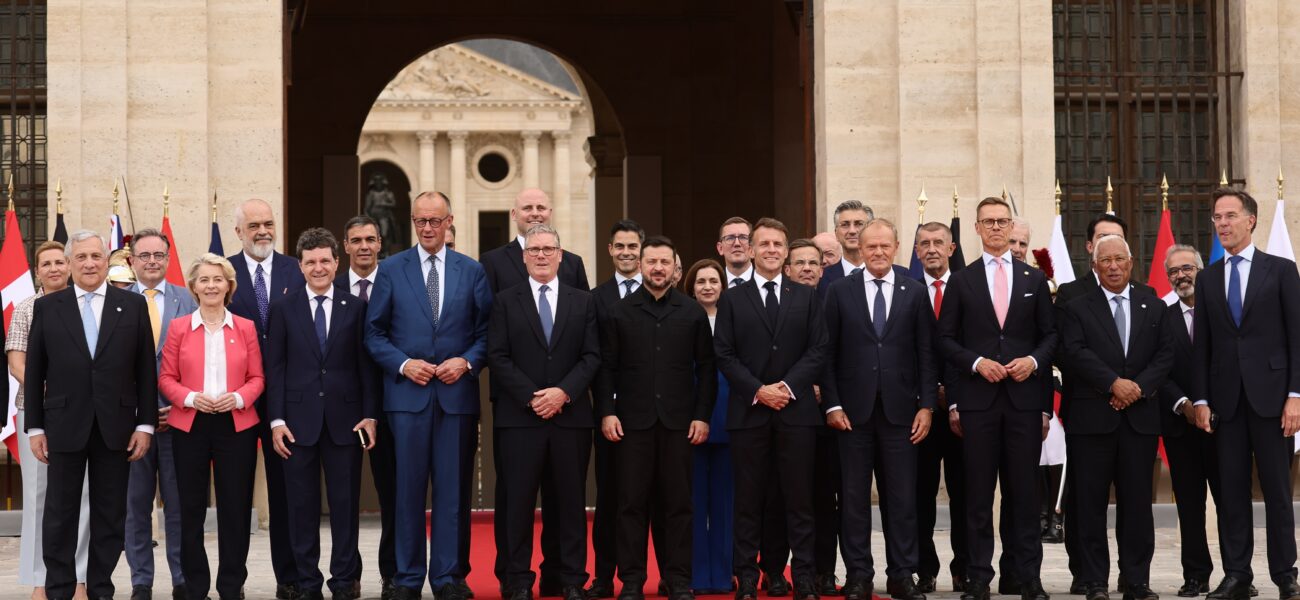
POLICY WIRE — Kyiv, Ukraine — Forget the gentle hum of post-Cold War diplomacy for a second. The continent’s quiet period is officially over, marked not by a grand peace treaty, but by the stark, undeniable clatter of nations building a new kind of defense. It wasn’t NATO that called the latest assembly—not directly, anyway. This time, it’s Ukraine, leading a curious cohort of ten European states, throwing down a challenge that speaks volumes about who trusts whom, and what kind of hardware they expect to deflect next.
It’s an awkward marriage, perhaps, between some longtime allies — and newcomers to the hot seat. The formal declaration might sound like boilerplate military jargon to the uninitiated, but strip away the officialese, and you get the bare metal truth: Europe’s getting ready to batten down the hatches against flying steel, a response long simmering, now boiling over. Because nobody’s waiting around anymore. The old guard is shaking, — and new defensive measures are less a luxury than a cold, hard necessity. One could even call it a strategic regrouping— a recognition that the past decade’s hope for an arms-control golden age was, well, a touch naive. This isn’t just about preventing damage; it’s about projecting resolve. [QUOTE_PLACEHOLDER]
But make no mistake, this isn’t just a military drill; it’s a political declaration. Ukraine’s inclusion isn’t symbolic. It’s a testament to its brutal experience on the sharp end of modern warfare. The other nine countries are varied, an interesting mix of those long accustomed to keeping an eye on their eastern flank, and others perhaps a little slower to acknowledge the changing winds. Their alignment signifies a fragmentation of previous security paradigms, a hardening of stances. And you can bet dollars to doughnuts other capitals, some quite far flung, are watching this closely. The notion of European air space as a relatively peaceful domain—it’s now a quaint anachronism.
Because frankly, the stakes have gone up. We’re not talking about minor border skirmishes or proxy wars in distant lands anymore. We’re discussing state-on-state capability to hurl weapons that leave very little to the imagination. The global defense market reflects this anxious reality; worldwide military expenditure, according to the Stockholm International Peace Research Institute (SIPRI), reached an all-time high of $2443 billion in 2023, with Europe seeing its steepest increase in three decades. It’s an arms race without the official starter’s pistol.
The coalition, even if described with guarded optimism, isn’t just about buying missile batteries off the shelf. It’s about interoperability, about shared intelligence, about a continental architecture designed to prevent rather than merely retaliate. This is the quiet business of defense, moved from backroom discussions to center stage. And it changes a lot of calculations. Countries like Poland and the Baltic states, veterans of Cold War anxieties, are breathing a slightly easier—or at least more strategically prepared—sigh. For some, like Germany, the decision to invest in such extensive layered defense capabilities marks a profound break from decades of post-war reticence. It’s expensive. It’s provocative, perhaps. But in the current climate, many believe it’s unavoidable. We’re past the point of hand-wringing. This is concrete action.
What This Means
📄 POLICY WIRE WHITEPAPER PUBLISHED: PAKISTAN'S NATIONAL SECURITY POLICY PRIORITIES
👉 READ BY CLICKING HEREThe formation of this missile defense coalition carries a far heavier punch than its relatively dry announcement might suggest. Politically, it signals a deeper entrenchment of East-West divisions in Europe. This isn’t just a reaction; it’s a preemptive shaping of the battlefield, a new ‘iron curtain’ forged not of ideology, but of anti-missile hardware. It tells aggressors that while conventional lines might be blurred, the air above will be contested, often fiercely. And it also highlights the increasing assertiveness of non-NATO countries in defining their own security architecture, even if operating within a broader, NATO-influenced orbit.
Economically, the implications are substantial. We’re talking about colossal defense contracts. The technology, often proprietary, will fuel a segment of the military-industrial complex that’s already booming. This will divert national budgets, naturally, from other public services, but is now framed as a necessary cost for stability. The pressure on neutral nations, or those with more ambiguous foreign policy stances, to choose a side or beef up their own defenses unilaterally will only intensify. And what about Pakistan, for example? A nation grappling with its own internal instabilities, a long and complicated relationship with China (a primary source for its missile technology, as Delhi certainly observes), and a constant dance with its neighbors, will surely watch this European push with a keen eye. The deployment of sophisticated Western anti-ballistic missile systems will no doubt be analyzed for any technological lessons, any strategic shifts that might ripple out into its own complex regional security dilemmas, or any potential opportunities for arms acquisitions. Because if Europe is locking down its skies, others, from Islamabad to Riyadh, are running their own complex threat models.
The messaging here is clear: Europe has chosen deterrence over de-escalation, at least in the air defense arena. This isn’t merely about protecting against future threats; it’s about acknowledging an extant one. And frankly, the consequences of miscalculation in this environment don’t bear thinking about. We’ve entered an era where missile defense isn’t an exotic theoretical debate; it’s a pragmatic necessity being built out, layer by agonizing layer, by nations determined not to be caught unprepared again. But will this shield deter, or simply accelerate the offensive ambitions of others? That’s the billion-dollar question. And the answers, unfortunately, usually come in the form of unpleasant surprises.