


Europe’s Relentless Blaze: Why a Mammoth Firefight in 2026 is Just Damage Control
POLICY WIRE — Brussels, Belgium — It’s a stark, almost unseemly confession from the gilded halls of European bureaucracy: the summers here aren’t for quaint countryside getaways anymore. No,...

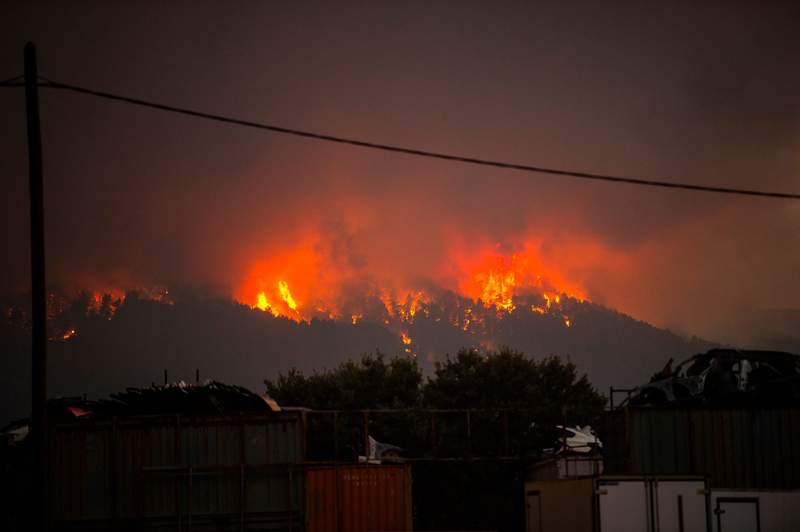
POLICY WIRE — Brussels, Belgium — It’s a stark, almost unseemly confession from the gilded halls of European bureaucracy: the summers here aren’t for quaint countryside getaways anymore. No, they’ve turned into battlegrounds, charring forests and incinerating homes with a ferocious regularity that demands more than polite discussion. This, then, is the unspoken subtext behind the European Union’s latest grand pronouncement—its plan for the largest collective wildfire response in its history, primed for the infernal season of 2026. Because what’s being framed as proactive leadership really feels like a panicked scramble, a grudging acknowledgment that decades of environmental hand-wringing are now just… too late.
Nobody’s popping champagne corks for this. Europe, long perceived as a continent insulated from the starker realities of global climate shifts, is finding its illusions burning right alongside its ancient olive groves. And Brussels, a place famous for its consensus-building (or gridlock, depending on who you ask), is now funneling resources into a colossal firefight operation, a testament to the fact that when your backyard is perpetually ablaze, you stop debating and start spraying. The continent suffered some of its worst fire seasons in recent memory, with over 500,000 hectares going up in smoke across the EU in 2023 alone, according to data from the European Forest Fire Information System (EFFIS). Think about that: half a million football fields, scorched. Every single year.
“We can’t pretend this is business as usual,” snapped Commissioner Jane Andersen, overseeing Crisis Management, in a tersely worded virtual presser. “We’re not just preparing for fires; we’re bracing for a fundamentally altered European summer. One where these extreme events aren’t anomalies, but the grim norm.” Her voice, usually measured, carried a weary edge. It’s almost as if the enormity of it all has finally dawned on them.
The operational expansion involves hundreds of aerial assets—helicopters, water-bombing planes, and thousands of specialized personnel—pre-positioned across strategic hotspots. But it’s not just the hardware; it’s the shift in mindset. For too long, the continent treated wildfires as localized, unfortunate incidents. Now, they’re integrated into the fabric of shared, continental disaster management. It’s expensive. And it’s draining.
But the problem, really, extends far beyond Europe’s well-manicured borders. Just look east, toward South Asia, for instance. Pakistan, a nation routinely battered by environmental catastrophes—from unprecedented floods to searing heatwaves that claim lives—doesn’t get the same swift, multilateral EU response. They’re often left to grapple with these immense challenges largely on their own. It’s a stark reminder that while climate change is global, its impact, and indeed the resources mustered to fight it, remain profoundly unequal. There’s a certain tragic irony in Europe gearing up for a domestic battle while nations with fewer resources, arguably facing even greater climate stresses, rarely feature in such large-scale protective strategies.
“We must treat climate action not just as a policy choice, but as a continental security imperative,” opined Dr. Lena Schiller, head of a Brussels-based climate think tank, her words resonating with a mix of academic foresight and sheer exhaustion. “The fires aren’t just burning our forests; they’re burning holes in our budgets, displacing our people, and frankly, shredding our idyllic image of Europe’s relentless summer creep. What’s more, it means we’re in a reactive cycle, pouring billions into crisis management instead of proactive mitigation that might actually solve the damn problem.”
This unprecedented investment isn’t just about extinguishing flames; it’s a costly lesson in political and ecological economics. Because prevention is cheaper. And less dramatic.
What This Means
The EU’s scaled-up wildfire response for 2026 isn’t merely an operational adjustment; it’s a profound admission of Europe’s new geopolitical reality. Politically, it signals a deeper, perhaps unwilling, integration of climate resilience into core security strategies. This isn’t just an environment minister’s brief anymore; it’s a national defense concern. Leaders are scrambling to show action, yet the sheer scale required underscores past policy deficits. There’s immense pressure to deliver, particularly after consecutive brutal summers chipped away at public trust. Failure to effectively manage these crises could fuel populist discontent and challenge the perceived competence of Brussels itself. Economically, the cost of this infrastructure — and the damage it’s designed to mitigate — will stretch already tight budgets, potentially diverting funds from other initiatives like social programs or economic recovery post-pandemic. It also puts a significant burden on member states, who must coordinate logistics — and personnel. We’re talking billions of euros not for growth, but for simply staying afloat. the explicit link to climate change—even if unspoken in direct press releases—reinvigorates calls for more aggressive decarbonization policies, though the focus here remains firmly on adaptation, not cause. The financial markets, always keen observers, will start factoring in climate volatility more aggressively into long-term investment models for regions repeatedly hit, influencing everything from insurance premiums to agricultural futures.