

Mossad Chief’s Gambit: Iran’s ‘Blow’ and the Shifting Sands of Mideast Intrigue
POLICY WIRE — Tel Aviv, Israel — The invisible struggle, that gnawing, ceaseless shadow war for regional dominion, rarely offers clear pronouncements. Its victories are typically whispered, its...

POLICY WIRE — Tel Aviv, Israel — The invisible struggle, that gnawing, ceaseless shadow war for regional dominion, rarely offers clear pronouncements. Its victories are typically whispered, its setbacks meticulously concealed behind a carefully curated veil of denial. But then comes a moment of surprising, almost disarming frankness. A rare public peek behind the curtain.
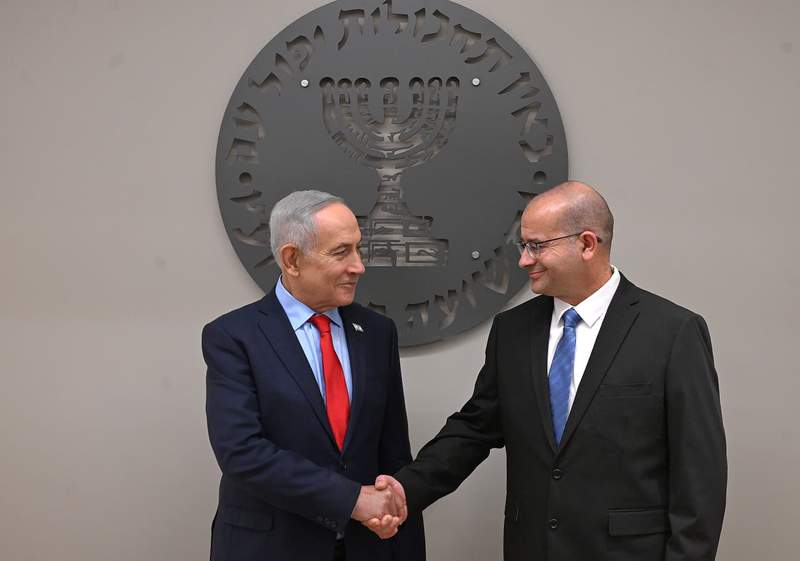
It was Roman Gofman, Israel’s freshly minted Mossad director—a man whose job description practically demands opacity—who cut through the usual diplomatic niceties this week. His declaration, stark and unburdened by diplomatic pleasantries, hit the wire: the so-called “Iranian Shiite axis” had taken a wallop. “The Iranian Shiite axis has indeed suffered a significant blow, a necessary disruption to their expansionist agenda,” Gofman reportedly remarked, a sentiment that echoed, not entirely coincidentally, throughout Western intelligence circles. It wasn’t just idle chatter; it felt like a deliberate broadside, designed to land hard.
What Gofman’s specific target was remains, naturally, a matter of fervent speculation. Was it a sophisticated cyberattack, crippling a critical piece of infrastructure? A targeted operation against key figures in Tehran’s elaborate network of proxies? Perhaps an economic squeeze, a well-timed sabotage effort to disrupt supply lines or funding mechanisms? The exact nature of this reported “blow” isn’t just redacted; it’s a state secret. But the claim itself, issued by the head of one of the world’s most formidable intelligence agencies, carries weight.
And it forces a critical examination of Iran’s expansive regional project. We’re talking about a web stretching from Hezbollah in Lebanon to assorted militia groups in Iraq—sometimes pledging allegiances that quickly blur—and its long-standing support for Houthi rebels in Yemen. This isn’t just about a military footprint; it’s an ideological one, built on shared revolutionary principles and a deeply ingrained defiance of Western — and particularly American and Israeli — influence.
Because let’s be frank, Gofman isn’t in the business of exaggeration. Not publicly, anyway. Such pronouncements are carefully calibrated. They’re meant to signal, to deter, — and perhaps even to encourage dissent within Iran’s orbit. It’s a message intended not just for Tehran, but for Washington, for Riyadh, and for any other capital grappling with Iran’s undeniable regional swagger. Their opponents will read it, analyze it, — and react.
The geopolitical dominoes throughout South Asia — and the Muslim world rarely fall in isolation. Any perceived weakening of Iran’s position reverberates, especially in places like Pakistan. This nuclear-armed nation, itself straddling a delicate balance of regional alliances and internal sectarian sensitivities, watches these power plays with an unblinking gaze. Islamabad, with its significant Shiite minority and complex relationship with Saudi Arabia, has always been acutely aware of Iran’s strategic maneuvers. Any instability further east—say, in Afghanistan where Iranian influence clashes with other regional players—directly impacts its own border security and domestic tranquility. Don’t think for a moment they’re not calculating the implications of Gofman’s words.
“These are the desperate bleatings of a cornered regime, attempting to inflate minor skirmishes into strategic victories,” shot back Iran’s Foreign Ministry spokesperson, Nasser Kanaani, a man whose official duties demand a healthy dose of public skepticism regarding Israeli claims. “Our resilience is unmatched, — and our axis of resistance remains stronger than ever. They’re mistaking a bump for a mountain.” A predictable riposte, one suspects, designed for domestic consumption as much as international. But what if it’s not?
The stakes are perpetually high. The Islamic Revolutionary Guard Corps (IRGC), a key instrument of Iran’s foreign policy, has seen its budget increase substantially. According to a 2023 report by the International Institute for Strategic Studies, Iran’s defense spending, a considerable portion of which flows to the IRGC and its overseas operations, was estimated to be around $24.6 billion, representing a significant percentage of its GDP. That’s a serious financial commitment to what Gofman calls an “expansionist agenda.”
But does this claimed setback alter the fundamental calculus of Tehran’s ambition? Probably not. An empire doesn’t simply fold its hand because of a single lost battle. It adapts. It recalibrates. It seeks new vulnerabilities in its adversaries, a process that continues regardless of the recent public pronouncements. The game, after all, is long, brutal, — and rarely played in the daylight. And the region is always holding its breath, waiting for the next move.
What This Means
Gofman’s remarks, while deliberately vague, signal a renewed—or at least, newly highlighted—intensification of covert operations against Iran’s regional power project. This isn’t just bravado; it’s a strategic messaging effort aimed at two audiences. First, internal opposition within Iran — and its proxies, suggesting their patrons aren’t invincible. Second, regional players like Saudi Arabia, offering a glimpse of shared objectives and a message of ongoing engagement against a common rival. For Tehran, it likely means a review of security protocols and an enhanced vigilance, possibly leading to even more clandestine activities to avoid further direct confrontation while maintaining influence. Economically, any disruption could stress an already sanction-hobbled Iranian economy, forcing harder choices on how to fund its far-flung networks. For Pakistan and other South Asian nations, a weakened Iran might paradoxically increase regional instability as competing influences rush to fill perceived vacuums, creating new diplomatic and security headaches.