


The G-League Grind: Anatomy of a Hoops Dream’s Hard Landing
POLICY WIRE — New York, USA — Not every Cinderella story gets the storybook ending. Sometimes, after the ball, the prince gets a pink slip. That’s pretty much the cold, hard reality facing...

POLICY WIRE — New York, USA — Not every Cinderella story gets the storybook ending. Sometimes, after the ball, the prince gets a pink slip. That’s pretty much the cold, hard reality facing Malachi Smith, a name whispered amongst basketball hopefuls just a year ago, now returning to the familiar purgatory of the G League. It’s a ruthless machine, the NBA, where contracts are ephemeral, loyalty a scarce commodity, and the dream, for many, remains just beyond a tenacious grasp. It’s not a narrative about a failed athlete, though; it’s a stark glimpse into the transient nature of talent, particularly in a hyper-competitive global market.
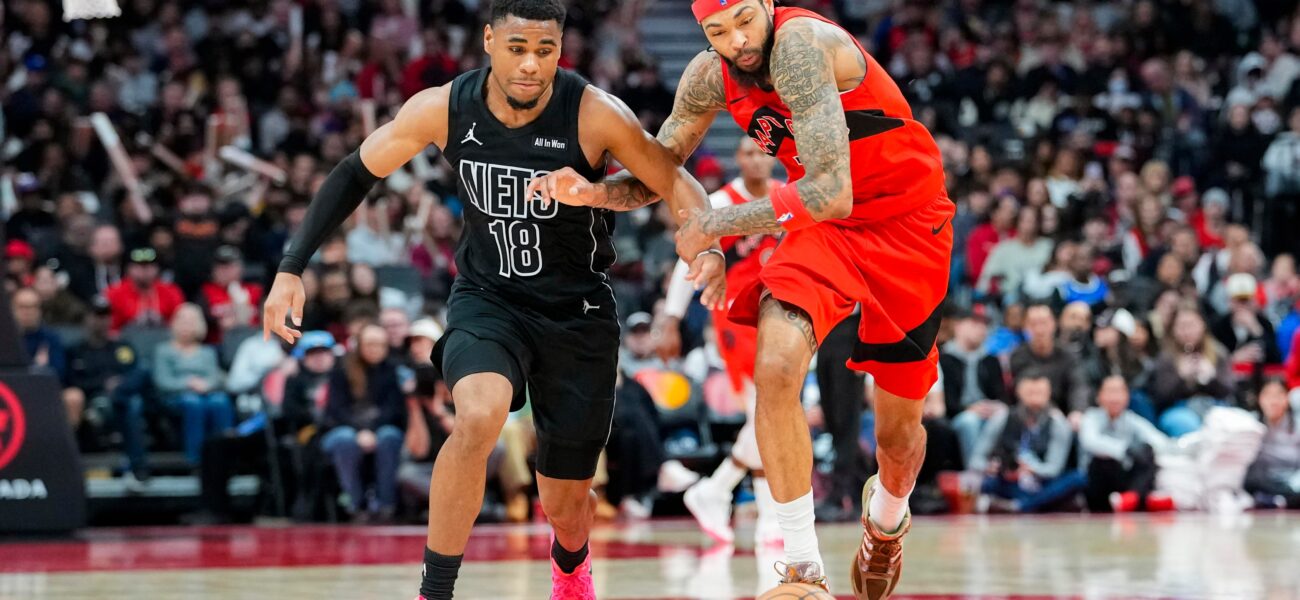
His recent dispatch from the Brooklyn Nets roster isn’t just another transactional footnote in a season’s statistical churn. No, it’s a policy statement, albeit an unspoken one, on the value placed on potential versus immediate, ironclad production. The kid, The former Gonzaga Bulldog signed a two-year, non-guaranteed deal back in April after two 10-day contracts with the organization. What sounded like an entryway, a foothold in the big league, was, in retrospect, merely another rung on a precarious ladder, waiting to be kicked out from beneath him. Brooklyn exercised Smith’s minimum salary team option in June. That gesture, once a sign of confidence, now looks like little more than a strategic pause, a hedge against uncertainty, or perhaps, a placeholder until the next shiny thing came along. [QUOTE_PLACEHOLDER]
The numbers, often the final arbiters in this cold calculation, tell their own story. During 15 games (four starts) played with the Nets to close out this past season, Smith averaged 8.3 points on a shooting split of 48.5 percent from the field/43.5 percent on three-pointers/100.0 percent at the free throw line, 3.4 rebounds, and 3.3 assists per game. These aren’t the statistics of a player wholly out of his depth. In fact, that 100.0 percent free throw clip for someone seeing limited action speaks volumes about focus, even under pressure. But in the modern NBA, good simply isn’t always good enough. You’ve gotta be great. Or, at the very least, economically disposable.
Malachi Smith, all of 26 years old, had seen this movie before. The circuitous path through the minor leagues isn’t an anomaly; it’s practically a rite of passage for many aspirants. He’s had stops with the Portland Trail Blazers’ Rip City Remix, Milwaukee Bucks’ Wisconsin Herd, Memphis Grizzlies’ Memphis Hustle, and the Brooklyn Nets’ Long Island Nets over the last three seasons. It’s a grind that would shatter lesser wills, a constant audition where every possession, every rebound, every minute matters more than the last. He crisscrossed the country, honing his craft in dimly lit arenas, chasing an ephemeral chance. And the collegiate career? A true journey: Smith started his collegiate career with the Wright State Raiders from 2018-19, transferred to the Chattanooga Mocs from 2020-22, before making his way to Spokane, Washington. He was named the West Coast Conference Sixth Man of the Year in 2023 before entering his name into the 2023 NBA Draft, bypassing his final season of college eligibility. Smith would go undrafted. Just imagine that – bypassing your senior year, placing all bets on an immediate leap, only to hear nothing.
But life, particularly in sports, has a way of throwing curveballs. The Brooklyn Nets’ decision, reported first by the New York Post’s Brian Lewis (yes, another reporter breaking news, ensuring we all know who’s got the scoop), the Brooklyn Nets have cut guard Malachi Smith from the team. This isn’t a narrative unique to American sports, by the way. The 26-year-old will most likely have to return to the NBA G League with another franchise. Because, like any other commodity, if one entity deems you surplus to requirements, there’s always another willing to take a flyer, hoping to polish an uncut gem.
And you see similar narratives playing out globally, often with far more serious ramifications. In developing nations, particularly across South Asia and the Muslim world, where formal job markets are tighter, the gig economy, the transient contract, the continuous ‘audition’ for stable employment—these are not exceptions; they’re the norm. Consider the legions of young men and women in Pakistan or Indonesia, vying for limited professional roles, often traveling great distances, making immense personal sacrifices, hoping for a ‘break’ that often comes with no guarantees, much like Malachi Smith’s non-guaranteed NBA deal. There’s no G League to fall back on there, just the harsh reality of unemployment or, worse, underemployment.
📄 POLICY WIRE WHITEPAPER PUBLISHED: PAKISTAN'S NATIONAL SECURITY POLICY PRIORITIES
👉 READ BY CLICKING HEREIt’s the brutal calculus of ambition versus opportunity, distilled down to its rawest form. But here’s a thought: sometimes, the lessons learned from these detours—the perseverance, the grit, the refusal to quit—build a different kind of strength, one that outlasts the fleeting glamour of the NBA. Maybe that’s the real championship. You’ve just got to look for it.
What This Means
The decision to waive Malachi Smith, despite exercising a team option just months prior, isn’t merely about a single player. It represents the hardened commercial realities permeating even the most celebrated global sports leagues. Franchises operate with balance sheets in mind, and every roster spot is a valuable asset, weighed against potential return on investment. The NBA, like many high-stakes industries, is a cutthroat business. Short-term contracts, performance-based clauses, and constant player churn are reflections of a broader economic landscape where job security, particularly for those on the lower rungs, is a luxury. We’re talking about a global economy that often values immediate returns over cultivating long-term talent, especially if that talent comes with an initial cost.
Economically, Smith’s situation mirrors the precarity faced by migrant laborers or specialized contractors globally—individuals with valuable skills yet without the long-term guarantees afforded to established figures. They chase opportunities, often crossing borders, relying on short-term commitments. And when one contract expires, or is cut short, the pursuit begins anew, a cycle of hope — and uncertainty. The economic implications are also tied to a system that prioritizes a select few; the vast majority operate on the margins. This echoes a different policy game entirely, one where the financial stability of many hangs by a thread.
Politically, such decisions, however small in the grand scheme, illustrate how even the most popular global pastimes reflect national priorities and market forces. The drive for efficiency, the ruthless pursuit of victory, and the protection of profit margins ultimately dictate personnel policy. In regions like Pakistan, for instance, policies aimed at developing domestic sports talent often grapple with similar resource constraints and the lure of international opportunity. The analogy extends further to the tech industry, where junior developers might find themselves on rolling contracts, ever-aware of the axe of redundancy hovering above. It’s a sobering reminder that regardless of the dream, the global market’s demands are unforgiving. This kind of intense competition—the relentless grind—is just another facet of the global struggle for economic viability, one that reflects Asia’s economic contours in surprising ways.