


Germany’s AI Gamble: Digital Minister Bets on Tech for Industrial Revival
POLICY WIRE — Berlin, Germany — For decades, the engine of Europe hummed with a predictable, if sometimes ponderous, efficiency built on precision engineering and robust export markets—a model now...

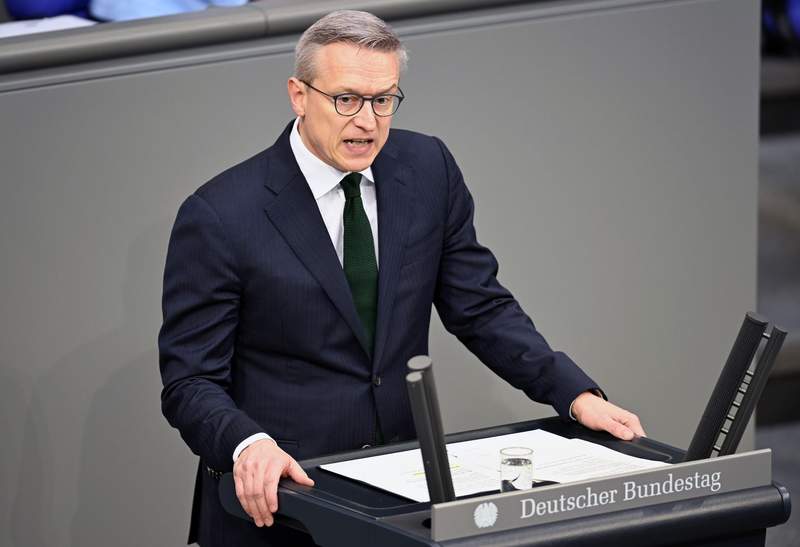
POLICY WIRE — Berlin, Germany — For decades, the engine of Europe hummed with a predictable, if sometimes ponderous, efficiency built on precision engineering and robust export markets—a model now facing the relentless churn of digital disruption and geopolitical realignment. It’s against this backdrop that Germany’s digital minister, Volker Wissing, isn’t merely suggesting AI is a technological upgrade; he’s positing it as the nation’s singular vantage point for an industrial renaissance. This isn’t just about efficiency; it’s about sheer survival in a fiercely competitive global arena.
Wissing’s pronouncement isn’t without its historical echoes. Germany, a titan of 20th-century innovation, has often found itself playing catch-up in the current century’s digital sprint. From broadband rollout to e-government services, the nation’s digital infrastructure and adoption rates have frequently lagged behind its peers. But now, it seems, there’s a palpable determination to leapfrog past these long-standing deficiencies, leveraging artificial intelligence as the critical propellant.
“We’ve got to shed the digital timidity of the past,” Wissing opined during a recent policy symposium, his voice betraying a hint of frustration with past inertia. “AI isn’t just an upgrade; it’s the very circulatory system of future competitiveness, a chance to reclaim our manufacturing primacy, to innovate like never before. Germany needs to be not merely a consumer, but a formidable producer of AI solutions, and quickly.” He emphasized the imperative to foster an environment where AI research translates directly into commercial applications, particularly in its bedrock automotive and mechanical engineering sectors. It’s an aggressive pivot, certainly, but one necessitated by global realities.
Still, the path isn’t devoid of formidable obstacles. Critics, particularly from the opposition and the often-beleaguered startup community, contend that Berlin’s bureaucratic labyrinth and penchant for regulatory caution could easily hobble even the most well-intentioned initiatives. Jürgen Schneider, CEO of ‘Innovate Deutschland’—a prominent tech advocacy group—shot back at the minister’s optimistic framing. “Such grand pronouncements often sound better in ministerial press conferences than they do in actual startup garages,” Schneider quipped in a recent interview. “Until we tackle the suffocating bureaucracy and glacial pace of digital adoption, Germany risks being a spectator, not a player, in the global AI race. It’s not just about investment; it’s about agility, which we frankly don’t possess enough of yet.”
And he’s got a point. Germany’s economy, while robust, has shown signs of strain, with some experts pointing to its delayed digital transformation as a key vulnerability. The challenge isn’t solely about funding, though that’s a significant piece of the puzzle. It’s also about nurturing a talent pipeline, retaining top-tier AI researchers, and fostering a risk-taking culture that often feels antithetical to Germany’s ingrained pragmatism. The country’s strict data privacy laws, while commendable in principle, can also present hurdles for AI development, which thrives on vast datasets.
But the stakes couldn’t be higher. The global AI market, according to Statista, is projected to swell to a staggering $1,847.5 billion by 2030. Missing out on a substantial slice of that pie isn’t an option for an export-driven economy. And this isn’t merely a European concern; it’s a global competition for technological supremacy, for economic leverage. Nations across the Muslim world and South Asia, for instance, are also scrambling to position themselves in this burgeoning sector. Pakistan, with its burgeoning youth population — and increasing digital literacy, presents a fascinating case study. While it contends with its own unique challenges in health policy and infrastructure, the nation’s policymakers are increasingly recognizing AI’s potential to leapfrog traditional development stages. Germany’s approach to ethical AI and data governance could, in theory, offer a framework for these developing economies, or it could simply highlight divergent paths in tech evolution.
At its core, Wissing’s vision is clear: Germany must leverage its engineering DNA, its educational prowess, and its deep industrial pockets to become a leader, not just a consumer, in the artificial intelligence revolution. It’s a call to arms for a nation often accused of resting on its laurels, a demand for innovation that cuts across political divides. The question, then, isn’t whether AI is an opportunity—that’s a given—but whether Germany can summon the political will and the societal agility to seize it.
What This Means
Politically, the government’s aggressive stance on AI could solidify its reformist credentials, particularly within the FDP, Wissing’s party. Success would bolster the coalition’s narrative of modernizing Germany for the 21st century, while failure would inevitably invite accusations of digital incompetence and squandered potential. It could also reshape Germany’s standing within the European Union, potentially positioning Berlin as the bloc’s AI vanguard, driving pan-European initiatives and standards. Conversely, a sluggish rollout could deepen skepticism among member states about Germany’s capacity to lead on complex digital agendas.
Economically, the implications are even more profound. A successful AI pivot could inject new dynamism into Germany’s traditionally strong industrial sectors, fostering new markets for smart manufacturing, autonomous systems, and advanced analytics. It promises job creation in high-skill areas, though it’ll inevitably displace some traditional roles, necessitating significant investment in retraining and social safety nets. a robust domestic AI industry could reduce Germany’s—and by extension, Europe’s—reliance on Silicon Valley or Chinese tech giants, bolstering digital sovereignty. But it’s a high-stakes wager, one that requires not just rhetoric but sustained, coherent action, something that’s proven a formidable challenge for Germany’s sometimes-fragmented political landscape (a subtle irony, perhaps, for a nation so famed for its precision).