

Europe Gripped by Stagflation Specter as Mideast Turmoil Chokes Global Oil Flow
POLICY WIRE — FRANKFURT, Germany — The continent’s central bankers, typically masters of subtle financial maneuver, find themselves in an unenviable predicament: paralyzed. While Europe’s...

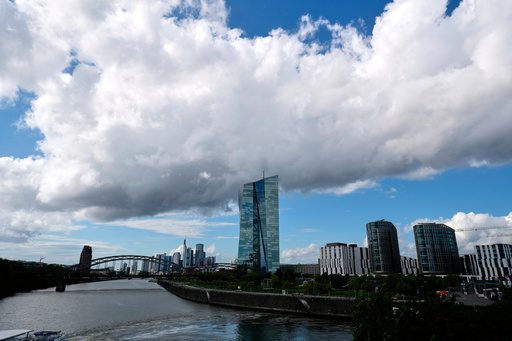
POLICY WIRE — FRANKFURT, Germany — The continent’s central bankers, typically masters of subtle financial maneuver, find themselves in an unenviable predicament: paralyzed. While Europe’s consumers grapple with a sudden, jarring acceleration in living costs, the guardians of the Eurozone’s economic stability appear bound by geopolitical realities far beyond their finely tuned interest rate levers. It’s a bitter pill, this new economic reality, where inflation isn’t merely a monetary phenomenon but a direct consequence of a rapidly unraveling global order.
Behind the headlines of rising prices, a more ominous narrative unfolds. The European Union’s statistical agency, Eurostat, recently delivered sobering news: annual inflation across the 21 Eurozone countries crept up to 3% in April, a noticeable jump from March’s 2.6%. But it wasn’t just a gentle climb; energy prices alone catapulted by a staggering 10.9%. This isn’t abstract economics; it’s the cost of keeping lights on, vehicles moving, — and factories humming. Crude oil, the lifeblood of modern economies, now commands prices above $120 per barrel, a sharp ascent from the approximate $73 mark recorded before the Iran conflict ignited on February 28.
And what’s powering this inflationary surge? The Strait of Hormuz, that narrow, critical choke point through which a fifth of the world’s oil previously flowed. Iran’s blockade, a stark retaliatory measure in its escalating conflict, has effectively severed a primary artery of global energy supply. This isn’t just about Europe’s bottom line; it’s a profound disruption felt from Houston to Karachi. Pakistan, for instance, a nation already navigating a precarious economic landscape with persistent balance of payments challenges, now faces an exacerbated burden. Its reliance on imported oil for energy and industrial needs means every dollar increase in crude prices translates directly into higher domestic costs, fueling local inflation and potentially straining its foreign exchange reserves further. Such geopolitical tremors resonate powerfully across energy-dependent economies in South Asia, leaving policymakers scrambling for viable alternatives.
“We’re witnessing a supply-side shock of unprecedented geopolitical origin,” declared Christine Lagarde, President of the European Central Bank, in a recent, somewhat strained, press conference. “Our conventional tools, while potent, struggle to address inflation driven by blocked shipping lanes and regional conflict. It’s a global energy crisis, not merely a European one.” Her measured words barely concealed the central bank’s mounting frustration. Simultaneously, economic growth across the Eurozone registered a paltry 0.1% increase in output for the first quarter, a disappointing showing that barely registers as expansion.
The combination of sluggish growth and rampant inflation, that old specter of “stagflation,” has descended upon European markets with disquieting speed. It’s the central bank’s ultimate conundrum: raise interest rates to combat inflation, and risk further stifling an already languid economy. Leave rates unchanged, — and watch prices spiral, eroding purchasing power and cementing inflationary expectations. The ECB, much like the Bank of Japan, the U.S. Federal Reserve, and the Bank of England (which all held rates steady this week), finds itself effectively frozen, a bystander in a economic drama orchestrated by distant geopolitical forces. Their benchmark rate, for now, remains untouched at 2% since June 2025 – a stark testament to their current impotence.
📄 POLICY WIRE WHITEPAPER PUBLISHED: PAKISTAN'S NATIONAL SECURITY POLICY PRIORITIES
👉 READ BY CLICKING HEREStill, the stakes couldn’t be higher. Italy’s finance minister, Giancarlo Giorgetti, recently underscored the gravity of the situation. “We can’t simply print our way out of a burning oil field,” he shot back at critics advocating for more expansive fiscal measures. “The inflationary pressures we’re enduring aren’t domestic, they’re global. Our primary concern is ensuring energy security while preventing widespread economic despair.” It’s a sentiment echoed across capitals that now face the unpalatable choice between economic pain and geopolitical defiance.
What This Means
This confluence of geopolitical conflict and economic stagnation poses a profound challenge to Europe’s political cohesion and the ECB’s credibility. For starters, the immediate implication is a significant erosion of consumer confidence — and purchasing power. Households, particularly low-income ones, will bear the brunt of skyrocketing energy and food prices, potentially triggering social unrest and calls for greater governmental intervention – measures that could further strain national budgets already reeling from recent crises.
Politically, the situation is ripe for nationalist — and populist narratives to flourish. Governments may face intense pressure to subsidize energy costs or impose price controls, policies that often distort markets and prove unsustainable in the long run. The unity of the Eurozone itself could be tested, as member states with varying degrees of energy dependence and fiscal headroom respond to the crisis with disparate approaches. Economically, prolonged stagflation risks a vicious cycle: high prices dampen demand, businesses scale back investment, and unemployment begins to tick up, creating a feedback loop that’s notoriously difficult to break. The central bank’s limited influence over supply-side shocks underscores the urgent need for diplomatic solutions to the Mideast conflict; monetary policy alone can’t refloat oil tankers.