


Europe’s Transfer Bazaar: Rashford Saga Exposes Hard Economic Truths for Continent’s Football Elite
POLICY WIRE — Madrid, Spain — In an era where football academies mint assets rather than just athletes, and financial fair play (or the perpetual bending of it) dictates boardroom strategy more than...

POLICY WIRE — Madrid, Spain — In an era where football academies mint assets rather than just athletes, and financial fair play (or the perpetual bending of it) dictates boardroom strategy more than tactical genius, the conversation around Marcus Rashford’s tenure at FC Barcelona isn’t simply about a striker finding his stride. No, it’s a cold, hard lesson in economic leverage, a geopolitical chess match played on manicured grass, and a stark reminder that even peak performance comes with a stratospheric price tag.
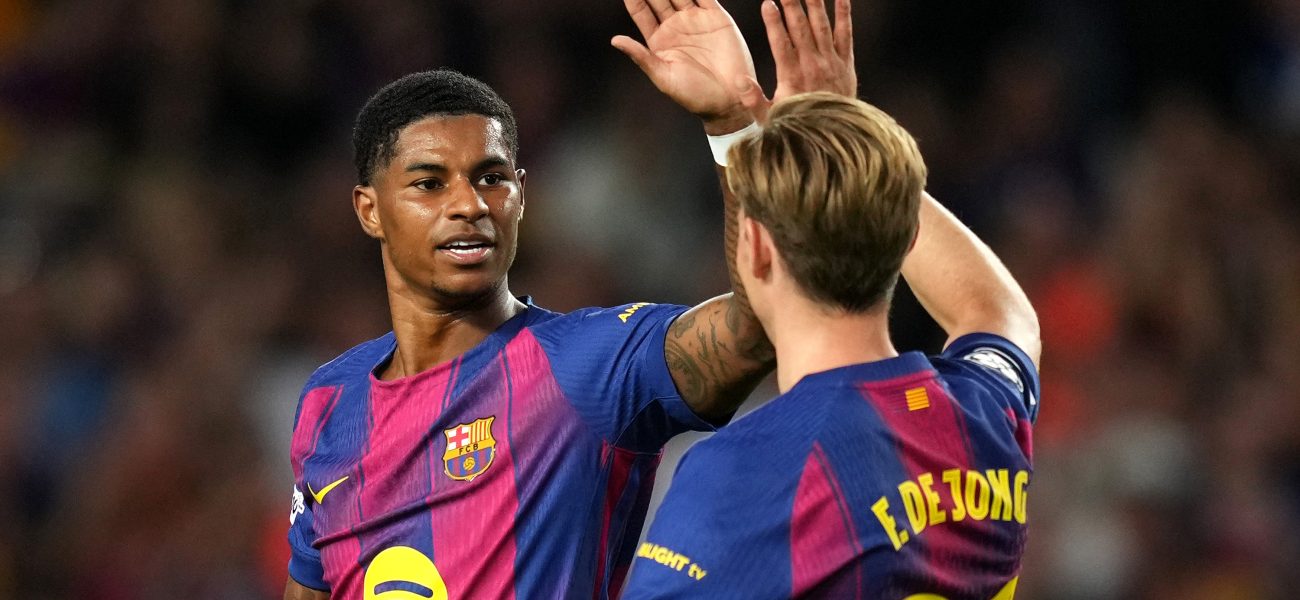
It’s not often a player’s loan spell becomes an open referendum, but here we’re. Rashford, having notched a commendable 14 goals and 11 assists for Hansi Flick’s squad – that’s some serious output, you can’t deny it – has seemingly endeared himself enough to the Catalan faithful, and, perhaps more tellingly, to the balance sheets. His teammate, the Dutch midfield orchestrator Frenkie de Jong, didn’t pull any punches, did he?
“Yeah, I think so. In the minutes he’s played, he’s given us a lot: goals, assists, attacking runs,” De Jong told the Spanish sports daily Sport, a subtle wink to the financial dividends of a winning player. He added, rather pointedly, “He’s a fast player who poses a real threat to opposing defenses. I’d be delighted if he stays with us.” It wasn’t just a teammate offering a casual endorsement; it felt more like a boardroom whisper translated into a locker-room sentiment. De Jong, one imagines, isn’t exactly in Barcelona to miss out on silverware, nor are his own wages insulated from the club’s wider financial health.
Because let’s be frank, professional football isn’t some Sunday league kickabout. It’s an economic engine, a sprawling multinational enterprise, capable of moving fortunes and shaping policy, whether explicitly or through the soft power of sport. We’re talking about billions of Euros circulating. Just last year, the global transfer market for men’s professional football clocked in at a staggering €7.36 billion in fees alone, according to FIFA’s 2023 International Transfer Market Report. That’s a sum most nations’ education budgets would eye enviously.
Barcelona, historically a club with significant debt but also astronomical income, finds itself perpetually in this delicate dance. They’ve offloaded future assets to cover past debts—selling bits of the club, its TV rights, its future income, effectively mortgaging tomorrow for today’s triumphs. Retaining a talent like Rashford, particularly one who’s proven his worth so decisively, becomes an act of economic tightrope walking.
“Mr. Rashford’s immediate impact isn’t simply a matter of on-field statistics; it’s about perceived value, fan engagement, and — let’s not be coy — the club’s commercial appeal in an increasingly fragmented global market,” observed Elena Rodriguez, Barcelona’s newly appointed Director of Football Operations. She didn’t smile. “We’re very much aware of what he brings, but Manchester United is also very much aware of what he brings. It’s a negotiation, not a given.” That’s the real kicker, isn’t it? What one club considers essential, another views as leverage.
And where does a saga like this register beyond the hyper-competitive leagues of Europe? Places like Pakistan, for instance, where millions obsessively follow La Liga — and the Premier League. Where shirts bearing the names of Messi, Ronaldo, and yes, Rashford, aren’t just fashion statements but aspirations, tangible links to a world away. For them, these transfer dealings aren’t abstract financial maneuvers; they’re narratives shaping the heroes they follow, indirectly influencing consumer habits and the local economies that feed off that massive fan base. These clubs, these players, they’re global brands, with echoes in markets far removed from the glitz of Camp Nou or Old Trafford.
But the realpolitik of it all often gets lost in the fervor. Will United — not exactly short on cash themselves — play hardball? Or do they need to offload his wages to reconfigure their own perpetually underperforming squad? It’s not just about one player, then. It’s about how much oxygen each giant can consume from a finite pool of elite talent — and discretionary spending.
Because, ultimately, these transactions illuminate a fundamental truth about elite sport: it’s a zero-sum game, financed by shrewd negotiation, immense debt, and an ever-expanding global audience hungry for heroes. The high price of peak performance isn’t just felt by the athlete’s body; it resonates across balance sheets and continents. It’s what keeps clubs, managers, — and agents in an endless, dizzying waltz of power and pelf.
What This Means
The Rashford situation encapsulates the precarious economic tightrope walk many top European clubs find themselves on. Barcelona, a club wrestling with legacy debt while striving for modern competitiveness, needs both on-field success and commercial viability. Retaining a proven asset like Rashford offers immediate sporting gains, boosts global brand appeal, and can unlock future revenue streams – a package Manchester United isn’t likely to surrender cheaply. The negotiations will hinge less on De Jong’s sentiment and more on Barcelona’s capacity to conjure the necessary funds from its complicated financial structures, potentially impacting their ability to pursue other strategic targets or manage existing salary caps.
For Manchester United, letting go of a player of Rashford’s caliber — even after a strong loan — isn’t straightforward. It could free up wages and transfer funds, sure, but it also means offloading a homegrown talent with significant marketing value, especially in markets like South Asia where Premier League allegiances run deep. It’s a calculated gamble on both sides, with policy implications for player valuation models, loan agreement intricacies, and the broader debate around how sporting federations can ensure fair competition without stifling economic innovation in a market that increasingly mirrors global capital flows. The outcome won’t just shift player rosters; it’ll send subtle tremors through the intricate, high-stakes ecosystem of elite international football.