


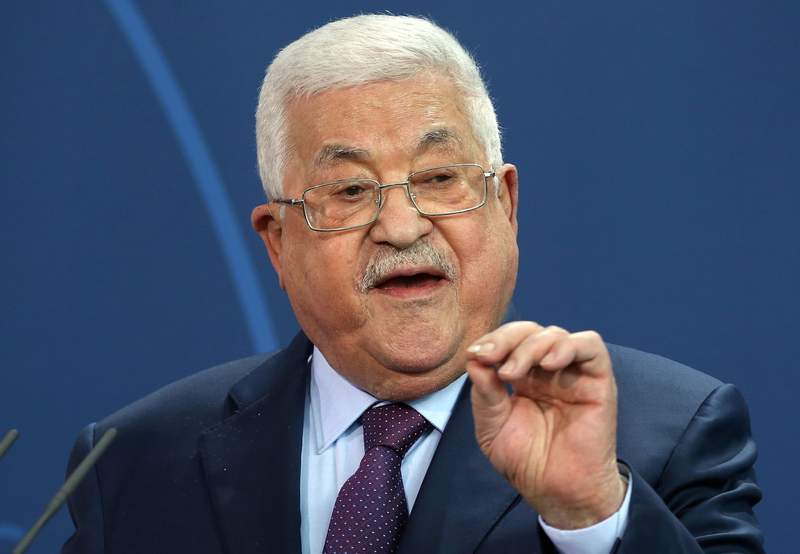
Abbas’s UN Overture: A Fading Echo in the Mideast Maelstrom
POLICY WIRE — New York City, U.S. — The world’s diplomatic machinery whirs, ever so slowly, processing another dispatch from Ramallah. Mahmoud Abbas, the increasingly embattled Palestinian Authority...

POLICY WIRE — New York City, U.S. — The world’s diplomatic machinery whirs, ever so slowly, processing another dispatch from Ramallah. Mahmoud Abbas, the increasingly embattled Palestinian Authority President, didn’t just pen a letter to the United Nations. He re-issued a familiar, plaintive call: Israel out of Gaza, — and statehood for Palestinians, right now. It’s an earnest request, no doubt, but one that lands with a practiced thud, largely absorbed into the diplomatic ether like so many before it.
It’s hard to ignore the weary familiarity. Abbas isn’t pulling a rabbit out of a hat; he’s reiterating decades of Palestinian demands. But the stakes, this time, feel heavier. The brutal war in Gaza has pulverized much of the territory, displaced nearly its entire population, and frankly, scorched any immediate prospects for a return to the negotiating table. Still, the message went out. And the hope, or perhaps the grim necessity, persists.
“Our people aren’t asking for the moon; we’re just asking for the ground under our feet,” President Abbas declared recently, echoing sentiments often expressed from his Ramallah compound. “It’s not a negotiation, it’s a right. A free Palestinian state, with East Jerusalem as its capital, living side-by-side with Israel. It’s what everyone says they want—until it comes time to actually make it happen.” There’s a certain tragic resignation in his tone, a man performing his part in a play whose ending seems perpetually rewritten, yet always the same.
Because, really, what’s changed? Israel’s security establishment views such calls as a quaint distraction at best, a dangerous fantasy at worst. A high-ranking Israeli Foreign Ministry official, speaking off the record (they always do for these touchy bits, don’t they?), dismissed the overture as “predictable theatre.” He added, dryly, “President Abbas has every right to send letters. We, on the other hand, have a duty to ensure our citizens don’t wake up to rockets again. The conditions he proposes? They’re not just unrealistic, they’re suicidal for Israel’s defense. Full stop.” It’s that deep, policy chasm. An ocean separates them, practically.
The letter reportedly details an urgent plea for the UN Security Council to enforce an immediate ceasefire, push for an independent inquiry into what’s happening, and pressure Israel to withdraw. Oh, — and it asks for guarantees for a two-state solution based on pre-1967 borders. Classic stuff. Standard playbook, you might say, but in the face of ongoing hostilities, it often feels more like shouting into the wind. UN agencies, by the way, estimated back in February that about 85% of Gaza’s population — that’s over 1.9 million people — has been internally displaced since the conflict escalated. That’s from a reliable, well, *UN source*.
This persistent appeal for international intervention isn’t just background noise in the Middle East; it resonates far and wide, touching nerves in capitals thousands of miles away. You see it from Jakarta to Rabat, from Ankara to Islamabad. In Pakistan, for example, the Palestinian cause isn’t merely foreign policy; it’s practically a national spiritual anchor. Its government, — and much of its populace, consistently throws full-throated support behind Abbas’s kind of appeal. They see parallels, don’t they? It’s a shared struggle, a rallying cry for Muslim nations demanding justice and self-determination against what they often perceive as unchecked Western-backed power. It frames broader debates about international law, self-governance, — and who, precisely, gets to decide the rules. The ongoing geopolitical tensions in the wider Muslim world often trace back to unresolved conflicts like this one. It’s all connected, after all.
📄 POLICY WIRE WHITEPAPER PUBLISHED: PAKISTAN'S NATIONAL SECURITY POLICY PRIORITIES
👉 READ BY CLICKING HEREBut while the sentiment is shared, practical levers of influence remain frustratingly scarce. Abbas’s gambit, then, isn’t about immediate victory. It’s about maintaining a historical narrative, a diplomatic record, even when the reality on the ground mocks every paragraph. It’s about keeping the pressure—however light—on international bodies, reminding them of obligations that are increasingly ignored.
What This Means
Politically, Abbas’s letter likely won’t shift Jerusalem’s stance one iota, not while the right-wing coalition there remains firmly entrenched. Don’t hold your breath for a sudden epiphany, basically. For the Palestinian Authority, it’s an existential necessity to continue advocating, to perform the rituals of statehood even as that state seems an ever-receding mirage. Failing to do so would concede the very idea of Palestinian sovereignty, something Abbas, despite his declining popularity and aging cohort, isn’t quite ready to do.
Economically, the endless conflict and the continued occupation—and its devastating impacts—cripple any meaningful Palestinian development. This letter, implicitly, serves as a desperate plea for international funds, for rebuilding Gaza, for a glimmer of economic stability that a functioning state *might* provide. But without political will, without actual land — and freedom from blockades, that’s just wishful thinking. The international community, weary and fractured, might offer aid, sure, but won’t likely push for the heavy lifting, the kind that costs political capital. So, another letter filed. Another crisis unaddressed. The same old story, sadly. And we watch, don’t we, as it all plays out.