

Beyond Rodgers: Steelers Face ‘Succession Crisis’ Despite Contract Relief, Future QB Hunt Looms
POLICY WIRE — Pittsburgh, USA — The roar of collective relief from Steeler Nation, though entirely predictable, almost drowned out the gnawing question that’s actually been festering for years in the...

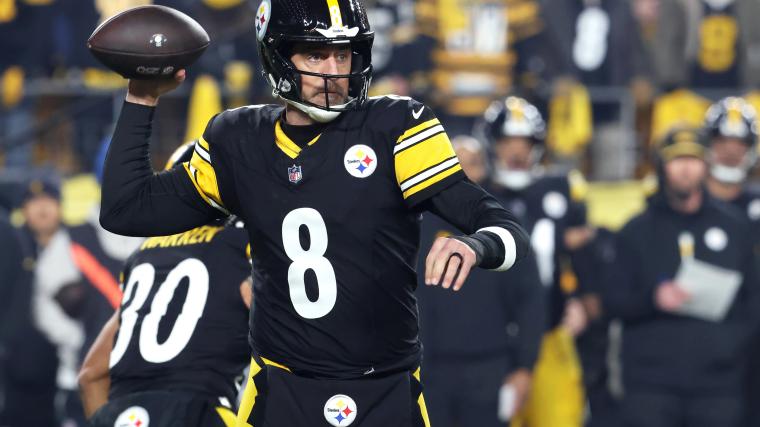
POLICY WIRE — Pittsburgh, USA — The roar of collective relief from Steeler Nation, though entirely predictable, almost drowned out the gnawing question that’s actually been festering for years in the steel city. Forget the headline: Aaron Rodgers signed a new one-year deal, preventing an immediate meltdown. But the ink on that contract dried quickly, exposing a much more unsettling reality for the storied franchise—a strategic void where a legitimate future quarterback should stand. They’ve kicked the can down the road, sure, but that road looks pretty rough a year or two from now.
It’s not about Rodgers; it’s about what he represents: a very expensive, high-stakes stopgap. For a team known for grinding out wins, sometimes uglily, relying on a legend past his prime feels decidedly un-Steelers. And frankly, it’s not exactly a long-term play. It’s a pragmatic punt, buying precious time while the front office—Omar Khan’s crew—whispers sweet nothings into the ears of college scouts and draft prognosticators, eyeing the distant horizon of the 2027 NFL Draft with an almost desperate focus.
Because let’s be real, the moment Rodgers’ agent signed on the dotted line, a clock started ticking. His one-year pact, worth a tidy sum — reported by ESPN’s Adam Schefter on X/Twitter to be around 22 to 23 million dollars base, with incentives pushing it higher — was less a declaration of a new era and more a reluctant acknowledgement of present-day shortcomings. They needed someone. He was available. They paid him.
But the real story? It’s buried in the subtext of league insiders: Pittsburgh’s got a big-time itch for a true young gun. According to ESPN’s Jeremy Fowler, some execs around the league are already watching the Steelers intently. They’ve bounced through seven different signal-callers since Ben Roethlisberger hung up his cleats in 2021, and that sort of musical chairs at the most important position usually doesn’t end well. “This isn’t just about winning games next season; it’s about stability, about cementing our franchise’s path forward for the next decade,” Steelers General Manager Omar Khan recently remarked, a comment tinged with a blend of boardroom jargon and palpable anxiety over future draft prospects.
It sounds an awful lot like the team leadership isn’t sold on the current batch of young arms — guys like Drew Allar or Will Howard — as their long-term answer. No, they’re reportedly fixated on swinging for the fences, a blockbuster trade perhaps, to leapfrog other hopefuls in 2027 and snag a tantalizing talent. Prospects like ‘Sellers’ or Notre Dame’s C.J. Carr are already being bandied about in hushed tones, their potential weighed against their raw skill. It’s a generational search, you know? They don’t just want a guy who can throw a ball. They want *the* guy.
📄 POLICY WIRE WHITEPAPER PUBLISHED: PAKISTAN'S NATIONAL SECURITY POLICY PRIORITIES
👉 READ BY CLICKING HEREAnd this isn’t just a uniquely American sporting dilemma. The echoes of a leadership vacuum, the relentless pursuit of a strong, undeniable successor — it plays out in every corner of the world. In places like Pakistan, where cricket reigns supreme and national loyalties run deep, the conversation about a team’s ‘dynasty’ or a ‘captain’s legacy’ resonates with a similar passion. The yearning for a transcendent figure, one who can lift a collective spirit and guide it to glory, transcends cultural boundaries and specific sporting codes. It’s about more than just points on a scoreboard; it’s about identity.
But back in Pittsburgh, the immediacy of that longing translates to draft picks. The organization’s apparent willingness to part with significant draft capital suggests a profound lack of faith in developing talent from within their current ranks, or even picking high enough in typical drafts. It’s a calculated gamble, one that could set the franchise’s trajectory for years—for better, or for much, much worse.
What This Means
This desperate future-gazing by the Steelers, even as they embrace the temporary calm of a Rodgers signing, highlights a deeper strategic tension at play in the modern NFL. Teams, facing an increasingly cutthroat landscape where elite quarterback play defines success, are willing to spend astronomical sums or mortgage future draft classes to secure that elusive generational talent. Economically, this pushes salaries skyward for top-tier QBs and inflates the value of early draft picks, making long-term team building less about incremental improvements and more about landing a single, transformational player. Politically, within the league’s hierarchy, it means fewer franchises can afford to ‘miss’ on a high draft pick, and the pressure on scouting departments—and general managers—becomes almost unbearable. It’s an arms race, really, — and Pittsburgh is signalling its intent to participate, no matter the cost. The implications extend to smaller market teams; they’ll struggle to compete for those elite QBs, creating a more stratified league. This isn’t just about football; it’s a harsh lesson in capital allocation under extreme pressure.