


Ayodhya Temple Corruption: Modi’s Project Under Fire
PM Modi's flagship Ram Temple in Ayodhya faces a corruption storm. Allegations of embezzlement and arrests threaten the BJP's image and the project's integrity.

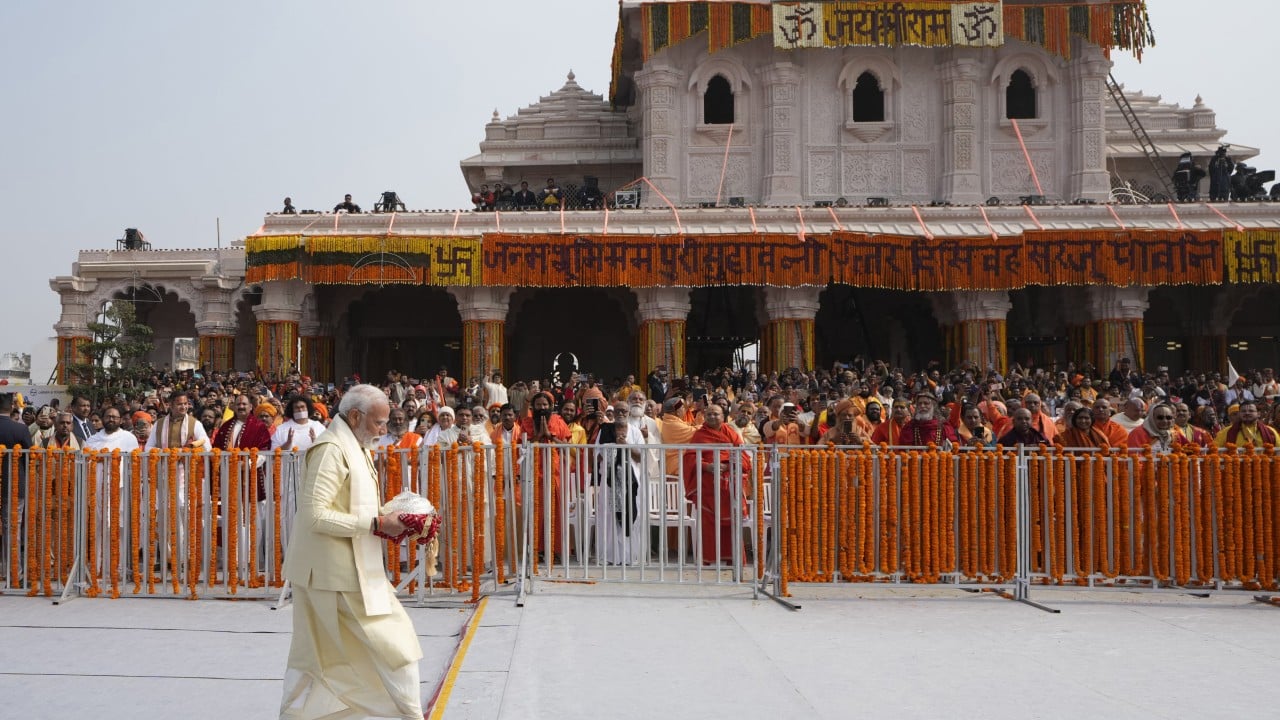
POLICY WIRE — New Delhi, India — The hallowed grounds of Ayodhya, a city whose very name resonates with millennia of faith and fierce contention, are once more witnessing a rather unholy spectacle. It isn’t another ancient dispute or a clash of ideologies this time, though those loom large in the backdrop. No, this go-around, it’s about cash—allegedly misappropriated, ill-gotten cash—that’s begun to swirl around one of Prime Minister Narendra Modi’s most potent political monuments: the nascent Ram Temple.
It’s not just a religious building, is it? It’s a whole political project, really—a triumphant symbol for Modi’s Bharatiya Janata Party (BJP), promising cultural restoration and, for many, national pride. But even temples, it seems, aren’t immune to the earthier human vices. The latest buzz concerns an investigation into alleged financial irregularities at a Hindu temple closely associated with Indian Prime Minister Narendra Modi. And let’s be blunt: that’s threatening to tarnish one of his party’s signature projects. A truly uncomfortable position for a government that’s so carefully cultivated an image of rectitude and national resurgence. We’ve seen these narratives before, across South Asia, where sacred trusts often get tangled up with less-than-sacred finances. And frankly, it’s always a messy business, undermining the very moral high ground some leaders claim. [QUOTE_PLACEHOLDER]
Details, you ask? Well, they’re slowly, painfully, oozing out. Reports confirm that two office bearers at the Ram Temple in Ayodhya have resigned. police arrested eight officials of the trust managing the site after allegations of embezzlement surfaced earlier this month. Imagine the scene: a project heralded as a spiritual cornerstone, now a police scene. What a mess.
This isn’t just about a few missing rupees; it’s about the credibility of a movement. For years, the construction of this temple has been a deeply emotive rallying cry, particularly among India’s Hindu majority. It fulfills a long-held promise of the BJP. To have it now shadowed by accusations of plain old corruption? It’s like finding rats in the temple treasury. And people are talking. People always talk, especially when large sums of public or, more pertinently, donated, money are involved.
The scale of the donations to the temple project has been staggering. Media reports indicate that the Ram Janmabhoomi Teerth Kshetra Trust, the body overseeing construction, has received over 35 billion Indian rupees in donations since 2020, according to financial disclosures filed by the trust. That’s a significant pile of money, collected from millions of individuals, many of whom gave out of genuine devotion and sincere belief. These are ordinary folks, mind you, parting with hard-earned cash because they believe in the cause. Their trust—and their contributions—are now front and center of this unsavory probe.
Now, let’s consider the broader geopolitical currents. Pakistan, a country that often watches India’s internal religious politics with a hawk’s eye, will no doubt register this. The building of the Ram Temple itself, on the contested site where the Babri Masjid once stood, was a deeply divisive act that reverberated across the Muslim world. It inflamed passions, it stirred old wounds. But that’s geopolitics, isn’t it? The construction was framed by the BJP as a redressal of historical wrongs, a spiritual reclaiming. To then have the edifice itself tainted by what appears to be straightforward greed—it introduces a new layer of irony, doesn’t it?
And you’ve got to wonder how this plays in the wider Muslim-majority nations, too. Nations that have often viewed the temple’s construction with concern, seeing it as part of a broader erosion of secular values in India. This investigation might well become a convenient data point in narratives critical of India’s current political trajectory. It suggests a lack of oversight, a weakness in governance even on issues closest to the government’s heart. And for a country like India, vying for global influence, these sorts of domestic hiccups don’t exactly bolster its international image.
What This Means
This temple investigation, modest as it might seem in isolation, carries a significant political undertow for the BJP and PM Modi. For a party that has skillfully used Hindu majoritarian sentiment as its bedrock, the sanctity and integrity of institutions like the Ram Temple are non-negotiable symbols. Allegations of embezzlement there aren’t merely administrative glitches; they’re perceived affronts to the very faith the party champions. This could chip away at the moral authority they’ve cultivated, particularly among devout followers who see Modi as a protector of their religion.
Economically, while the direct impact might be contained, sustained allegations of corruption, especially involving high-profile projects, can subtly erode investor confidence. Transparency and governance are big on the minds of international investors, and stories like this don’t exactly project an image of impeccable institutional hygiene. If the investigation deepens and implicates higher-level figures, it could prompt questions about accountability at various echelons of power. That’s never good for business confidence, foreign or domestic. But sometimes, just sometimes, these things simply blow over. We’ll see.