


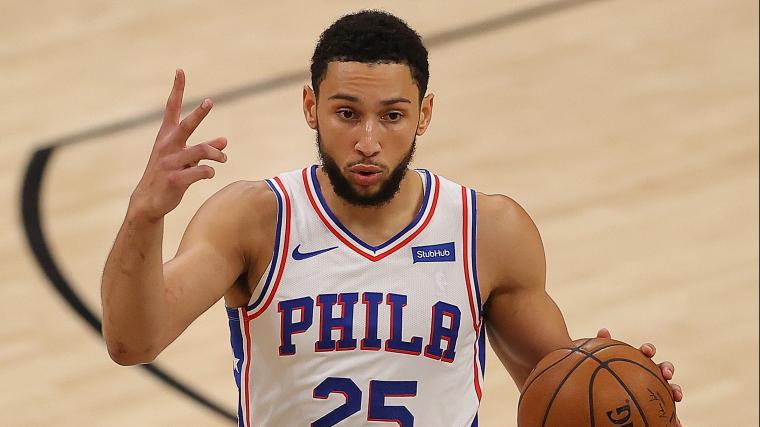
Ben Simmons Eyes NBA Comeback: 76ers or Heat?
After a season off, Ben Simmons publicly declares his NBA comeback intentions, eyeing the 76ers & Heat. Unpack this audacious move and its market impact.

POLICY WIRE — New York, USA — Not many players, after a season completely off the hardwoods, casually declare their desired future employers as if picking a brand of tea. But Ben Simmons, once touted as a generational talent, has done just that. He hasn’t laced up in the NBA during the 2025-26 season, mind you—a detail that makes his public musings all the more striking. The silence of absence often speaks louder than words, but here we’re, listening to a peculiar blend of confidence and aspiration.
It’s an interesting strategy, signaling intent not with agents buzzing anonymously, but with a public pronouncement. In an interview with Men’s Health, Simmons expressed an openness to return to the Philadelphia 76ers, the team that drafted him with the No. 1 overall pick in the 2016 NBA Draft. He isn’t exactly whispering sweet nothings in a GM’s ear; he’s essentially sending a smoke signal across the league. Miami would be nice, he added—just for good measure. There’s a distinct feeling, though, that one doesn’t simply walk back into professional sports after an entire year out, dictating terms from afar. Yet, that’s precisely the theatrical performance we’re getting. [QUOTE_PLACEHOLDER]
His declaration carries a familiar blend of personal ambition and a surprising lack of self-awareness regarding market dynamics. And why wouldn’t it? These are athletes accustomed to being pursued, courted, fawned over. To hear him articulate it: I plan on getting as strong as I can physically, getting my ass on the court, and then the team realizing that my abilities will be needed. I don’t have a plan on where,
Simmons said of a return to the league. Maybe I’ll go back to Philly. Miami would be nice. And not because it’s Miami. I like Erik Spoelstra, I like the Heat, I like their organization, I like the culture.
This isn’t just about an athlete picking a spot; it’s about a global enterprise—the NBA—and the constant renegotiation of personal brand, value, and collective bargaining agreements. The spectacle of a high-profile player seeking redemption, or simply a re-entry, isn’t lost on anyone. For fans from Lahore to London, the stories of fallen idols and potential comebacks are endlessly compelling, fodder for armchair strategists and betting slips alike. Professional sports, for all its athleticism, has always been as much about narrative as it’s about physical prowess.
Consider the raw economics for a moment. Player contracts, especially max deals for top picks, involve astronomical sums that often outpace performance, especially when injuries derail careers. The average length of a professional NBA player’s career, according to Statista, is typically just under 4.5 years. Simmons, having already navigated well beyond that median, faces the stark reality of dwindling years versus persistent public memory. That he’s eyeing a specific 2026-27 return underscores a belief in his own market worth, regardless of his recent court absence.
This dynamic—a player, formerly highly valued, now off the grid, actively pitching his return to specific, successful organizations—illustrates the peculiar economy of modern sports. It’s a high-stakes poker game played out in the media, where reputation and potential are just as liquid as actual cash. The league, remember, is a global phenomenon. And with that, every utterance, every strategic move by a player with a history, is amplified — and analyzed.
What This Means
Simmons’ proactive approach—or perhaps, his hopeful audition—suggests a strategic calculation. It’s an implicit challenge to former employers, a test of institutional memory versus an athlete’s belief in his renewed physical state. For the 76ers, a team whose fan base has, let’s say, a complex relationship with Simmons’ past performance, this isn’t just basketball; it’s politics. There’s the political capital invested in previous drafts, the ongoing sagas of superstar dynamics, and the subtle dance of a team’s public perception versus the raw calculation of roster needs. Bringing him back would require significant management, a careful massaging of narratives.
From an economic angle, his declaration also highlights the persistent lure of a player’s brand. Even an injured or absent star still generates column inches—and therefore, advertising revenue and fan engagement. This engagement translates globally. You see, the NBA’s narrative of talent and triumph resonates in markets like Pakistan, where sports enthusiasts devour news of Western leagues as much as their local cricket. They understand the harsh spotlight, the intense scrutiny on individual performance, and the sheer audacity of an athlete attempting to resurrect a career. It’s an economy of expectation, after all. What’s intriguing is how little player salary is actually tied to game-time performance post-contract signing. This gives way to the economic subtleties of athlete contracts, making player decisions as much financial chess as sporting ambition. His absence, then his declared return, adds another layer to that peculiar contract structure, posing a delicate risk-reward proposition for any franchise considering a veteran player who’s been off the grid.