


New Mexico Fire: Global Climate Battle Microcosm
Discover how New Mexico's wildfire response highlights global climate change challenges. A local victory offers critical lessons in resilience and resource disparity.

POLICY WIRE — Jemez Springs, New Mexico — It’s a cruel kind of theatre, this annual ballet between parched landscapes and the tireless efforts of human intervention. While the casual observer might just see smoke fading into New Mexico’s crisp, arid sky, what’s actually happening is a precarious dance of logistics and grim determination. Here in the Jemez Mountains, just north of Albuquerque, that delicate balance tipped just enough this week for some residents to finally go home, a fleeting moment of victory in an endless war against a changing climate.
The McCauley Springs Fire isn’t just another regional brush-up; it’s a stark reminder of the escalating environmental pressures shaping our world. Its relatively modest size—an estimated 712 acres in size and 43% contained as of Tuesday, according to fire managers—belies the intensive human effort required to bring it to heel. But even as the smoke lessens and families return to Sierra de los Pinos, a lingering question remains: what does a localized triumph in New Mexico truly mean for the grander, more chaotic global climate narrative?
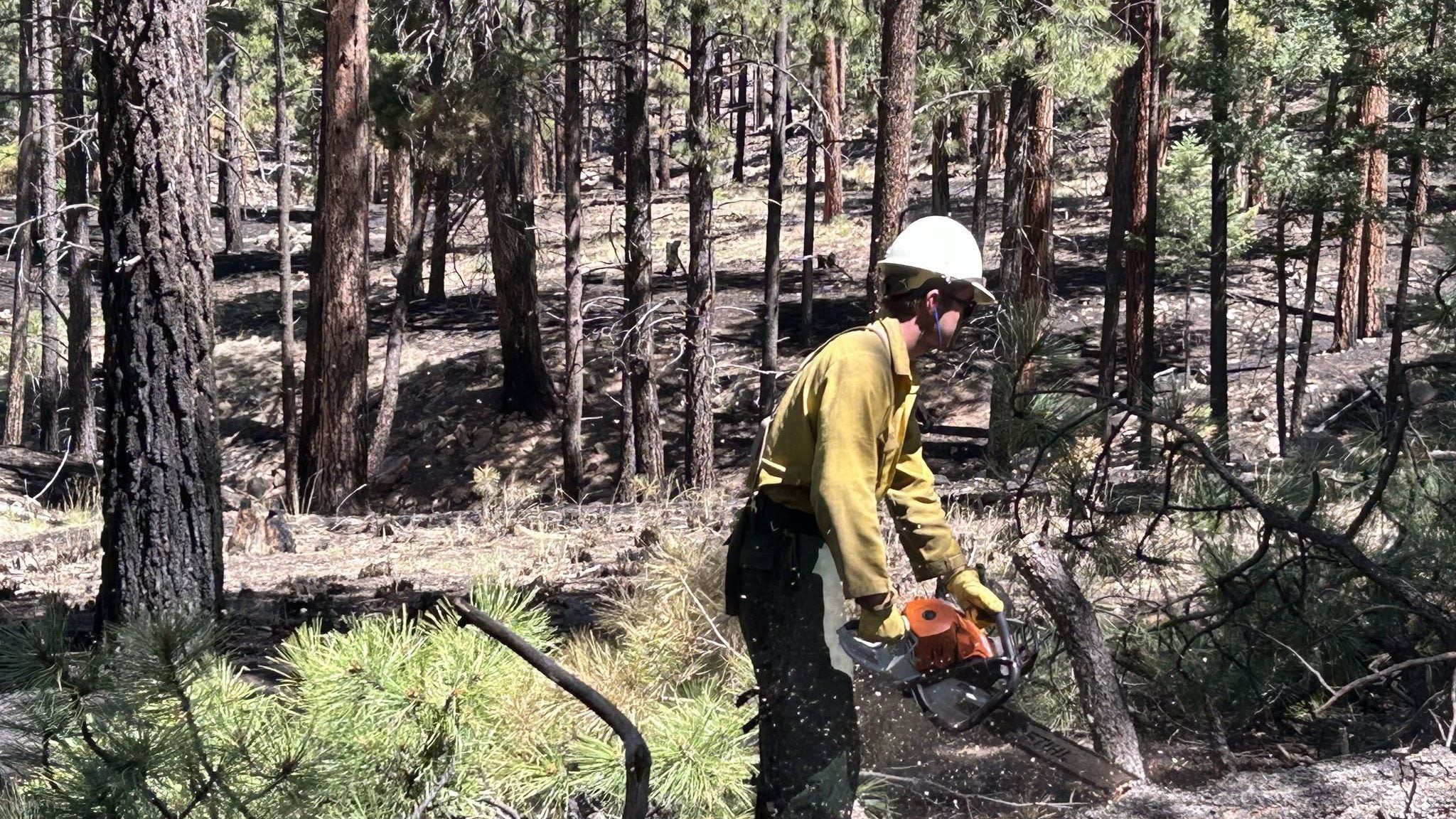
It means managing expectations. Managers have already started talking about repairs after the fire. They’ve still got 384 personnel working it, after all, — and that’s a substantial force for any localized disaster. This isn’t just about dousing flames; it’s about meticulous ground efforts, planning, and ensuring the land can recover, too. The contingency conundrum is a global one, isn’t it?
The fire, which kicked off Wednesday, June 24, just east of Battleship Rock, quickly raised concerns for locals. But, commendably, firefighters managed to keep the blaze within the previous footprint despite it smoldering and “creeping through dry fuels.” This focused strategy—a kind of disciplined holding action—is what allowed for the safe return of residents. Starting at 10 a.m., people got their lives back, piece by slow piece. Because sometimes, just holding the line is enough.
The Southwest Area Incident Management Team 3 is overseeing this whole operation, orchestrating everything from ground crews to air support, and now, the delicate process of reintegrating a community back into the affected zone. The warnings issued were direct: [QUOTE_PLACEHOLDER] That’s a careful dance between urgency — and necessity.
And their foresight goes beyond merely putting out fires. There’s a “suppression repair plan” already in place. Fire response, it seems, isn’t complete until it includes “the repair and restoration of the fire area.” This longer view is exactly what you hope for from effective governance, a sense of responsibility extending beyond the immediate crisis. That foresight, incidentally, is often in short supply elsewhere.
Statewide fire restrictions are still in effect, you know? And the entirety of the Santa Fe National Forest remains under Stage II restrictions. So, while evacuations are lifted, the peril hasn’t evaporated. Weather is playing a part too, with sunny conditions and highs in the 80s, but also winds that could hit 12-17 mph, gusting up to 30 mph. Those gusts—they’re the wildcard, always the wildcard, aren’t they?
What This Means
This localized reprieve in New Mexico offers a telling lesson in resource allocation and disaster management, one with stark implications for regions far less equipped. Imagine similar wildfires, but in places like Pakistan, a country perpetually navigating the thin edge of climate instability. Just last year, devastating heatwaves and subsequent floods displaced millions, illustrating a national vulnerability that eclipses New Mexico’s challenges by orders of magnitude.
Pakistan, with its vast agricultural lands and rapidly growing population, simply can’t muster 384 personnel—nor the sophisticated aerial assets and coordinated inter-agency framework—for every localized disaster. The struggle against a changing climate isn’t just about atmospheric shifts; it’s about the stark, material difference in capacity between nations. While New Mexico fights fire, managing to lift evacuations with relative efficiency, countries in South Asia often battle the economic and humanitarian fallout of such events for years, sometimes decades. This seemingly small victory in the Jemez Mountains underscores a broader political truth: climate resilience is inextricably linked to economic development and governmental stability, a reality deeply felt across the Muslim world. The investment in robust disaster response infrastructure here, therefore, isn’t just about protecting forests; it’s about maintaining civic order and minimizing long-term economic drain. For nations grappling with scarcer resources, the long-term impact of even a small blaze, if not rapidly contained, can be an utter catastrophe.
It’s all about resource stewardship — and anticipation. The sight of the smoke from Albuquerque or U.S. 550 might just be an inconvenience here, a temporary haziness on the horizon. But elsewhere, that hazy horizon can herald a future of prolonged displacement, ruined livelihoods, and an escalating cycle of poverty and environmental degradation. The precise, almost clinical, planning to repair and restore the fire area, as described by managers, offers a blueprint that many global communities would envy, even as they face far more dire threats.