

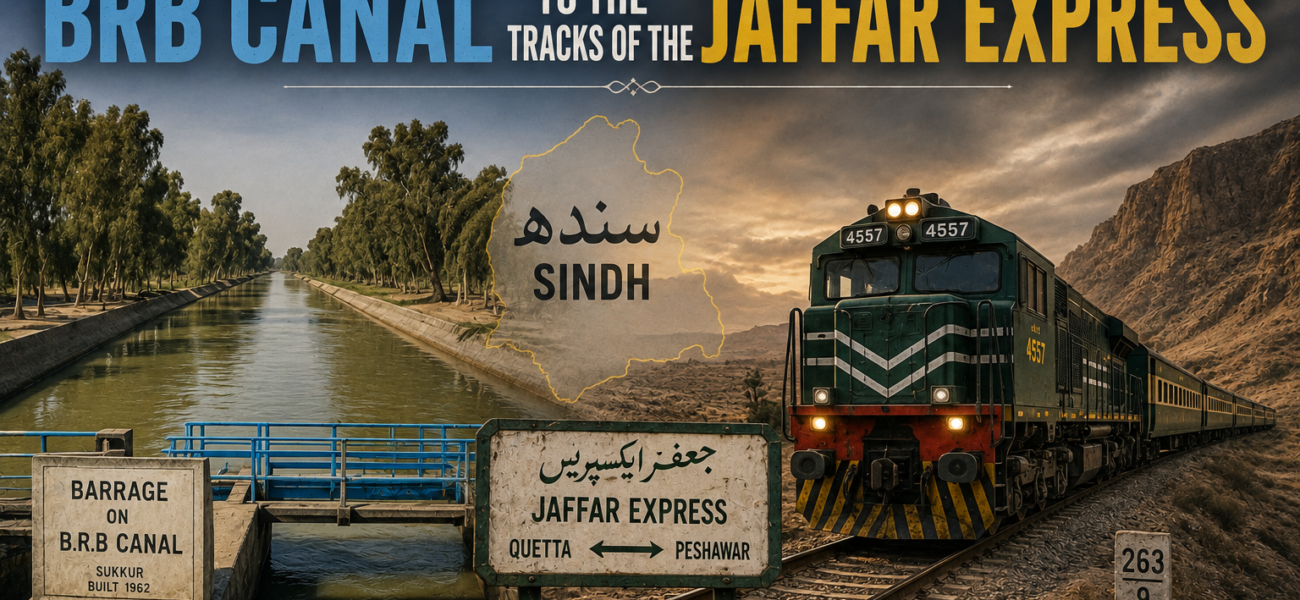
From the Banks of the BRB Canal to the Tracks of the Jaffar Express
The siren cut through the pre-dawn stillness of Lahore on September 6, 1965. Families gathered their children into whatever shelter they could find, radios crackled with instructions in hushed Urdu,...
The siren cut through the pre-dawn stillness of Lahore on September 6, 1965. Families gathered their children into whatever shelter they could find, radios crackled with instructions in hushed Urdu, and along the BRB Canal on the city’s eastern edge, a young army officer decided he would not fall back. By the time the guns fell silent seventeen days later, Pakistan had written one of the defining chapters of its national memory, not only through the courage of its army, but through the quiet defiance of ordinary citizens who refused to abandon their homeland.
Sixty years on, that spirit has not aged. It has simply found new battlefields, a canal bank in Burki, a school gate in Hangu, a mosque half a world away in Christchurch, a hijacked train in the Bolan Pass. The names have changed, but the instinct to place one’s own body between danger and the people one loves has not. This Defence Day, it is worth widening the lens beyond parade grounds and fighter jets, to the soldiers and civilians alike who have joined the long roll call of Pakistan’s martyrs.
The Officer Who Would Not Leave the Canal
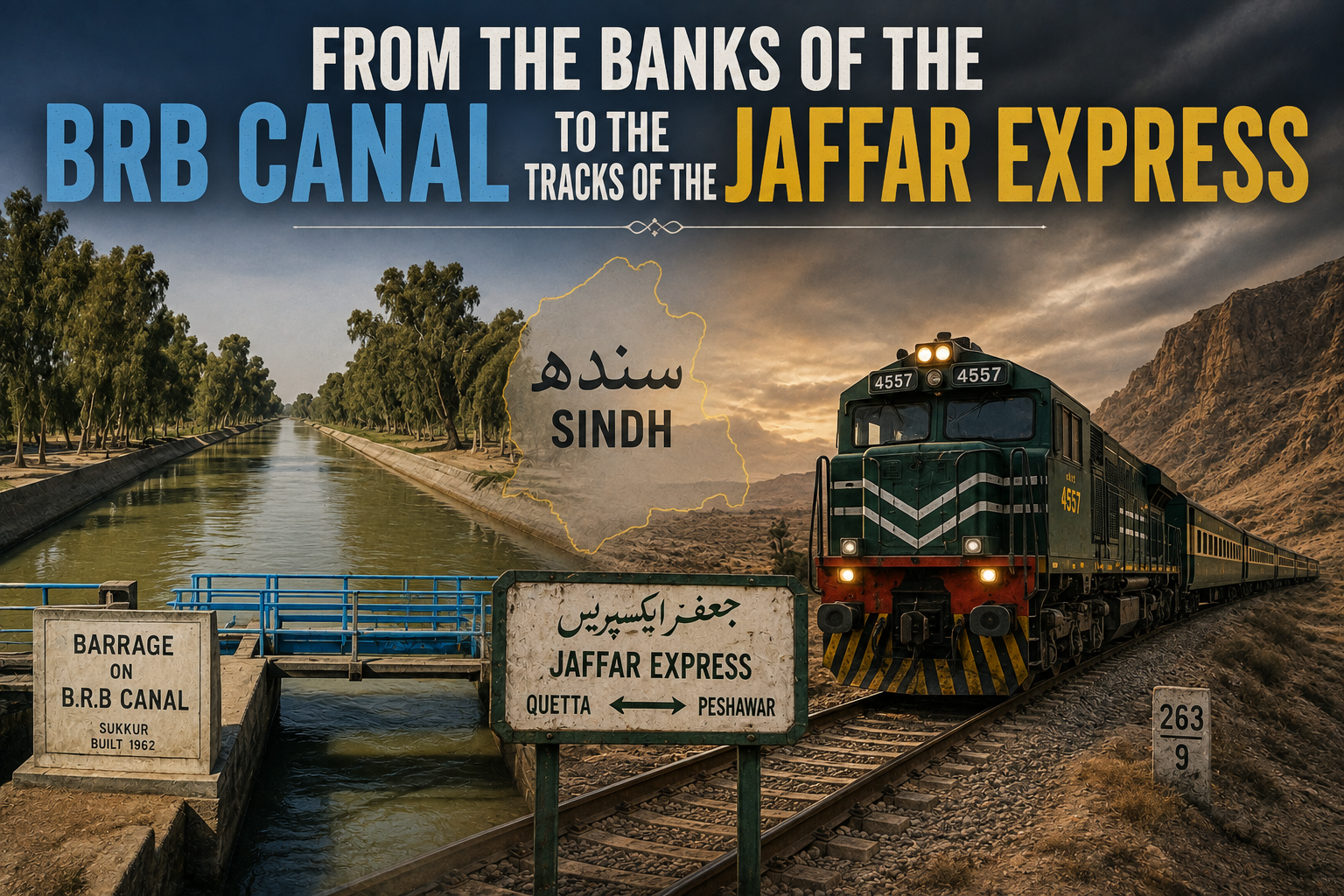
Every account of September 6, 1965 begins in the same place; the Burki sector, east of Lahore, where the Bambanwala-Ravi-Bedian (BRB) Canal formed the last line of defence before the city itself. Major Raja Aziz Bhatti, a company commander in the 17th Punjab Regiment, was posted there when Indian forces crossed the border with the largest tank assault Pakistan had yet faced. Rather than direct the defence from a safer position in the rear, Bhatti chose to stay forward with his platoon. For five days and nights, under continuous artillery and tank fire, he organized his men, corrected their aim, and held the canal line, the position that stood between the advancing army and Lahore. On September 11, while directing artillery fire, an enemy tank shell struck him directly, and he was martyred the following day.
Major Bhatti became the sole recipient of the Nishan-e-Haider, Pakistan’s highest military decoration, for the 1965 war. Pakistan’s military historians still teach his defence of Burki as a case study in leadership under sustained fire, and every September 6, the nation’s official commemorations begin, almost ritually, with his name.
When a Schoolboy Became a Shield
Half a century later, in the town of Ibrahimzai, Hangu, a fifteen-year-old named Aitzaz Hasan Bangash applied the same instinct without ever having worn a uniform. On the morning of January 6, 2014, Aitzaz was standing outside his school gate after arriving late for class, more than 2,000 students were inside. When he noticed a stranger in a suicide vest approaching, his classmates urged him to run. He moved toward the bomber instead, grabbed him, and held on as the vest detonated. Aitzaz died instantly. Not a single student inside the school was harmed.
The government posthumously awarded him the Sitara-e-Shujaat, Pakistan’s second-highest civilian bravery award, and renamed his school in his honor. Prime Minister Shehbaz Sharif, marking Aitzaz’s anniversary in early 2025, described him as “a true son of soil from Hangu” whose courage “stands as a beacon of hope and resilience.” His father offered a line that has since entered the nation’s vocabulary of grief and pride: his son had made his mother cry, he said, so that hundreds of other mothers would not have to.
“I Am Their Mother. Talk to Me.”
Nowhere was that same instinct tested more brutally than at the Army Public School in Peshawar on December 16, 2014, when Tehrik-i-Taliban Pakistan gunmen scaled the compound wall and opened fire on more than a thousand students. Over the following hours, 149 people were martyred, 132 of them children.
Principal Tahira Qazi, 63, had already been pulled to safety once. She went back in. Survivors and rescuers say she confronted the attackers directly in the school corridor, placing herself between them and her students, telling them: “I am their mother. Talk to me.” She was shot and later died at the scene. Her sister, speaking to reporters months afterward, recalled that Tahira had told those trying to evacuate her, “I will go with the last child.” She was posthumously awarded the Sitara-e-Shujaat in 2015, and Peshawar’s Frontier College for Women was later renamed in her honor. Several of her teaching staff died the same way, standing between gunmen and their classrooms rather than fleeing toward the exits.
A Pakistani Name on the Other Side of the World
Heroism, it turns out, carries no passport requirement. Naeem Rashid, a Pakistani immigrant living in Christchurch, New Zealand, was inside the Al Noor Mosque during the March 2019 terrorist attack when he lunged at the gunman in an attempt to disarm him, buying precious seconds for others to flee. He was killed in the attempt; his teenage son Talha died alongside him. Both New Zealand and Pakistan honored his bravery, and he too received the Sitara-e-Shujaat posthumously, a reminder that the instinct to protect strangers does not stop at Pakistan’s borders.
The Railwayman Who Stood His Ground Near Kohat
📄 POLICY WIRE WHITEPAPER PUBLISHED: PAKISTAN'S NATIONAL SECURITY POLICY PRIORITIES
👉 READ BY CLICKING HEREThe most recent name added to this list belongs to Liaquat Ali, a former Pakistan Railways employee. Near Khushhal Garh, in the Kohat region, Ali noticed a man behaving suspiciously and, recognizing the danger, moved to intercept him rather than raise the alarm and retreat. The man detonated his explosives during the confrontation, killing Ali but preventing the bomber from reaching a populated area. In May 2026, President Asif Ali Zardari conferred the Sitara-e-Shujaat on Ali’s family at a formal ceremony at Aiwan-e-Sadr, calling his actions an instance of “unparalleled bravery” by a man who gave his life “protecting others.”
The Rails of Bolan: Ordinary Passengers, Extraordinary Composure
On March 11, 2025, the Jaffar Express, carrying roughly 440 passengers from Quetta to Peshawar, was ambushed in the Bolan Pass by the Balochistan Liberation Army, which blew up the track, stormed the train, and took hundreds hostage. Over the following two days, in an operation codenamed Green Bolan, Pakistan’s security forces fought to clear the train car by car, ultimately rescuing more than 300 passengers and killing all 33 attackers. Twenty-six hostages, including 18 security personnel, lost their lives before the operation concluded, railway police and commandos who stood between armed militants and unarmed civilians in the forward carriages.
The story of that siege belongs to civilians as much as soldiers. Survivor Muhammad Numan, 30, noticed his captors had fallen asleep and organized more than a dozen fellow hostages into a four-hour trek through the mountains to reach a Frontier Corps checkpoint, leading strangers to safety on nothing but resolve and darkness. Muhammad Ashraf, 75, released only because of his age, walked for hours through the same terrain to raise the alarm for those still trapped. These were not soldiers. They were travellers who, in the space of a single terrifying day, became each other’s protectors.
The Numbers Behind the Names
These stories are not exceptions in Pakistan’s recent history; they are data points in a much larger pattern. According to a statement issued by Pakistan’s Ministry of Foreign Affairs in August 2025, the country has lost more than 90,000 lives to terrorism, alongside economic losses exceeding $150 billion, in a struggle it describes as “orchestrated, planned, and executed from across the borders.” The Islamabad-based Center for Research and Security Studies recorded 2,526 deaths from militant attacks in 2024 alone, Pakistan’s deadliest year in nearly a decade — including close to 700 security personnel and more than 900 civilians. A separate assessment by Brown University’s Watson Institute put cumulative losses since the start of the war on terror at over 23,000 civilians and nearly 8,900 security personnel.
2025 added fresh names to that ledger: the schoolchildren killed in the Khuzdar school-bus bombing in Balochistan; the 12–13 people killed in a November suicide bombing outside a court complex in Islamabad’s G-11 sector; the 48 people, including 31 civilians, killed in coordinated attacks across Balochistan in January 2026, condemned by the UN Security Council in the strongest terms. Each figure in these statistics belonged to someone’s household, someone’s classroom, someone’s morning commute.
Defence Day, Redefined
What ties Major Aziz Bhatti at the BRB Canal in 1965 to Aitzaz Hasan at a school gate in 2014, to Tahira Qazi in a Peshawar corridor, to Naeem Rashid in a Christchurch mosque, to Liaquat Ali near Kohat, to a sleepless commando guarding a hijacked train in 2025, is not the uniform they wore, because several of them wore none. It is the same instinct: that some things are worth standing between danger and the people you love, even when the cost is your own life.
Pakistan’s Defence Day has traditionally been narrated through military parades, flypasts, and tributes to fallen soldiers, and rightly so; the sacrifice of the armed forces remains the backbone of the day’s meaning. But defending a nation has never been the sole responsibility of those in uniform. It has also been carried by teenagers who chose not to run, a principal who walked back into gunfire, commuters who organized each other’s survival in the dark, and a railway worker who intercepted a bomber rather than simply raising an alarm. As Pakistan marks another September 6, the truest tribute may be recognizing that the line first held at Burki has never really moved, it simply runs today through classrooms, train carriages, and mosques, wherever ordinary Pakistanis have chosen, again and again, to stand their ground.
Author